
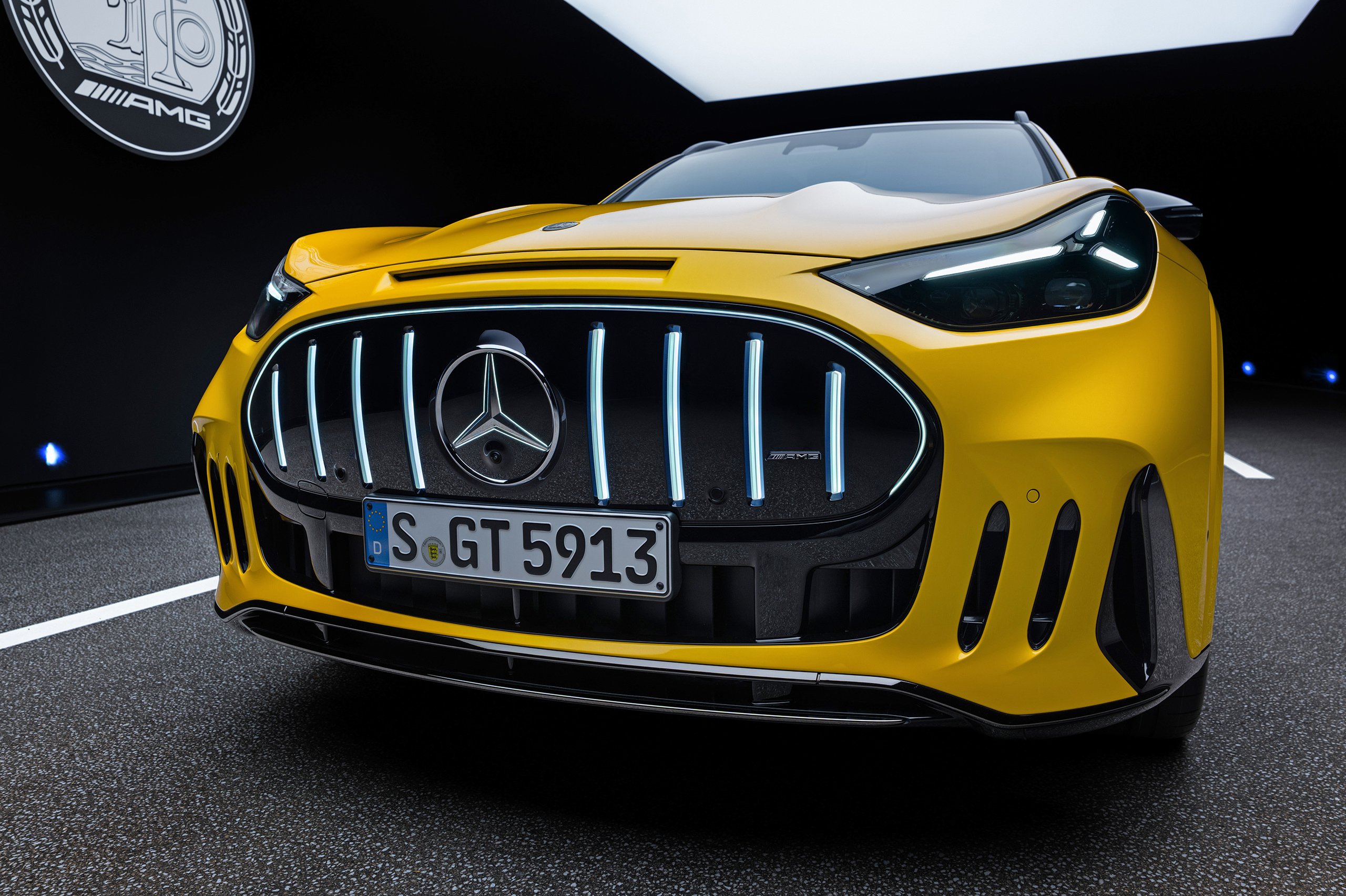


Mercedes just introduced an all-electric AMG GT SUV over the weekend, and buried in the spec sheet is a detail that tells you everything about where the luxury car business is headed. The base model, the GT 53 with 536 horsepower, gets simulated six-cylinder engine sounds. If you want the fake V8 noises, you need to step up to the GT 55 or GT 63, which start at 805 and 1,153 horsepower respectively.
Read that again. Mercedes is gatekeeping a sound file.
The system responsible is called AMGFORCE Sport+, and Mercedes wants you to know it spared no expense capturing the real thing. The company says the sounds are “meticulously documented rather than synthetically generated,” drawn from over 100 measurements taken with 16 microphones on reference vehicles including the Mercedes AMG GT R. The audio adapts in real time to driving inputs, acceleration, and simulated gear changes.
So the recording process was thorough. The result is still a speaker playing pretend.
This isn’t a new phenomenon. Renault let gas-powered Clio owners choose motorcycle or Nissan GT-R sound profiles a full decade ago. BMW’s M division has been layering synthesized engine notes through cabin speakers for years. But Mercedes has taken the concept to its logical, absurd conclusion by tiering the fantasy. You can have fake engine noise, sure, just not the good fake engine noise. Not unless you write a bigger check.
The AMG GT SUV itself is a peculiar machine. It doesn’t share a platform with any existing Mercedes SUV. It’s a standalone electric vehicle wearing the AMG GT badge, a name that until recently belonged to a two-door, front-engine sports car with a handbuilt twin-turbo V8 under its hood.
That car had a voice of its own. This one borrows someone else’s, through transducers and algorithms.
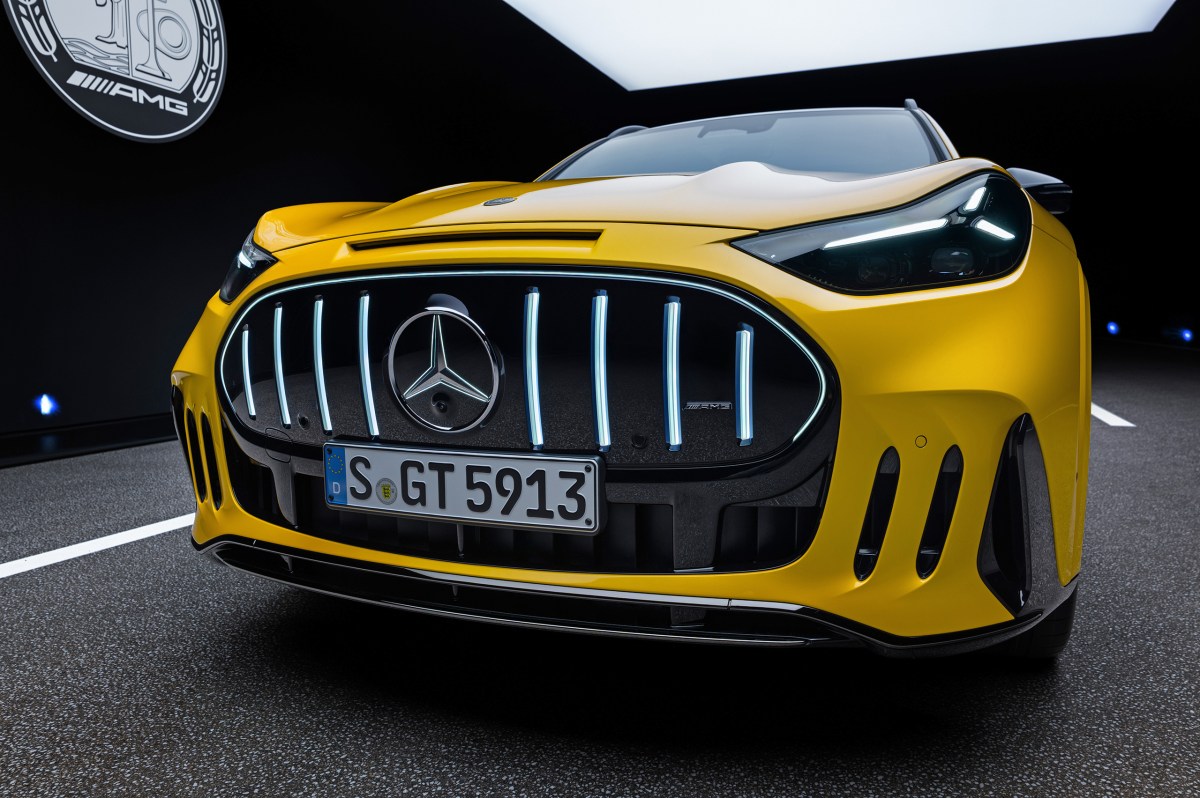
Every EV maker does this to some degree. Dodge piped synthetic exhaust rumble into the Charger Daytona. Ford engineered a Baja mode soundscape for the F-150 Lightning. Hyundai and BMW offer multiple artificial sound profiles. The justification is always the same: customers miss the emotional connection of a combustion engine, and sound fills that gap.
It doesn’t, though. A speaker vibrating a floorpan is not a crankshaft spinning at 7,000 rpm. No amount of microphone arrays and real-time processing changes that fundamental truth. The engineering effort Mercedes poured into making these sounds “authentic” only underscores the contradiction. If authenticity mattered that much, there would be an engine.
What Mercedes has really built is a hierarchy of nostalgia. The GT 53 buyer gets to pretend they’re driving something with six cylinders. The GT 63 buyer, who already has more than twice the horsepower, also gets the privilege of a more prestigious illusion.
The car itself performs identically regardless of which audio track plays. The torque curve doesn’t change. The acceleration doesn’t shift. Only the theater does.
The broader EV industry has spent years trying to solve a problem that may not actually need solving. Pedestrian warning sounds are a regulatory requirement and a safety necessity. Everything beyond that is marketing dressed up as engineering. Mercedes is now charging a premium for the better costume.
Ten years from now, when a generation of drivers has grown up with silent powertrains, this era of fake exhaust notes will look like the automotive equivalent of a ringtone business. Mercedes is betting that day hasn’t arrived yet.


Share this Story