
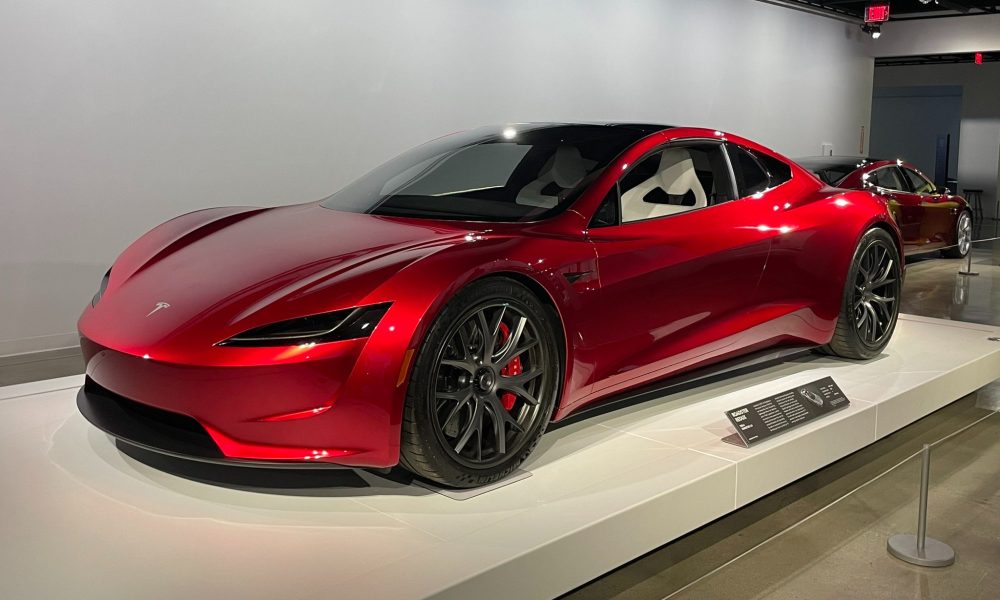


The Federal Aviation Administration has locked down a 1.5-nautical-mile cylinder of airspace over SpaceX’s McGregor, Texas, facility, stretching from the surface to 10,000 feet above ground level. The restriction runs from September 18 through October 2, neatly bracketing Tesla’s October 1 Roadster event in nearby Waco.
That altitude is the tell.
Routine flight restrictions at McGregor for engine static fires and hardware tests typically cap out around 2,000 feet. Even some Starbase operations don’t command a 10,000-foot ceiling. Whatever Tesla and SpaceX are planning requires five times the vertical buffer the FAA normally grants at that site.
Tesla’s invitation to Roadster reservation holders placed the event about 20 minutes from McGregor. The company’s teaser materials have leaned hard into aerospace language, using the phrase “Go for launch” alongside an image of the car sitting on what appears to be a launch pad. None of that confirms a flight demonstration. But the FAA doesn’t hand out airspace restrictions on vibes.
The speculation centers on the long-discussed SpaceX Package, a cold-gas thruster system Elon Musk has described in increasingly dramatic terms over the years. He has claimed it could push the Roadster below one second for the 0-60 sprint and, at its most ambitious, allow the car to briefly leave the ground. Earlier reports this year described a planned remote-controlled demonstration at McGregor with no occupant in the vehicle and spectators kept hundreds of yards back due to noise concerns.
A 10,000-foot ceiling would provide an enormous safety margin even for a hover measured in feet rather than miles. That kind of precaution tracks with an unmanned vehicle test involving rocket propulsion in close proximity to invited civilians. You don’t need that much sky for a car sitting on a stage.
Tesla has not confirmed any of this. The TFR notice itself cites only generic hazards under 14 CFR 91.137(a)(3) and bars all aircraft and drones from the zone. SpaceX uses McGregor regularly for Raptor engine development, so a restriction alone is not unusual. The scale of this one is.
The Roadster has been the most delayed vehicle in Tesla’s history. First announced in 2017 with a promised 2020 delivery, it has been pushed back repeatedly while Tesla prioritized Model Y, Cybertruck, and the Semi. Reservation holders paid between $50,000 and $250,000 in deposits years ago. Many have waited nearly a decade for a car they could only see in renderings and brief show appearances.
Placing the reveal at a rocket test site rather than a traditional auto show venue or Tesla factory is a deliberate choice. It signals the Roadster’s identity will lean as much on its SpaceX hardware as its electric drivetrain. If the thrusters work as described, the car would occupy a category that doesn’t currently exist, part sports car, part demonstration of propulsion technology developed for spacecraft.
The reservation holders heading to Waco on October 1 are walking into either the most theatrical car launch in recent memory or an elaborate tease that stops short of the main act. The FAA filing suggests someone expects real hardware to operate in real airspace. Whether that means the Roadster actually lifts off or simply fires thrusters while bolted to the ground is the question no document has answered yet.
The sky over McGregor is closed and the invitations are sent. Whatever happens in that 10,000-foot envelope will either validate a promise Musk has been making for the better part of a decade or add another chapter to one of the auto industry’s longest-running cliffhangers.
Share this Story