
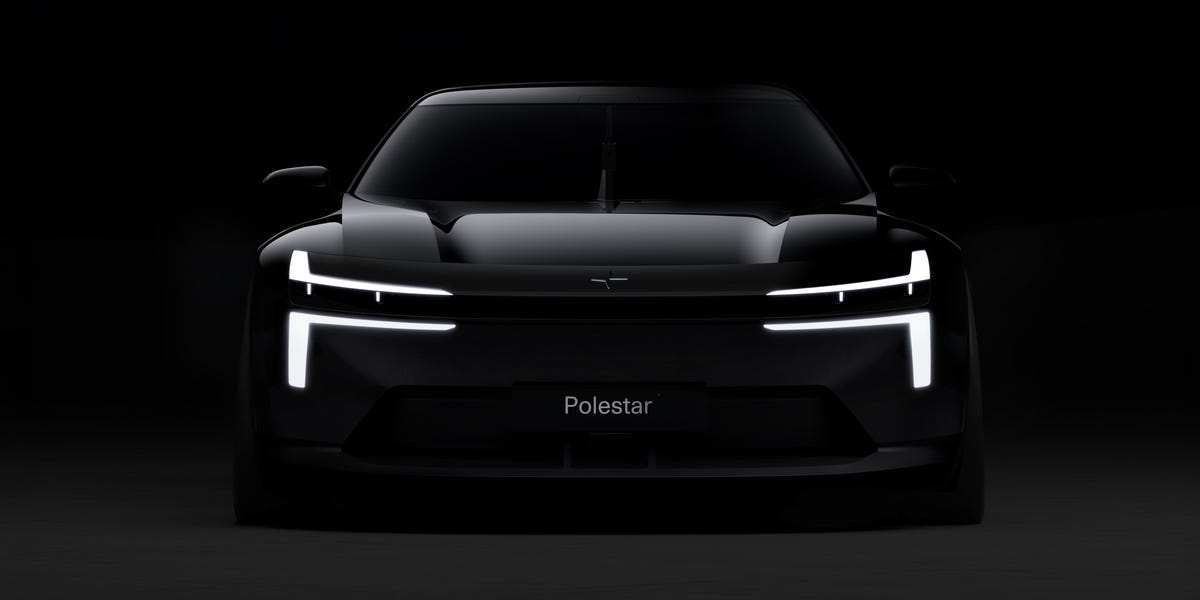


Polestar just pulled the curtain back on a concept car called the “Formula 2030,” a low-slung design study that previews the next-generation Polestar 2. It looks aggressive, athletic, and exactly like the kind of thing that would move metal in American showrooms. Too bad it will never see one.
The timing here is brutal. Polestar is effectively done selling cars in the United States after this year, shut out by a ban from the U.S. Department of Commerce’s Bureau of Industry and Security tied to connected-car regulations. So the brand is out here teasing its future to an audience that has no legal way to participate in it.
From the single front-facing image released so far, the Formula 2030 sits extremely low, with wide front fenders wrapping what appear to be serious performance tires. The “Dual Blade” headlights, a Polestar signature, give the face a sharp, predatory look. There’s also a curious vertical element bisecting the windshield, though that reads more like concept theater than anything destined for a production line.
Polestar says the design language shown here will first appear on the next-gen Polestar 2, due in 2027, and will carry over into a new model called the Polestar 7. Both cars are earmarked for markets outside the U.S.
The full concept reveal is planned for an upcoming media event tied to the Polestar 4, with VIP customers getting a private look beforehand. American enthusiasts, if any remain loyal after being cut off, will need a passport and a plane ticket.
This is the strange position Polestar now occupies. The brand spent years building awareness in the States, competing against Tesla, BMW, and Mercedes in the premium EV space. It ran Super Bowl ads. It opened retail locations in major cities.
It earned genuine respect from journalists who drove the Polestar 2 and came away impressed by its chassis tuning and its refusal to chase the tablet-on-wheels trend. And now it is designing cars that look better than anything it previously sold here, for customers who live somewhere else.
The connected-car ban that forced Polestar out targets vehicles with software and hardware links to China. Polestar, majority-owned by Geely, fell squarely within its scope. The brand explored workarounds and made public statements about compliance, but the regulatory door closed anyway.
The U.S. market, once central to Polestar’s growth ambitions, became collateral damage in a broader technology and trade standoff.
What stings is that Polestar was never really a volume player here. It was a niche brand doing interesting work, the kind of automaker that car people root for. The Polestar 2 drove like an engineer cared about it.
The brand’s design team, led from Gothenburg, consistently punched above its weight in aesthetics. The Formula 2030 concept suggests that trajectory was only steepening.
Now Polestar is left showing its best work to a country where it can no longer do business. The Formula 2030 will debut fully in the coming weeks, and it will look fantastic in photos Americans can only scroll past.

Share this Story