
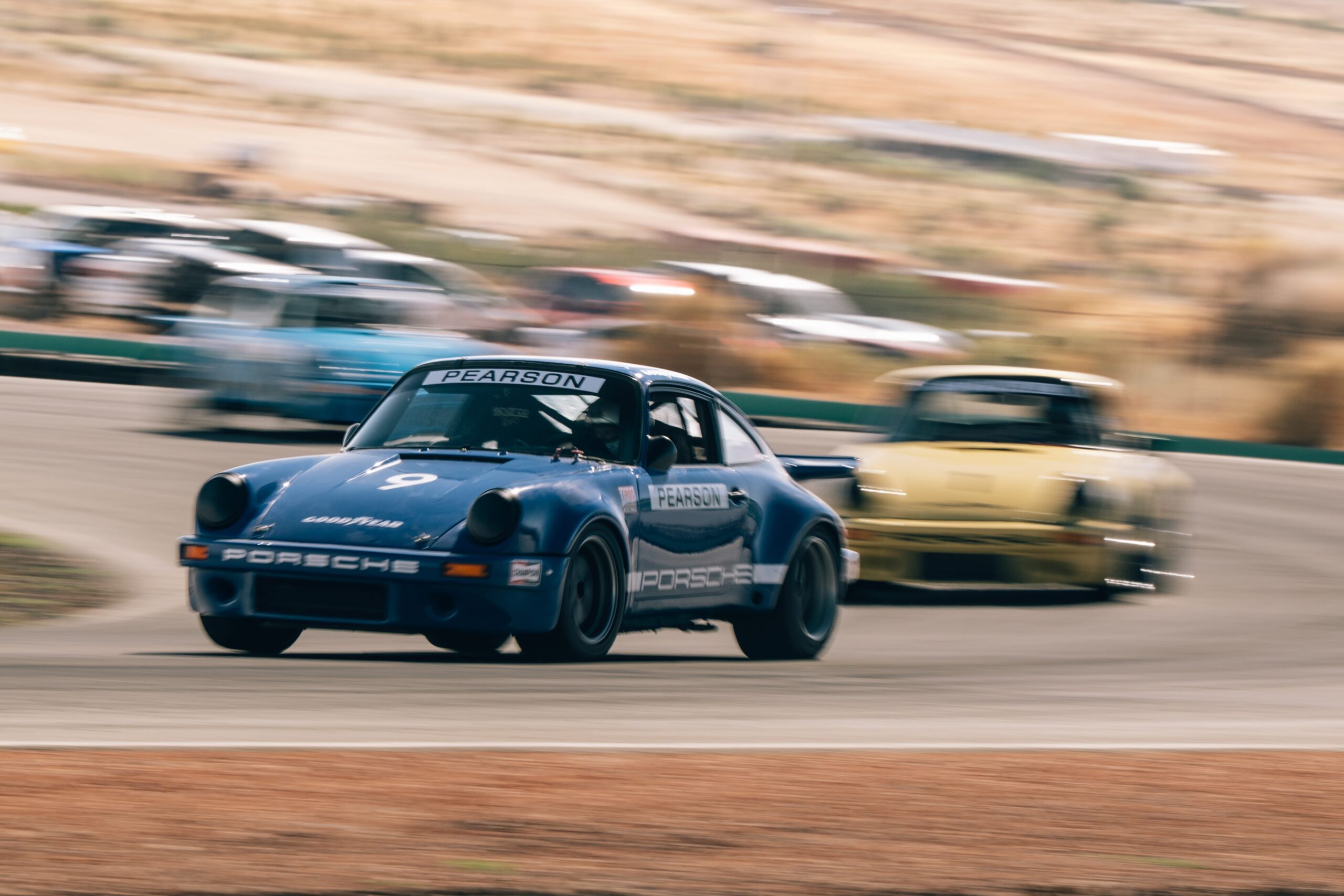


Two years into its reinvention under new ownership, Willow Springs Raceway resurfaced its asphalt, repainted its buildings, and threw a party. The second annual Willow Springs Reimagined event on October 17 drew drift cars, vintage racers, and a modified Tesla that beat an Aston Martin, a McLaren Senna, and a Gordon Murray T.50 up the hill. What it didn’t do was settle the fundamental question hanging over the 64-year-old desert track: who is this place actually for?
The numbers tell one story. Membership initiation costs $450,000, plus monthly dues. That buys access to freshly paved circuits, catered hospitality lounges, and the promise of future condos and garages.
CrossHarbor, the private equity firm that partnered with Singer Vehicle Design to purchase the facility in 2025, is clearly building a West Coast answer to places like The Thermal Club and Monticello Motor Club.
The event itself told a more complicated story. General admission ran $50. A drift ride with Formula Drift pros Matt Field or Odi Bakchis cost another $75 on top of that.
Security kept spectators well back from the track walls. The curated car show, borrowing from the Luftgekühlt playbook of photogenic staging, was thin on cars. A burnout contest devolved into donuts, and the races, dominated by identical Porsches, lacked visual punch.
Still, the bones were better than year one. Gone were the chaotic entry lines and parking confusion that plagued the inaugural Reimagined. Shuttles ran efficiently across the sprawling, hilly property.
The café served real food. Rivian offered free off-road ridealongs and DirtFish Rally School put attendees in rally cars at no charge. Go-karting cost a reasonable $40.
Edwards Air Force Base provided a flyover. The weather, often brutal at this particular patch of Mojave, cooperated.
On the competition side, Ed Jones took the Huth Invitational Cup, beating a field that included Jensen Button, Patrick Long, and Emelia Hartford. Craig Coker’s modified Tesla from Unplugged Performance claimed the Petersen Hill Climb over some of the most exotic machinery on the planet. Robert Darylmple won the Clubwheels race, Edwin Haazer took motorcycle honors, and Brent Smith captured the IROC tribute.
The members Car and Driver spoke with seemed content. They had evaluated other private track options on the West Coast and chose Willow for what they called its “soul,” the sense that real racing history lived in those original buildings and hand-painted signs. The new ownership has been careful to preserve that patina even as construction crews reshape the facility around it.
Promises keep stacking up. Open test-and-tune days. Instructional track days. A collaboration with the Duke of Richmond to bring a Goodwood-style festival to California within the next two years.
Cabins and overnight accommodations are planned but not yet built. Shade, that most basic desert commodity, remains almost nonexistent outside the restricted VIP areas.
Southern California has been bleeding accessible racetracks for decades. Willow Springs was one of the last places where anyone with a helmet and a dream could rent time on real asphalt. The pivot to private membership changes the equation for thousands of grassroots racers, time attackers, and weekend track-day regulars who treated this place as their home circuit.
The new Willow Springs is clearly going to be a polished, well-funded facility for people who can write six-figure checks. Whether the public gets more than one curated event per year and a long look from behind the security barriers is the question nobody at Reimagined seemed eager to answer.


Share this Story