
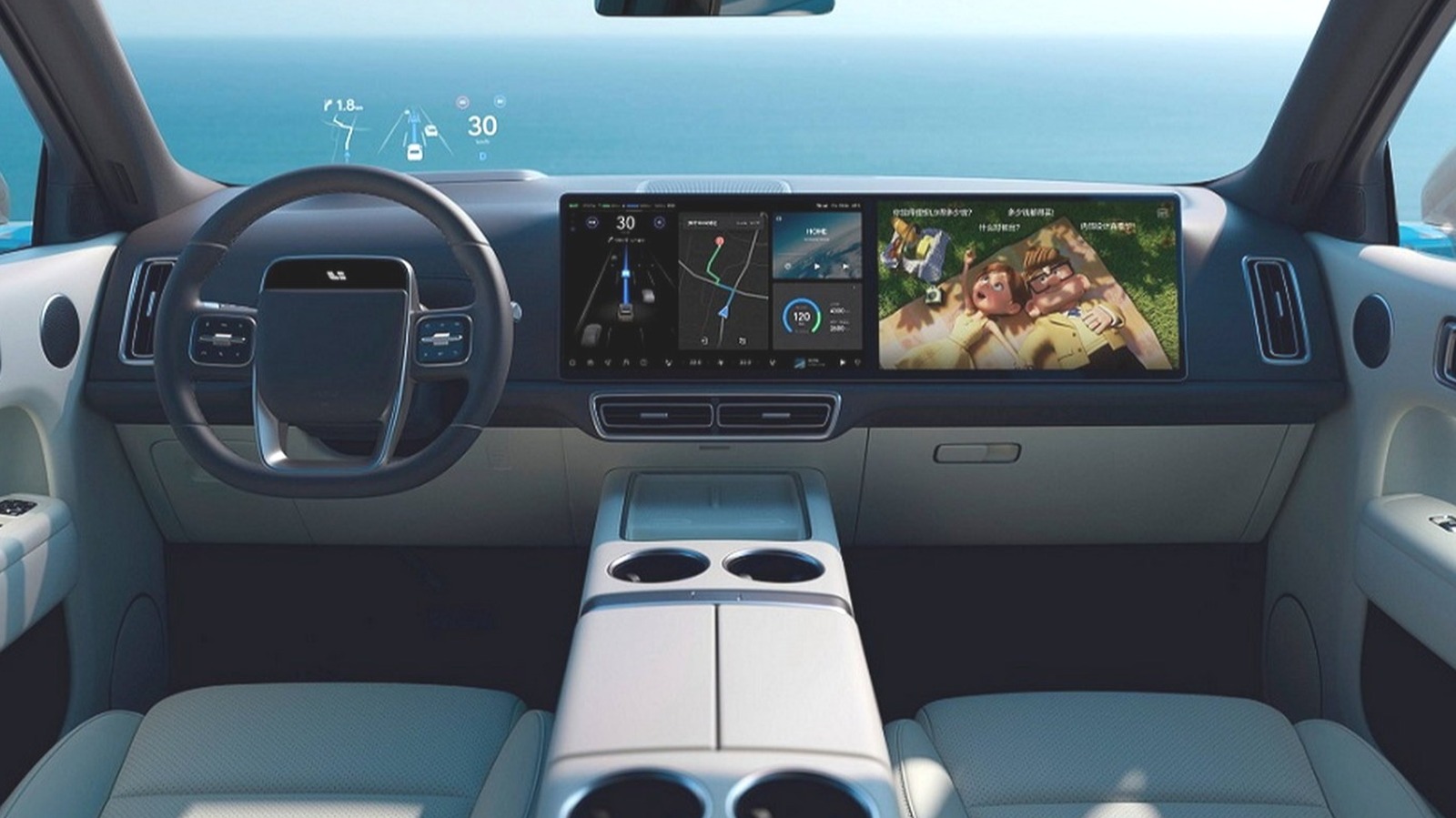


China’s Ministry of Industry and Information Technology wants to put the brakes on the screen arms race happening inside Chinese cars. A new notice from the regulator proposes mandatory safety assessments for large infotainment displays, heads-up displays, and any other cabin screens that might distract a driver. If a screen fails the test, it gets pulled.
The proposal also floats a blanket ban on flexible and folding displays in vehicles. No Chinese production car currently uses one, but the tech is already knocking on the door. BOE, a major local display manufacturer, previewed a curving screen earlier this year. Beijing apparently wants to slam the door before anyone walks through it.
This is the same regulatory body that recently banned electronic pop-out door handles and mandated physical buttons for critical vehicle controls. The pattern is unmistakable. While Chinese automakers spend billions trying to out-gadget each other with theater-sized passenger screens and gesture controls, Beijing’s safety apparatus is quietly drawing lines.
And the screens are just one front.
Zero-gravity seats, those fully reclining, leg-rest-equipped thrones that have become a selling point for brands like Li Auto and Zeekr, are also under scrutiny. The MIIT proposal would ban their use while the vehicle is in motion. Drivers obviously can’t recline to near-horizontal while operating a car, but passengers can.
In a serious crash, a fully reclined occupant wearing a standard three-point seatbelt faces a fundamentally different injury profile than someone sitting upright. The belt geometry is all wrong.
LED daytime running lights that let owners upload custom designs are getting examined too. So are voice commands for safety-critical functions like operating headlights, opening doors, or popping the hood. The regulator apparently doesn’t trust a microphone to reliably stop a car from accidentally opening its door on a highway.
The timeline is aggressive. Vehicles manufactured from January 1, 2027, would need to comply with whatever rules survive the proposal process. Cars already on sale get until July 1, 2027. After that, noncompliant models face mandatory recalls or production shutdowns.
That deadline puts real pressure on a domestic industry that has treated cabin technology as its primary competitive weapon against legacy automakers. Chinese EVs don’t just compete on price and range. They compete on the sheer spectacle of their interiors.
Screens the size of laptop monitors. Karaoke systems. Ambient lighting rigs that would embarrass a nightclub. Some of this is genuinely useful. Some of it is a liability lawsuit waiting for a jurisdiction that cares.
Beijing, it turns out, cares.
The irony is thick. Western regulators have spent years wringing their hands about touchscreen distraction, publishing studies, forming committees, accomplishing almost nothing. Euro NCAP started penalizing cars for burying climate controls in touchscreens, but that’s a ratings dock, not a law. China is moving toward actual prohibition.
Whether these proposals survive lobbying from BYD, Li Auto, NIO, and the rest of the domestic heavyweights remains the open question. These companies have enormous political capital. But the MIIT has already shown it can win these fights. The pop-out handle ban stuck. The physical button mandate stuck.
The screen war may be the first real collision between what Chinese consumers want and what Chinese regulators will allow on four wheels.


Share this Story