
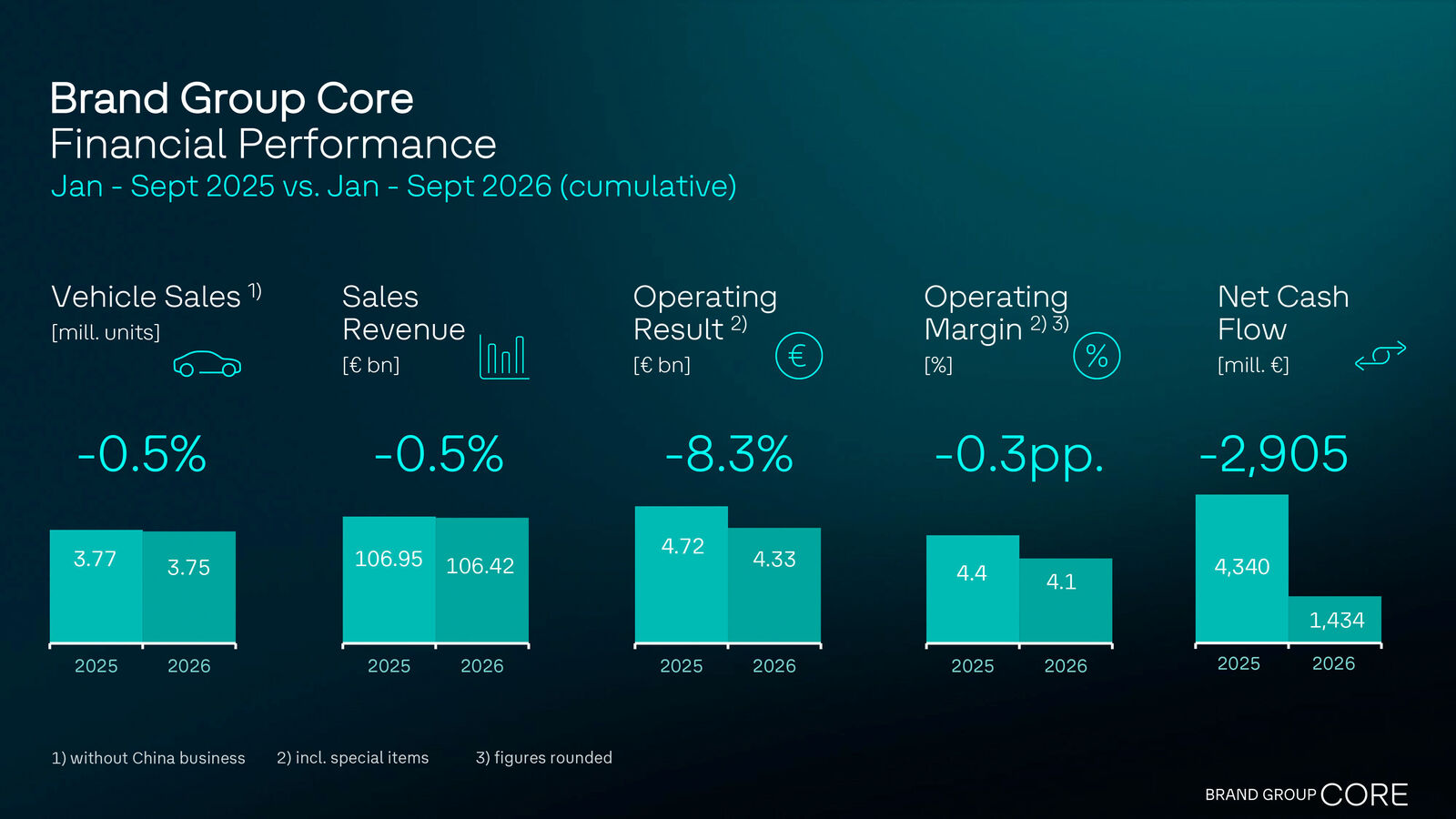


Volkswagen’s Brand Group Core earned 4.33 billion euros in the first nine months of 2026, down from 4.72 billion a year earlier, with the operating margin slipping to 4.1 percent. Those numbers tell one story. The decision buried inside the quarterly update tells a far more revealing one.
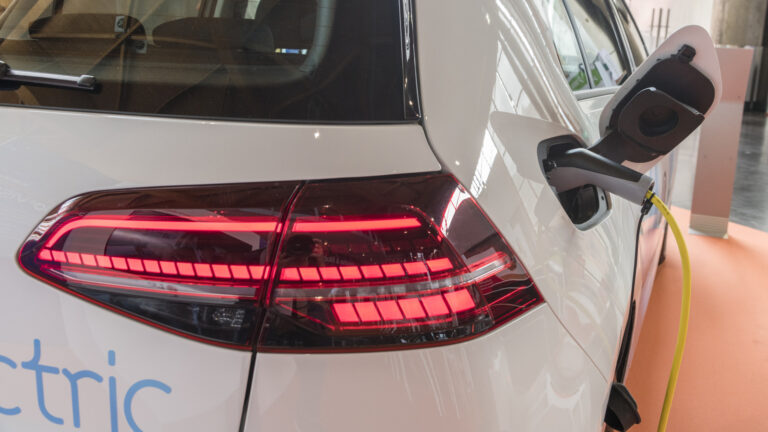
CFO David Powels confirmed that development work on the future ID.Golf has been temporarily paused. The reason: Volkswagen cannot “securely accommodate the necessary investments.” Freezing what would be the electric successor to the world’s most recognized nameplate is not a small footnote.
It is a signal that the financial squeeze from electrification is real, painful, and forcing hard choices at one of the industry’s largest players.
The core tension is not hard to spot. Demand for battery-electric vehicles in Germany surged on high fuel prices and government incentives. Volkswagen says that shift came directly at the expense of higher-margin combustion engine models.
More BEVs sold, less money made. Powels acknowledged as much: electric vehicles “do not yet achieve the margins of our combustion engine models.”
Special items made the picture worse. Restructuring costs, the planned sale of the Osnabrück plant, and the shutdown of ID.4 production in Chattanooga dragged the VW passenger car brand’s margin down to a dismal 1.3 percent. Strip those charges out and the margin climbs to 2.6 percent, which is still thin for one of the world’s largest automakers.
Škoda quietly carried the group. Its 8.3 percent operating margin was the standout, and its sales revenue growth nearly offset VW passenger cars’ decline. Volkswagen Commercial Vehicles more than doubled its operating result to 465 million euros.
SEAT and CUPRA scraped by at 0.1 percent.
Unit sales across the brand group held roughly flat at 3.75 million vehicles. Sales revenue barely moved at 106.4 billion euros. But net cash flow cratered from 4.34 billion euros to just 1.43 billion, a nearly 70 percent drop driven by working capital swings and lower gross cash flow.
The company is responding with the tools you’d expect: task forces optimizing the ICE-to-BEV vehicle mix, cuts to advance expenditure, and tighter working capital management. A new cross-brand steering model is designed to force decisions through a group-wide lens rather than brand-by-brand.
There is one bright spot in the product pipeline. The ID. Tiguan debuted recently, and the Electric Urban Car Family, which includes the ID. Polo, ID. Cross, Škoda Epiq, and CUPRA Raval, has already racked up 150,000 orders. Those models, built on a shared platform in Spain, are projected to deliver 600 million euros in synergies over their life cycle.
Whether that offsets the margin erosion from cannibalizing ICE sales remains to be seen.
Additional restructuring expenses are still coming. The “Zukunft Volkswagen” agreement from late 2024 includes expanded early retirement arrangements, and VW expects the costs to hit future quarters.
Volkswagen finds itself caught in the same trap as most legacy automakers, only at a larger scale. The electric transition it is legally and strategically committed to is actively undermining the profitability of the combustion business that funds it. Pausing the ID.Golf does not solve that equation.
It just buys time. How much time is the question nobody at Wolfsburg seems eager to answer.
Share this Story