


A YouTube mechanic is now three engines deep into Toyota’s V35A V6 failure mystery, and the latest teardown might be the most unsettling yet. Not because of what he found, but because of what he didn’t.
Eric, the wrench behind the “I Do Cars” channel, has spent a year cracking open dead examples of the twin-turbo V6 that powers the Tundra. His first two subjects told a clear story: catastrophic internal destruction, metal debris shredding through the oiling system, oil pump idler pulleys chewed to pieces. Classic carnage, easy to photograph, easy to diagnose after the fact.
This third engine is different. It came off a 2025 Tundra and was itself a warranty replacement for an already-failed unit. Let that sink in. This is a replacement engine that also failed.
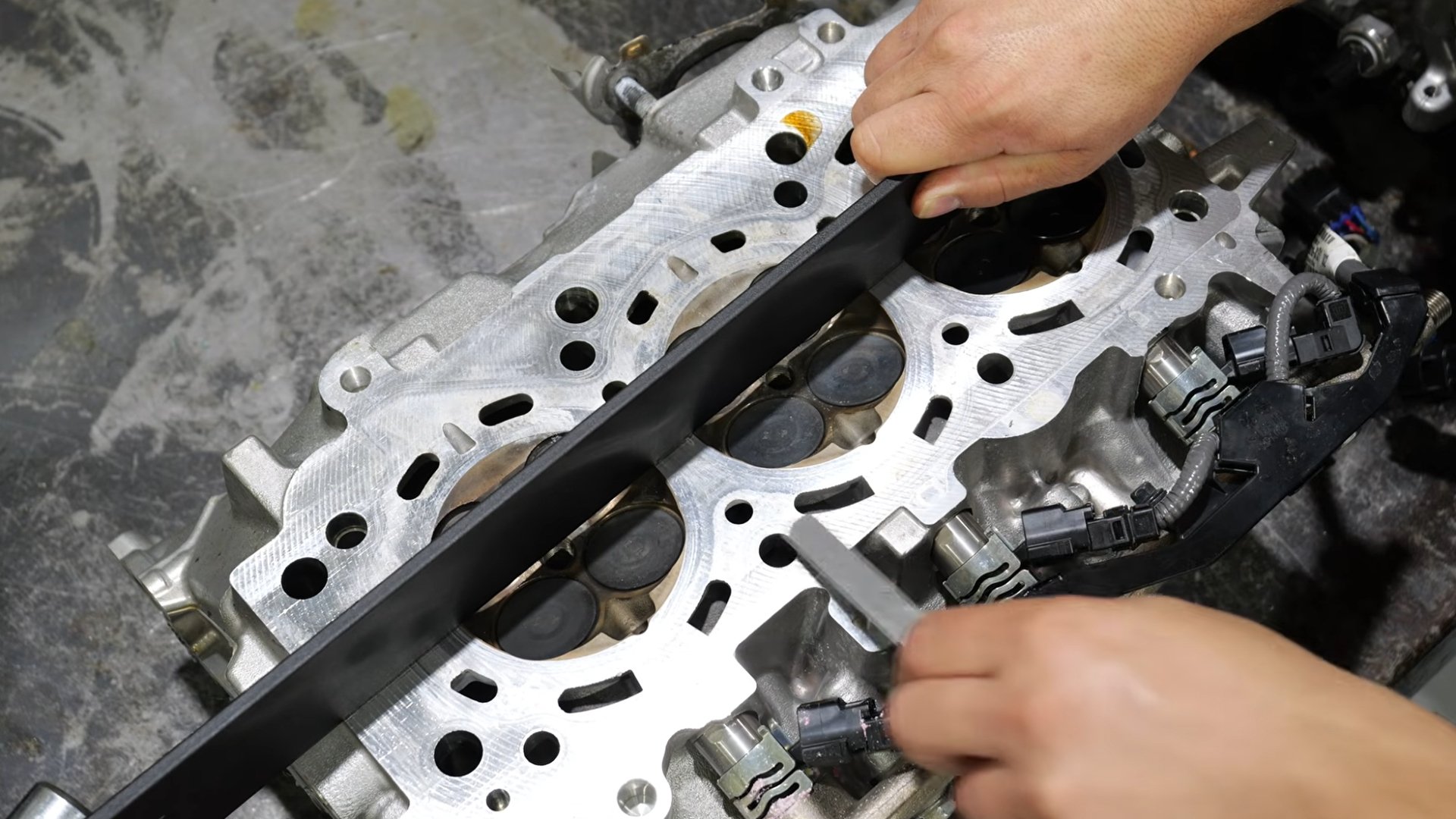
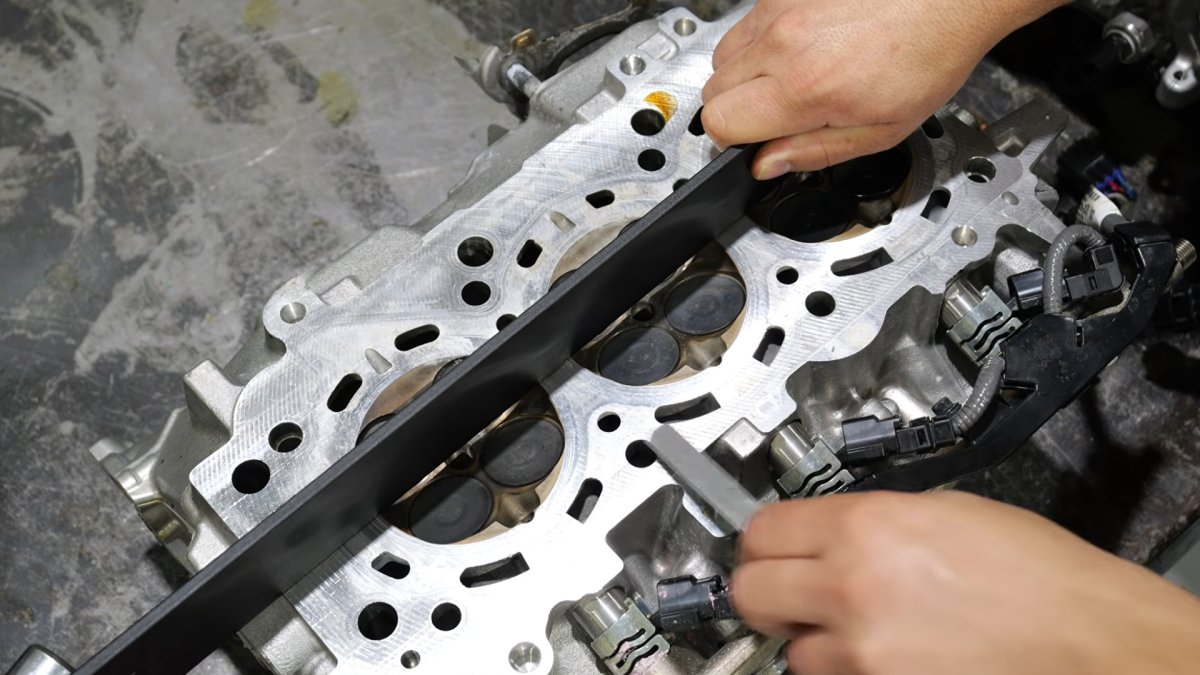
The water pump was caked with deposits. Coolant had intruded past the head gaskets. A straightedge across the deck surface confirmed a warped cylinder head. One of the inner head bolts fought back hard enough to snap a socket. Something cooked this engine from the inside.
But the block internals told a quieter story. The crankshaft was relatively clean. Some crank bearings showed uneven wear, and a thrust bearing displayed abnormal contact patterns, but nothing had grenaded. No metal confetti in the oil pan. For a dead engine, it looked almost healthy.
That’s the problem. Eric believes this V6 may still contain whatever root defect is killing these motors, frozen in time before it could finish the job. It’s like catching a disease between infection and full-blown symptoms. The evidence is there, but diagnosis remains elusive.
A borescope inspection of the oil passages backed up the ambiguity. Unlike the previous teardown, where machining burrs and metal debris littered the internal channels, this engine’s passages were comparatively clean. That might suggest Toyota has cleaned up its manufacturing process. It might also mean nothing.
Here’s why the timeline matters. This cleaner 2025 engine failed. The previous engine Eric tore apart came from a 2026 model year truck, and it was riddled with machining debris in the oiling system. If Toyota fixed its production quality issues, the fix didn’t stick.
Toyota recalled certain Tundra and Lexus models over the V35A’s problems, but the recall hasn’t delivered clarity. Replacement engines are failing. Newer production engines still show contamination. A year into one man’s systematic autopsy of these motors, there is still no single confirmed root cause.
Eric says two more locked-up V35A engines are headed to his shop. He’s also looking to bring in a specialist with deep expertise on Toyota’s V6 architecture. The hope is that a larger sample size will eventually corner whatever flaw keeps slipping through the cracks.
Toyota has built its entire brand identity on bulletproof reliability. The 22RE, the 2JZ, the 1GR-FE that runs forever in 4Runners and Tacomas. The V35A is shaping up to be the engine that tests whether that reputation can survive a genuine engineering mystery, one that even the people cutting these things apart on camera cannot yet explain.
Two more engines on the way in. No answers yet.


Share this Story