
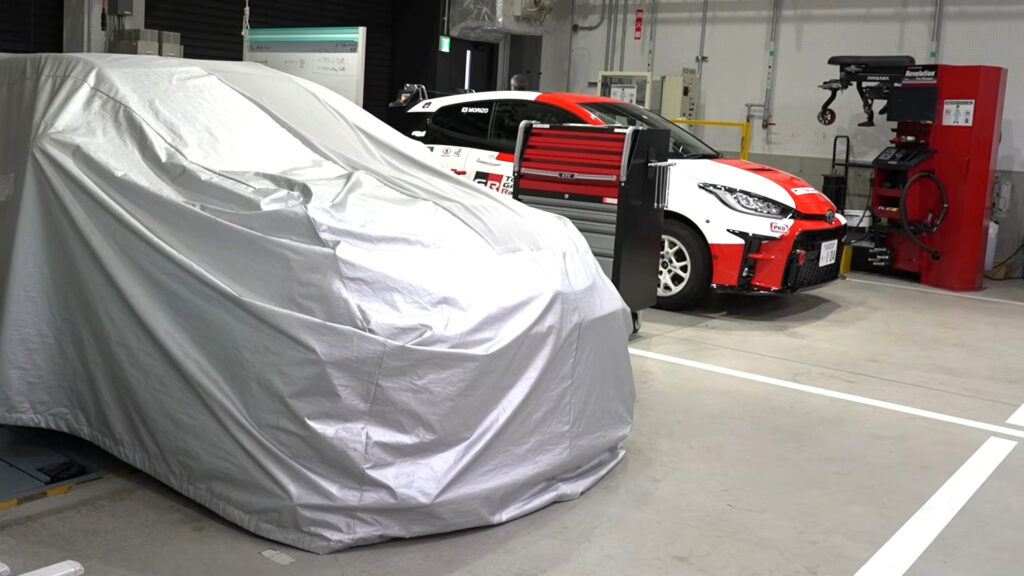


Three years, six prototype generations, 500 engineers, and a 90-minute documentary Toyota didn’t have to release. The next MR2 isn’t hiding anymore. It’s been racing at Fuji Speedway in a mid-engined GR Yaris body shell Toyota calls “Concept M,” and the program is now entering its final stretch.
Most automakers develop future sports cars behind locked doors and NDAs thick enough to stop a bullet. Toyota’s Gazoo Racing division has done the opposite, publishing a running diary of every stumble and breakthrough along the way. The latest chapter: the sixth-generation mule just survived a 24-hour endurance race in the Super Taikyu Series, the kind of brutal reliability test that either validates your engineering or exposes it in the most public way possible.
The mechanical layout tells you where this is headed. The Concept M inverts the GR Yaris and GR Corolla drivetrain, placing the engine behind the cabin while retaining all-wheel drive through front and rear Torsen limited-slip differentials. A prop shaft runs forward from the rear-mounted transmission to drive the front axle.
Engineers say the system can send 100 percent of torque rearward or split up to half to the front wheels. A 70/30 front-biased split was tried and quickly abandoned — it understeered badly, according to comments made to Car and Driver.
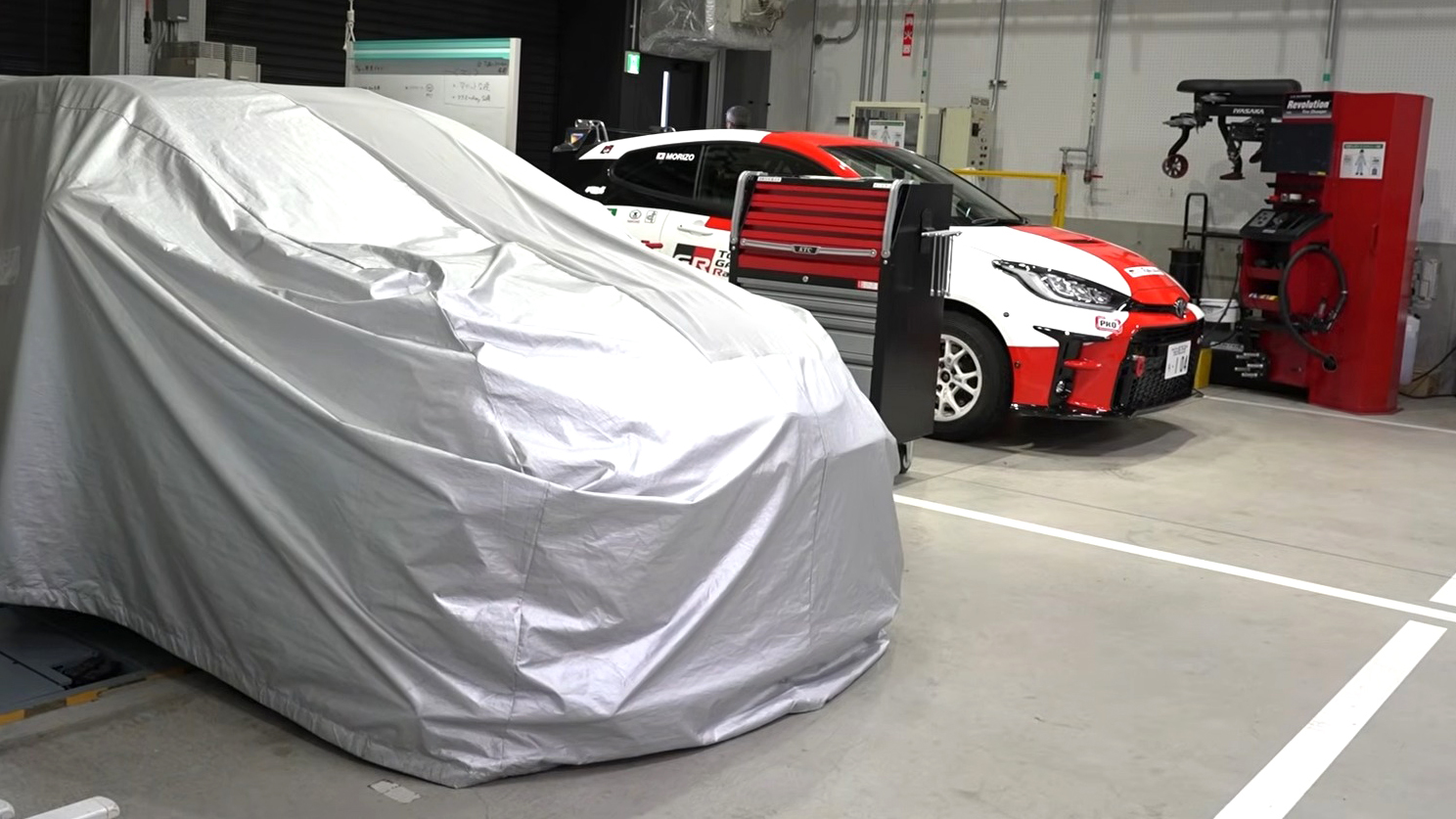
The heart of the project is Toyota’s new G20E, a 2.0-liter turbocharged, direct-injection four-cylinder built to replace the characterful but aging 1.6-liter turbo three-cylinder currently in the GR Yaris and GR Corolla. Toyota is targeting more than 100 horsepower per cylinder, which means north of 400 horses from a compact four-pot. The company says the G20E will be both more powerful and physically smaller than its existing 2.4-liter turbo four — a deliberate packaging decision, because a mid-engine sports car lives or dies by how tightly its mass can be concentrated.
Cooling that engine in a mid-ship configuration has been the single biggest headache. Packaging radiators and ducting airflow to a motor buried behind the cockpit is an old problem that has humbled bigger companies than Toyota. Gazoo Racing appears to have solved it across successive prototype iterations, though the team isn’t declaring victory yet.
GR chief engineer Naohiko Saito told Car and Driver that at least 14 more iterations of the AWD test bed are planned beyond the current ones. This is not a team in a hurry to cut corners.
The destination for all this work is widely understood to be the revived MR2 and a new Celica, two nameplates that have been teased and speculated about for the better part of a decade. The mid-engine architecture being proven in the Concept M mule is expected to underpin both cars. That gives Toyota a two-model return on a development program that has consumed enormous resources.
What separates this from the usual concept-car theater is the racing. You don’t enter a 24-hour endurance event with a prototype unless you believe the hardware is close to production-ready. Endurance racing doesn’t forgive optimism — it punishes it with blown head gaskets at 3 a.m.
Toyota’s transparency here is calculated. By showing the cooling failures, the understeer experiments, and the iterative grind, they’re building anticipation the way a trailer builds an audience. But the engineering underneath is real, and it’s being validated in the most unforgiving laboratory available. The MR2 isn’t coming back as a concept sketch or a design study — it’s coming back as a car that already has race miles on it.
Share this Story