
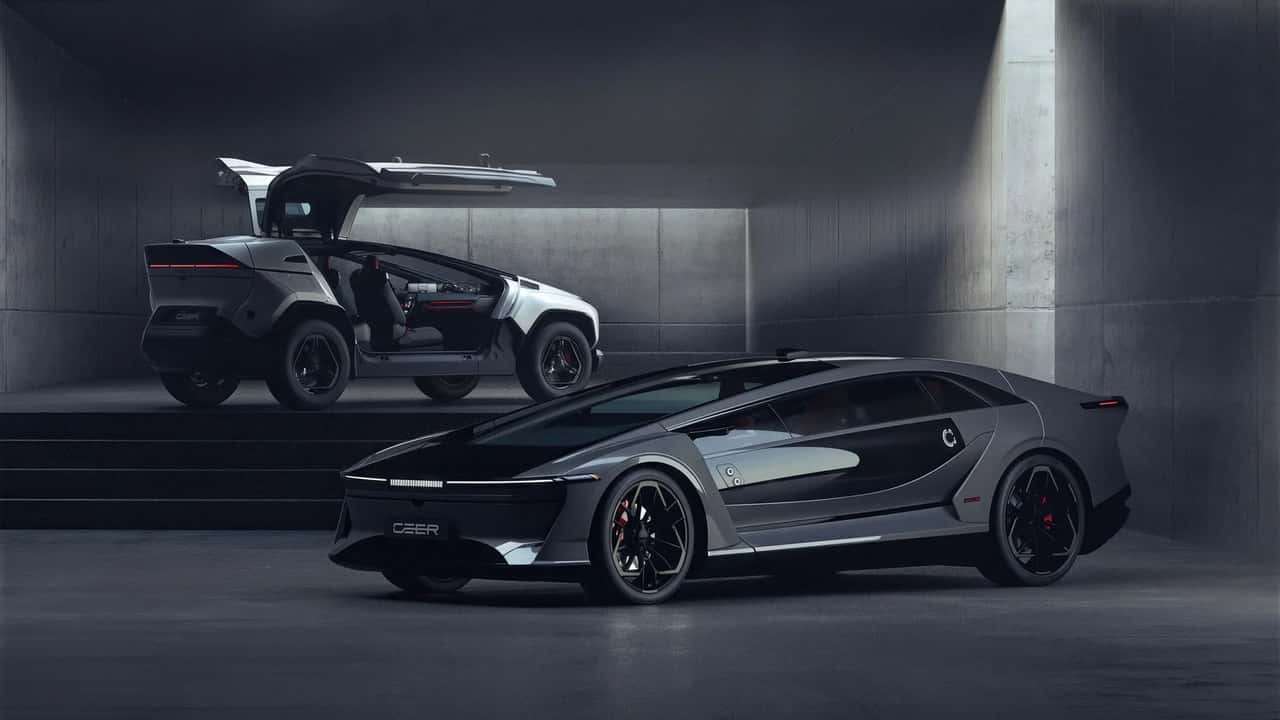


Ceer just pulled the sheet off a sedan and SUV that look like they were designed by someone who played too much Gran Turismo and had access to sovereign wealth. The Exobot, Saudi Arabia’s first domestically produced car, comes in two body styles, packs a tri-motor powertrain with up to 1,111 horsepower, and opens its nearly three-meter-long doors like a falcon taking flight. This is not a concept. These are production vehicles.
The company behind them was formed in 2022 as a joint venture between Saudi Arabia’s Public Investment Fund and Foxconn, the Taiwanese electronics giant best known for assembling iPhones. Since then, Ceer has quietly assembled partnerships with BMW, Hyundai Transys, and Rimac to source key components. The front motors come from Hyundai’s affiliate, the rear motor is a Rimac unit, and the platform is Ceer’s own modular electric architecture.
Both vehicles share a 112-kWh battery and 800-volt charging that gets from 10 to 80 percent in under 30 minutes. The sedan stretches 5.26 meters long while the SUV is slightly shorter at 5.02 meters. Both are 2.1 meters wide, which means they’ll fill every inch of a standard parking space and then some.
The launch spec delivers 850 horsepower and hits 62 mph in 2.6 seconds for the sedan, 2.9 for the SUV. Ceer is already teasing a higher trim pushing 1,111 hp and 1,500 Nm of torque, enough to shove the sedan to 62 mph in 2.1 seconds flat. Top speed is electronically limited to 155 mph for the sedan and 130 for the SUV, numbers that would have sounded absurd from an established automaker five years ago.
Range is quoted at 670 kilometers for the sedan and 560 for the SUV, but those figures use the NEDC cycle, which is notoriously generous. Expect real-world numbers to land well below those claims.
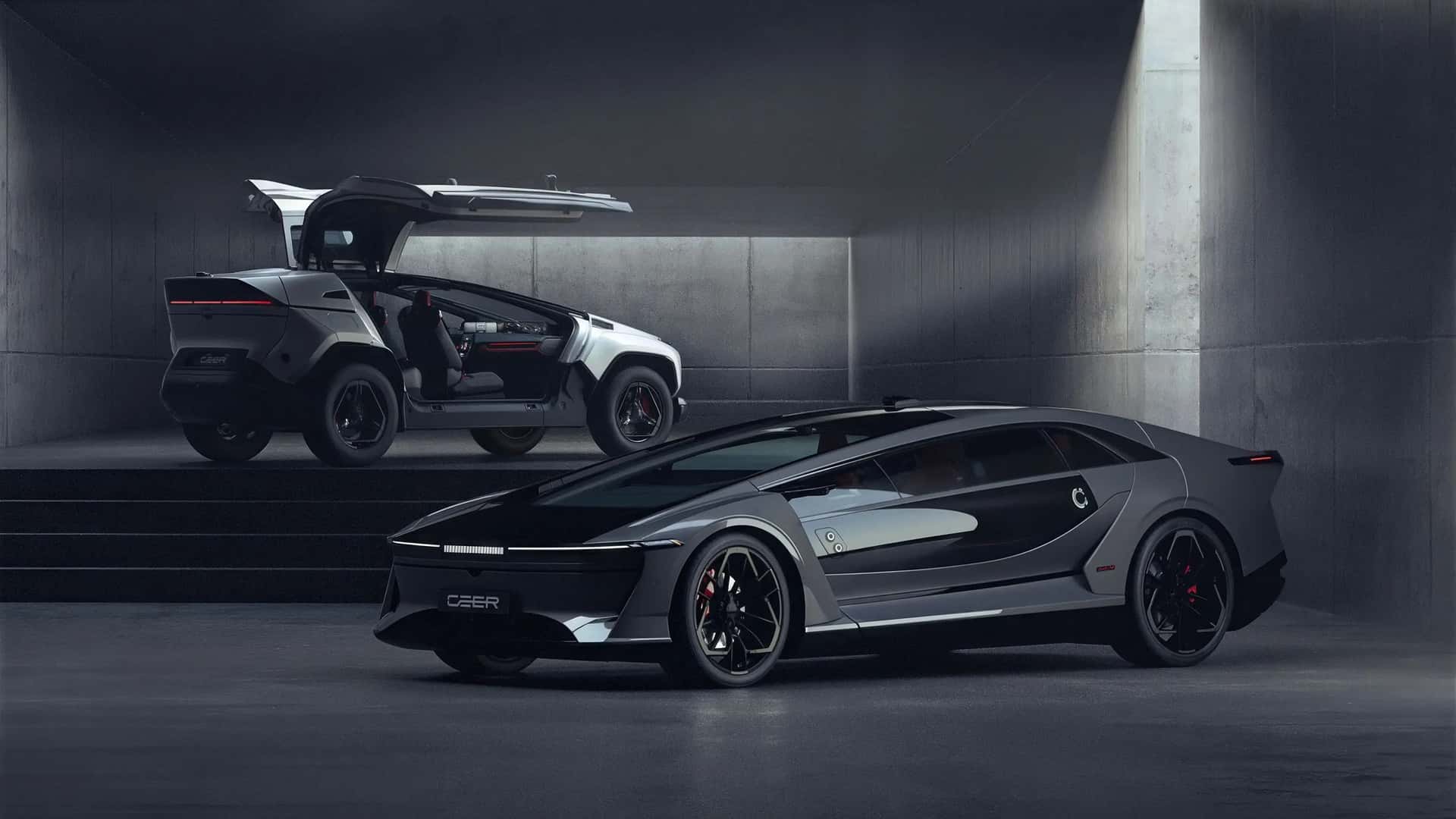
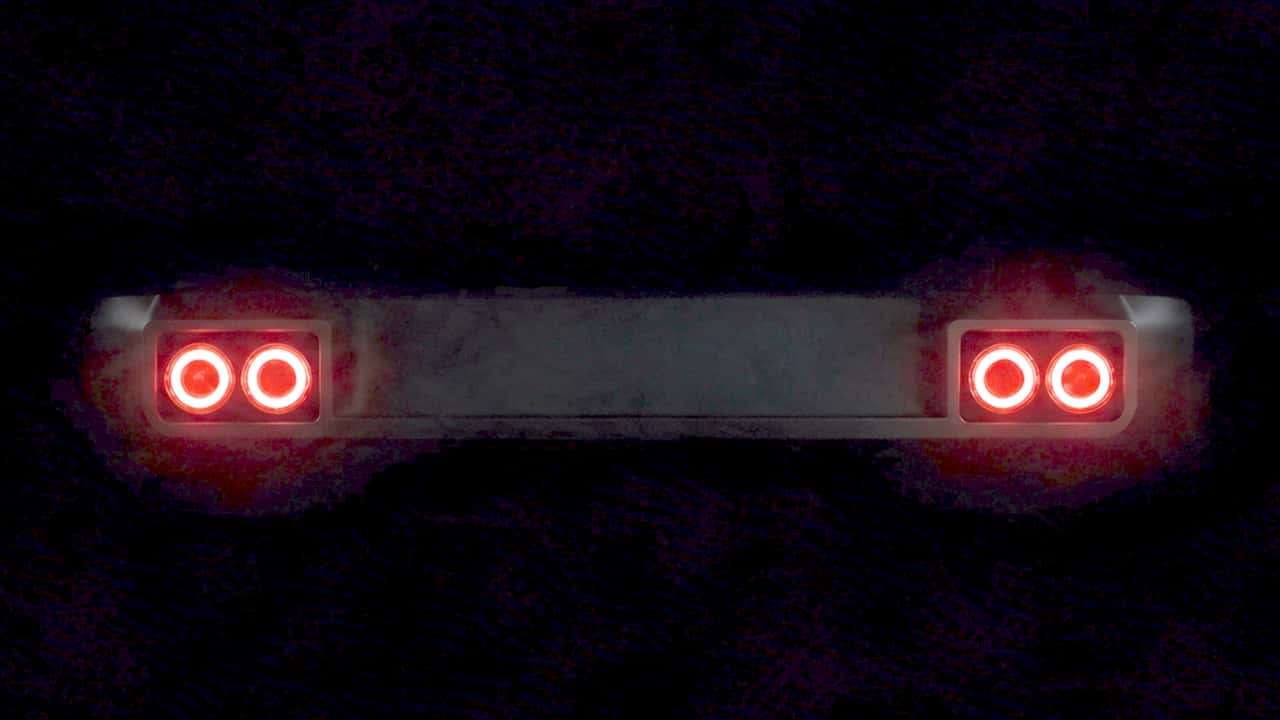
The design is polarizing by intent. Ceer says the sharp bodywork draws from the ancient Nabataean architecture of Hegra, and the 32-element lighting signature references 1932, the year Saudi Arabia was unified. The Shahin Wing Doors, named after the falcon native to the region, open upward in a 60-centimeter arc and give access to both front and rear passengers, a dig at Tesla’s Falcon Wing doors, which mostly serve the second row.
Inside, there’s a steering yoke, steer-by-wire, and lower door glass that can switch between transparent and opaque on demand. It reads like a spec sheet written to grab headlines, which is precisely the point.
The first units will be sold as a limited First Edition with 850 hp, red-and-black Nappa leather, and a numbered VIN plaque. All production is planned for the Ceer Manufacturing Complex in King Abdullah Economic City, described as the largest automotive production facility in the Middle East.
Ceer says seven models are planned through 2030, including smaller and midsize vehicles. Not all will be electric. The company has left the door open for combustion engines depending on market demand, a pragmatic hedge from a brand making its debut with a pair of electric hypercars.
The real question is whether Ceer can move beyond spectacle. Startups with wild prototypes and big promises are a dime a dozen, and most never deliver a single customer car. Ceer has deeper pockets than almost any of them, backed by a sovereign wealth fund worth north of $900 billion, but money alone has never been enough to build a car company. Faraday Future proved that, and Lordstown proved that.
Saudi Arabia is betting Ceer will be different. Production timelines and pricing have not been announced.
Share this Story