
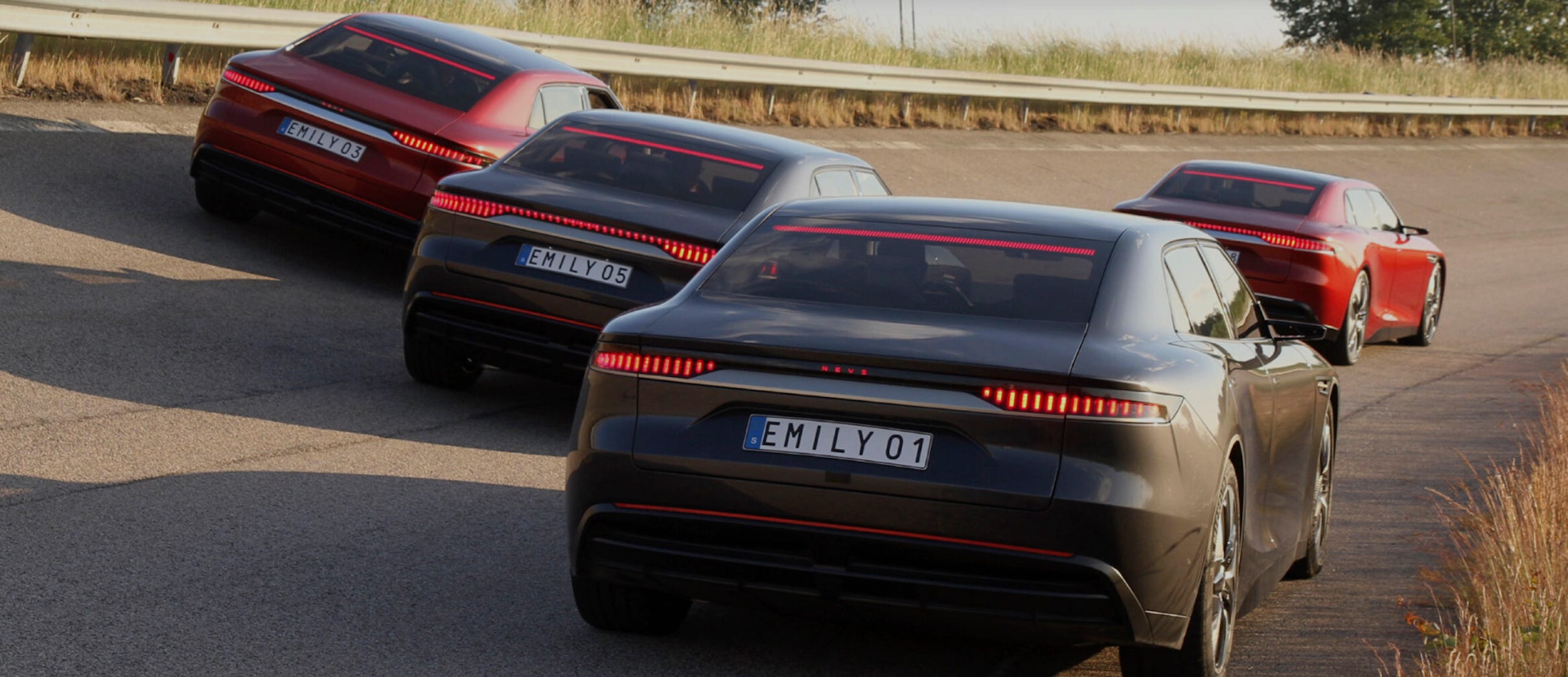


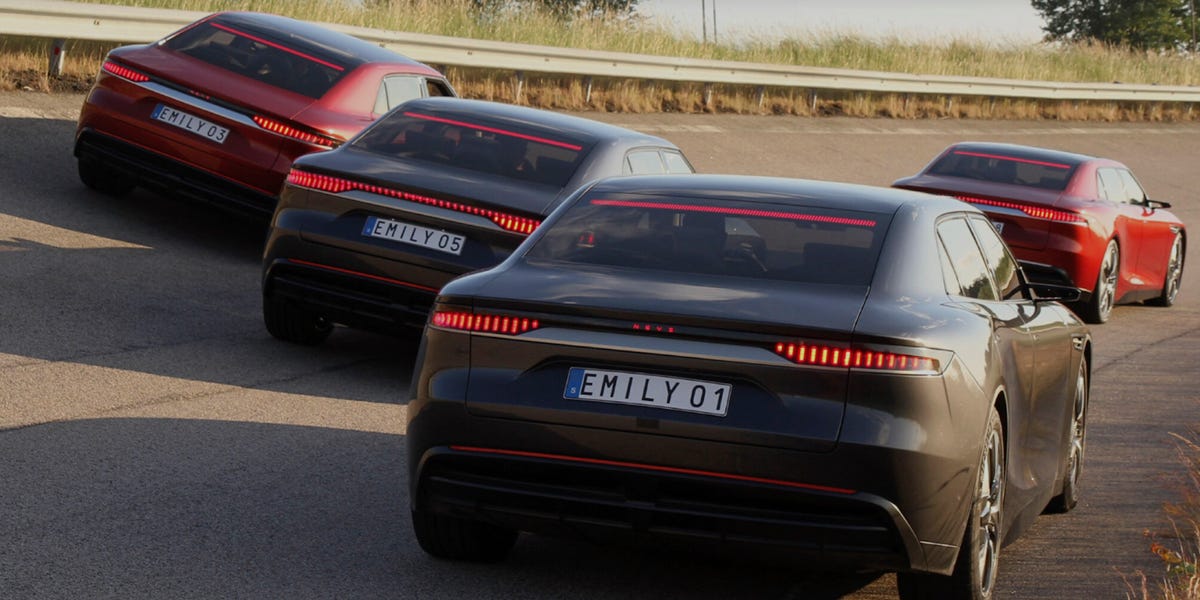
Four Emily GT prototypes, one development mule, a stack of spare bodies and the engineering drawings that tie them together. That is what remains of the plan to turn Saab into an electric car company, and it is now up for auction in Sweden.
Bidding closes December 9. The seller is Klaravik, an auction house that usually deals in heavy equipment.
This is the second time this year Klaravik has picked through the leftovers in Trollhättan. Earlier, it sold some of the last brand-new Saabs ever built, pulled from a shuttered facility in the brand’s hometown.
Half the prototypes in that earlier batch weren’t really Saabs at all. They were development vehicles for National Electric Vehicle Sweden, better known as NEVS.
NEVS was formed to take the bones of a freshly defunct Saab and rebuild it as an EV maker. The ambition was written right into the hardware: the company called its battery platform Phoenix.
The bird never got off the ground. NEVS couldn’t make the business work, and the project was eventually wound down.
Before the lights went out, though, it built cars. The Emily GT was the most serious of them.
On paper, the Emily GT was no science project. Car and Driver describes it as something like a one-size-smaller Lucid Air, a low, clean sedan with the proportions buyers in that segment expect.
The interesting part sits at the corners. The prototypes use in-wheel electric motors from the same supplier now working with Renault on the 5 Turbo 3E.
That detail cuts both ways. The technology NEVS bet on is good enough for a major manufacturer to put its name on, but NEVS didn’t survive long enough to cash in.
The targets were aggressive: roughly 490 horsepower and a range goal of around 600 miles.
That range figure was always a stretch, and nobody has proven the Emily GT could hit it. But the parts, the notes and the work behind those numbers are all in the lot.
So is something stranger. The auction also lists the Pons Sango, an autonomous six-seat van NEVS was developing on the side.
The Sango looks more like a museum piece than a business plan. Still, it shows how wide NEVS cast its net while its core product was stuck in prototype form.
The Emily GT lot is the opposite of a museum piece. Tools, parts, drawings and extra bodies come bundled with the cars.
It’s essentially a starter kit for an EV company, minus the money. And money is what has killed everyone who tried.
Saab’s engineering and design depth was real. NEVS had access to it, plus a platform, a sedan that looked the part and a drivetrain that has since found a home elsewhere.
It still wasn’t enough. Building cars profitably is a brutal, capital-hungry business, and good ideas burn cash faster than they make it.
For a buyer, the math is unforgiving. Winning the auction is the cheap part; turning four prototypes and a mule into a production line is where the real check gets written.
Somebody will take the lot home on December 9. Maybe it’s a collector who wants a footnote of Saab history in the garage.
Maybe it’s a startup that sees a shortcut past years of development work. Trollhättan has been waiting a long time for that second kind of buyer.

Share this Story