
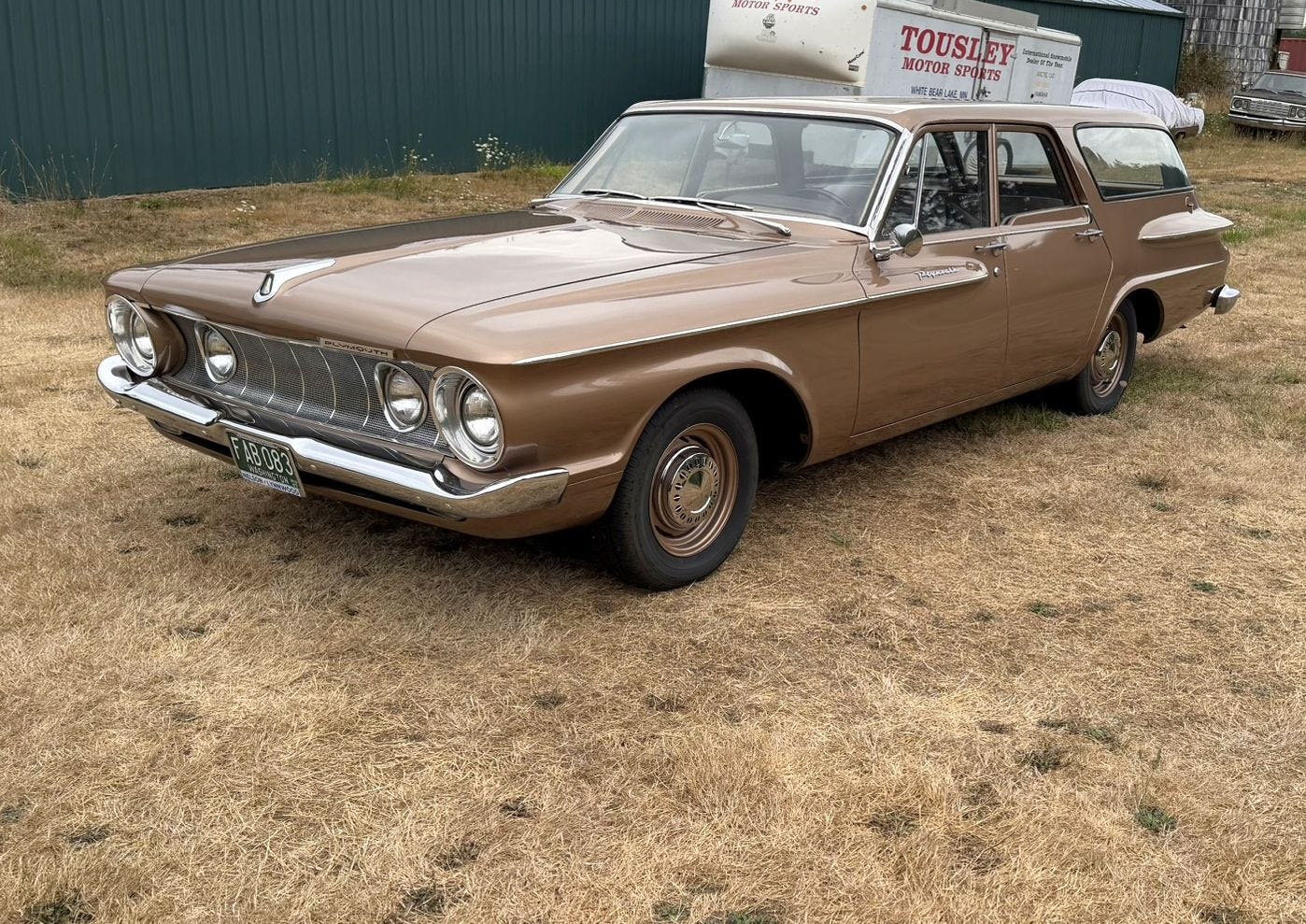


A brown 1962 Plymouth Savoy wagon with a Slant-Six and a column-shifted three-speed manual is up for grabs on Bring a Trailer. Bidding closes December 2.
No Hemi. No Max Wedge. No convertible top, just the kind of car that once filled grocery store lots across America and then quietly vanished from them.
That disappearance is the whole story.
Collectors have spent decades rescuing the cars that won drag races and magazine covers. The cars that carried families to church and kids to school went to the crusher, because nobody thinks the ordinary is worth keeping until it’s gone.
Hollywood feels this every time it shoots a period piece. Picture car coordinators, the people who source vehicles for film and television, keep hitting the same wall: the surviving fleet skews toward expensive, flashy metal.
Real 1962 traffic didn’t look like a Barrett-Jackson catalog. It looked a lot more like this.
The Savoy name came from London’s Savoy Hotel, a favorite haunt of Winston Churchill. Plymouth’s version, launched in 1951, kept none of the glamour.
By 1962 the Savoy was the bottom rung of the lineup, below the Belvedere and the Fury. Buyers who wanted more could tick boxes for air conditioning and big V-8s, all the way up to the rare 413-cubic-inch Max Wedge rated at more than 400 horsepower.
This car’s original owner ticked none of them.
The full-size Plymouth also shrank for 1962, even if the styling stayed odd enough to start arguments. A base Savoy wagon that year was a frugal choice stacked on top of another frugal choice.
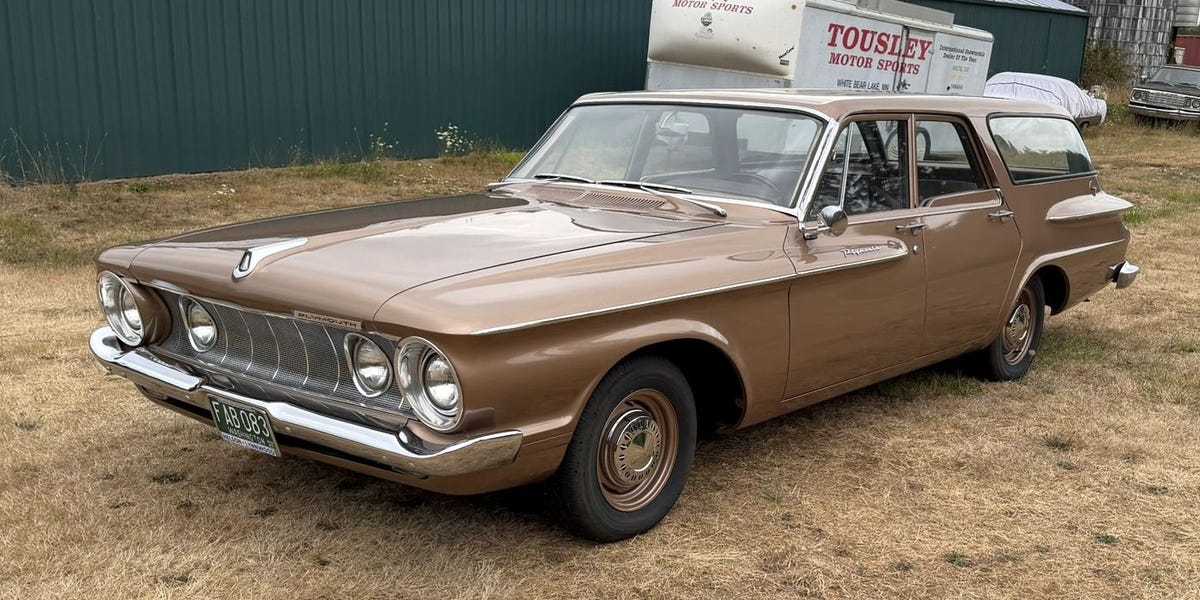
Under the hood sits the 225-cubic-inch Slant-Six, good for roughly 145 horsepower. Chrysler sold far more of these engines than it ever sold Hemis, and they earned a reputation for refusing to die.
The gearbox is three-on-the-tree, the column-mounted manual that was standard fare in cheap American cars. Plenty of drivers today have never touched one, and it demands more from whoever’s behind the wheel than any V-8 and automatic of the period.
Here’s where the wagon breaks pattern. In 2018 it got a full restoration, the kind of money and attention normally reserved for Superbirds and Shelbys.
Total mileage is unknown. The car has reportedly covered only a few thousand miles since the work was done, and it still looks excellent.
Spending restoration money on a base-model six-cylinder wagon makes no sense by the usual math of the hobby. You restore what appreciates, and plain family haulers rarely do.
But survivors like this are scarce precisely because that math ruled for so long. Rarity built on neglect doesn’t carry the blue-chip status of a Hemi car, yet it’s rarity all the same.
One disclosure buyers should know: Bring a Trailer and Car and Driver, which spotlighted the listing, are both owned by Hearst Autos.
The real question is what the market will pay for honesty. Muscle cars tell the story collectors want to remember. This wagon tells the one most people actually lived, in brown paint, with a column shifter and no apologies.
The gavel falls December 2.

Share this Story