


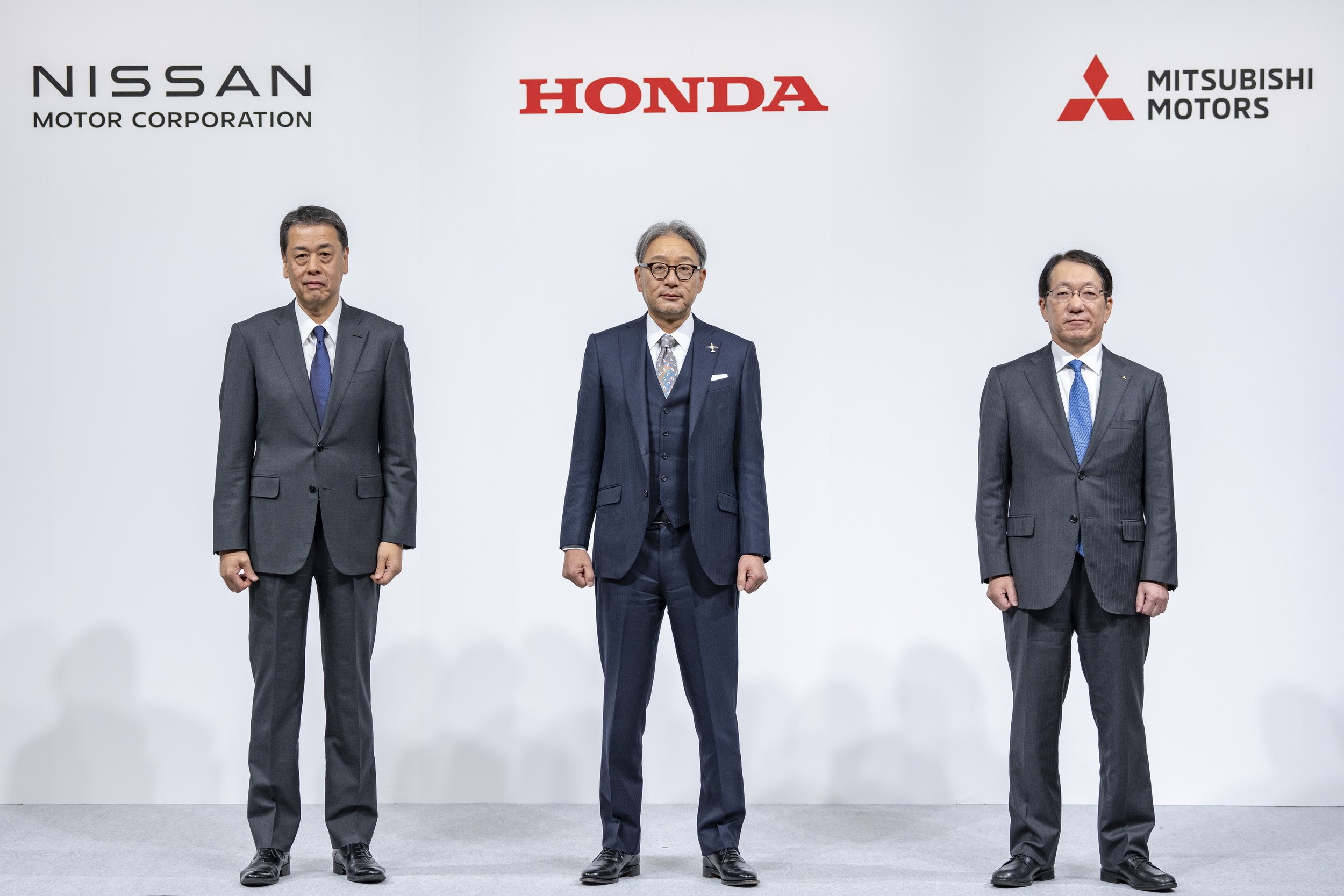
Renault, holding nearly 36% of Nissan, has yet to confirm its role in the proposed merger between Honda, Nissan, and Mitsubishi. This potential merger could create the world’s third-largest automotive conglomerate. However, Renault remains cautious and has hinted at exploring “all options,” leaving industry observers curious about its next steps.
The Stake Breakdown
Renault owns a direct 17% stake in Nissan, alongside an additional 18.7% through a French trust. Despite being Nissan’s largest shareholder, Renault’s potential involvement in the Honda-Nissan merger talks remains ambiguous. This raises questions about the French automaker’s strategic priorities and its influence on the alliance’s future.
 Renault building showcasing corporate logoRenault’s position as Nissan’s biggest stakeholder places it at a pivotal decision-making juncture.
Renault’s Official Response
Renault has released a measured response to the proposed merger, emphasizing its focus on shareholder interests.
“Renault Group acknowledges today’s announcements from Nissan and Honda, which are still at an early stage,” the company said in an official statement. “As Nissan’s main shareholder, Renault Group will evaluate all options, prioritizing the best interests of the Group and our stakeholders. While we continue to implement our strategy, we remain focused on rolling out ongoing value-creation projects within the Alliance.”
This response neither confirms nor denies Renault’s future involvement in the merger. Observers speculate on whether Renault is biding its time to assess potential benefits or distancing itself from the three-way tie-up.
Carlos Ghosn Weighs In
Carlos Ghosn, the former chief of both Renault and Nissan, has publicly commented on the matter, providing sharp insights. Speaking to a media publication, Ghosn suggested that Renault could sell its stakes in Nissan to Honda to capitalize on their value.
“If Renault sees an opportunity to maximize the value of its share in Nissan, I have no doubt they’ll consider selling to Honda,” Ghosn remarked.
The timing of such a sale, he hinted, could be influenced by Nissan’s underperformance in the stock market this year, as well as broader strategies to benefit from the merger.
Role of Japan’s METI
Ghosn also shed light on the potential influence of Japan’s Ministry of Economy, Trade, and Industry (METI). He believes METI may have been instrumental in encouraging Honda to join forces with Nissan and Mitsubishi.
“I’ve spent years in Japan and fully understand METI’s influence,” said Ghosn. “This merger doesn’t seem to have strong industrial logic. However, METI likely prioritized control over performance, pushing Honda into the deal.”
Such statements imply that the proposed merger might have more political motivations than business-oriented ones, calling into question its long-term feasibility.
Implications for the Renault-Nissan-Mitsubishi Alliance
The current Renault-Nissan-Mitsubishi Alliance, which has co-developed several successful models and platforms, may face a significant restructuring if Renault chooses to exit or adjust its stake. Any such move could redefine the dynamics of the global automotive industry as major players seek dominance in EVs, AI technology, and globalization.
Visual Insights
Below is a summary of Renault’s stake and the companies involved in this pivotal merger discussion:
| Key Detail | Information |
|---|---|
| Renault’s Stake in Nissan | 17% (direct), 18.7% (via French trust) |
| Nissan’s Role in the Alliance | Largest carmaker in Renault-Nissan-Mitsubishi |
| Merger Proposal Timeline | Expected by 2026 |
| Stake Sale Possibilities | Renault potentially selling to Honda |
Such numbers highlight the strategic weight Renault holds, leaving it with influential opportunities and significant decisions to make shortly.
Industry-Wide Impact
If this merger becomes a reality, Honda, Nissan, and Mitsubishi could form a major automotive force, especially in electrification and autonomous driving technology. However, unresolved uncertainties surround Renault’s participation, Nissan’s performance recovery, and potential regulatory hurdles in key markets like Japan, Europe, and North America.
Renault’s cautious approach at this stage ensures that its shareholders remain at the core of future decisions while the industry watches intently.
Share this Story