
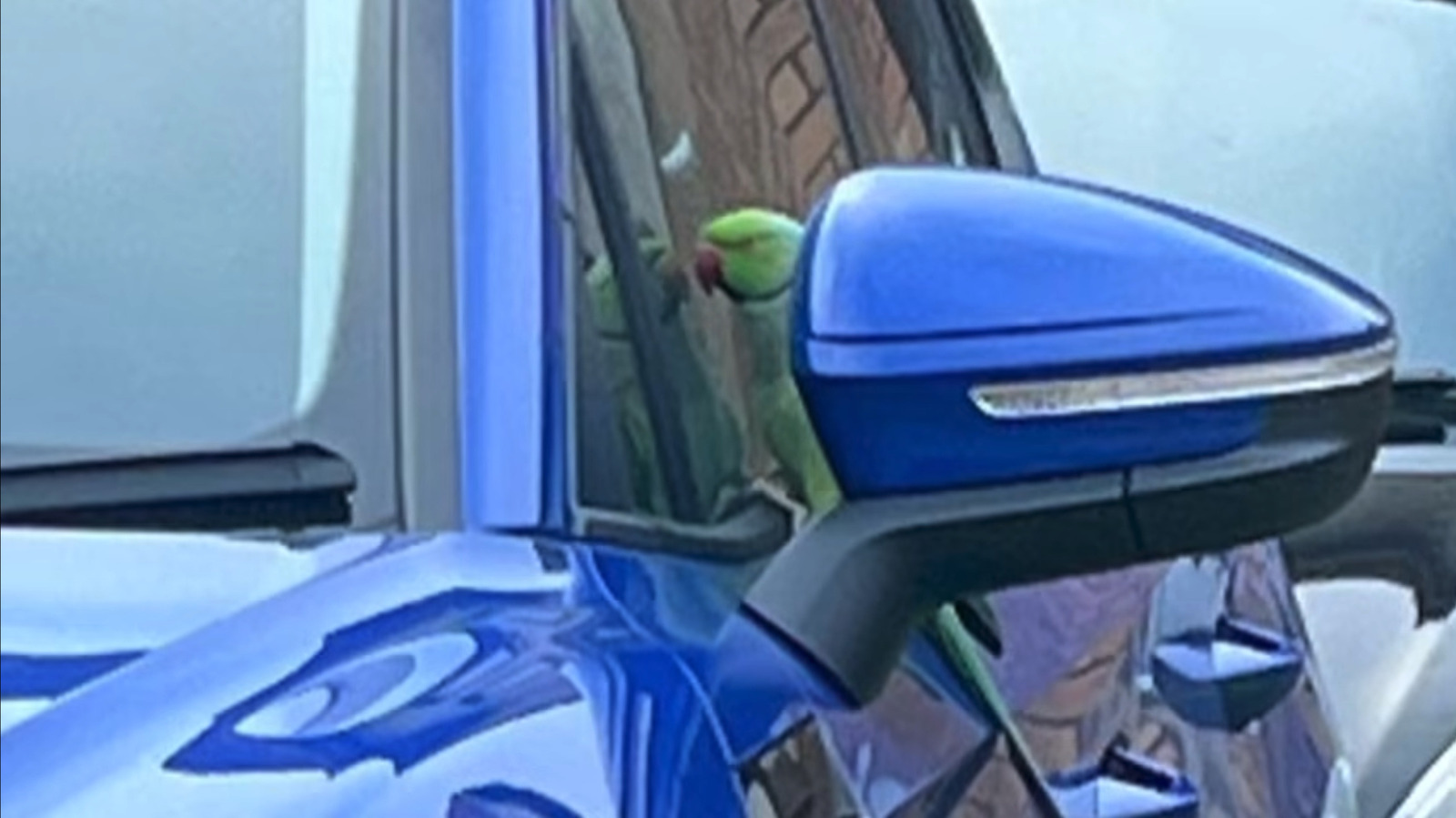


A single rose-ringed parakeet has been systematically destroying vehicles across a quiet suburb of Inverness, Scotland, and nobody can legally stop it.
Residents of Lochardil told the BBC the bright green bird has been pecking apart window seals and shredding the rubber strips on windshield wipers, racking up thousands of pounds in estimated damage. The parakeet works in stints, attacking for days, vanishing for a couple of weeks, then returning to resume its campaign.
The neighborhood has developed its own early warning system. When someone spots the bird, they shout an alert to the block. The word “parakeet” itself has become something of a curse in the area.
Nature experts identified the culprit as a rose-ringed parakeet, a species not native to Scotland. According to the Audubon Society, these small parrot-like birds are common enough in London and southeastern England, where a feral population has taken hold after years of pet escapes. But they don’t typically range into the Scottish Highlands.
The Royal Society for the Protection of Birds confirmed the species is the UK’s only “naturalized parrot.” This particular bird is almost certainly an escaped pet.
Here’s the catch that makes the whole situation stick: because it’s classified as a wild bird, no organization will touch it. Desperate residents have called for help from multiple agencies. Every one of them has said, essentially, not our problem.
NatureScot, Scotland’s nature agency, offered a few theories about the rubber fixation but no solutions. The parakeet might be reacting to its own reflection in car windows, triggering a territorial response. It might crave the fats and minerals embedded in modern rubber compounds. Or it might simply be bored, a lone tropical bird with nothing to do in the Scottish suburbs.
The rubber-craving theory carries some weight. Automakers have increasingly shifted to bio-based materials in recent years, incorporating soy-derived compounds into wiring insulation, seals, and other components. That shift has already created well-documented problems with rodents chewing through wiring harnesses in vehicles from Toyota to Tesla. A parrot gnawing on window seals isn’t much of a leap.
Mice in the engine bay are one thing. A bold, visible, lime-green bird methodically working over your windshield wipers in broad daylight is another kind of problem entirely.
With no institutional cavalry coming, Lochardil residents have resorted to DIY countermeasures. Some cover their cars with tarps. Others have placed rubber snakes on their dashboards, hoping the decoys will spook the bird.
One apparently effective tactic involves brushing peppermint oil directly onto the rubber trim. The parakeet, it turns out, does not care for peppermint.
That a single escaped pet bird can cause thousands of pounds in damage across an entire neighborhood, and that the collective response of Scotland’s wildlife agencies amounts to a shrug, says something about the gap between how we classify animals and how they actually behave. This bird doesn’t know it’s “wild.” It knows rubber tastes good.
For now, the residents of Lochardil are on their own, armed with tarps, fake snakes, and essential oils, locked in an asymmetric battle with an eight-ounce parrot that keeps winning.





Share this Story