
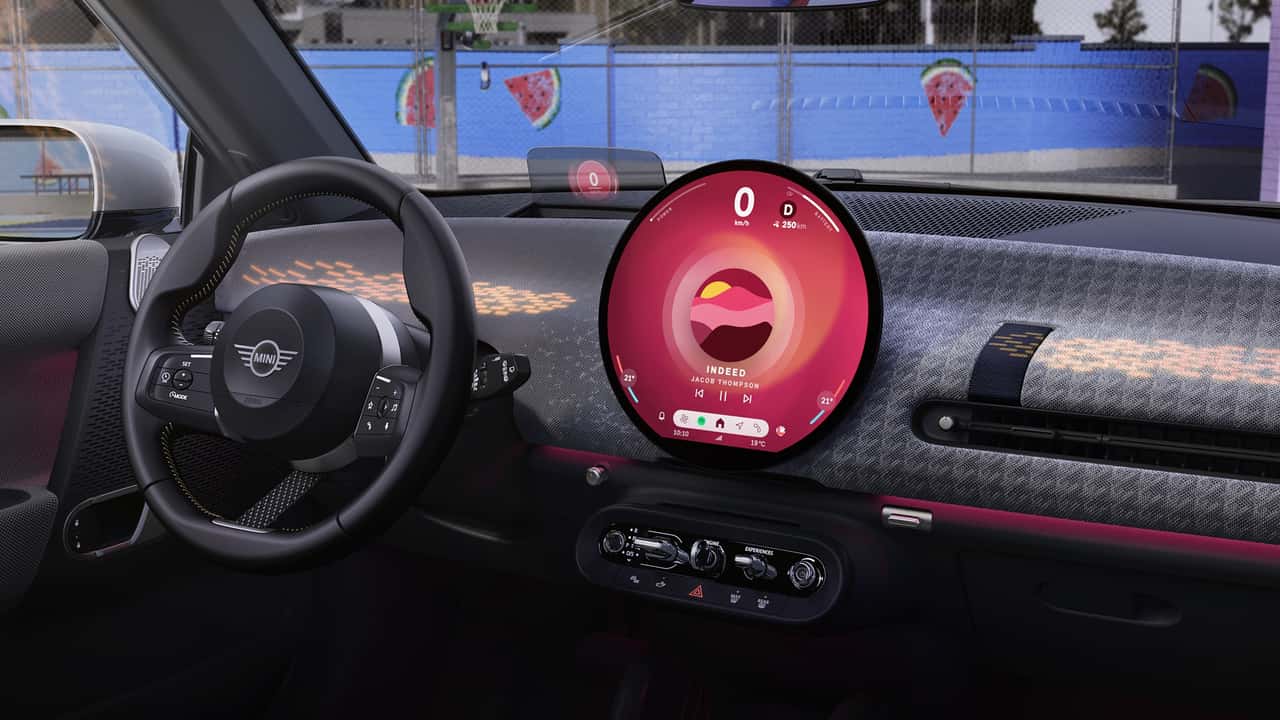


Apple CarPlay looks like a postage stamp trapped inside a porthole. Android Auto fares no better. And Mini knows it.
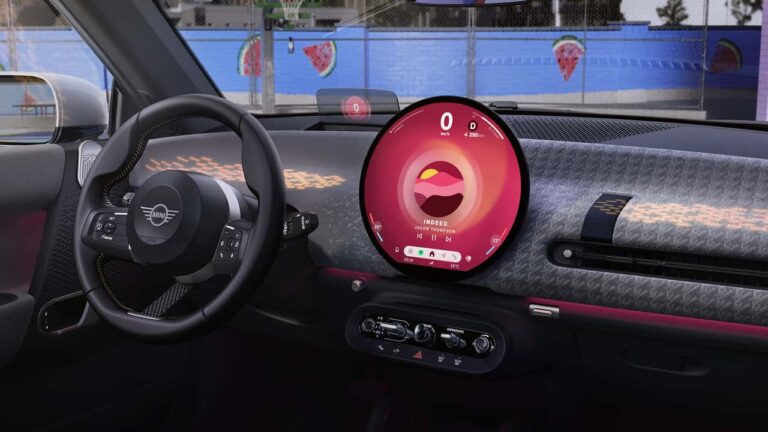
The brand’s 9.4-inch OLED circle, planted dead center in the dashboard, forces rectangular phone-mirroring systems into an awkward box floating inside a round frame. It is a deliberate trade. Mini has decided that brand identity trumps interface logic, and the company’s Australian general manager, Alexander Brockhoff, made no apologies in a recent interview with Drive.
“The round display is unique to Mini, and we want to keep that as part of the history,” Brockhoff said.
History is exactly the right word. The original 1959 Mini had a single round speedometer mounted in the center of the dash. Through six decades and multiple ownership changes, the circular gauge migrated behind the steering wheel, then back to the center. When Mini launched its new digital cockpit in mid-2023 with the Cooper Electric, the OLED screen simply digitized that same idea at scale.
The problem is that heritage and daily usability are pulling in opposite directions. Strip away the physical HVAC controls and you get a cabin that forces drivers into touchscreen menus for basic climate adjustments. The lone concession is a volume knob.
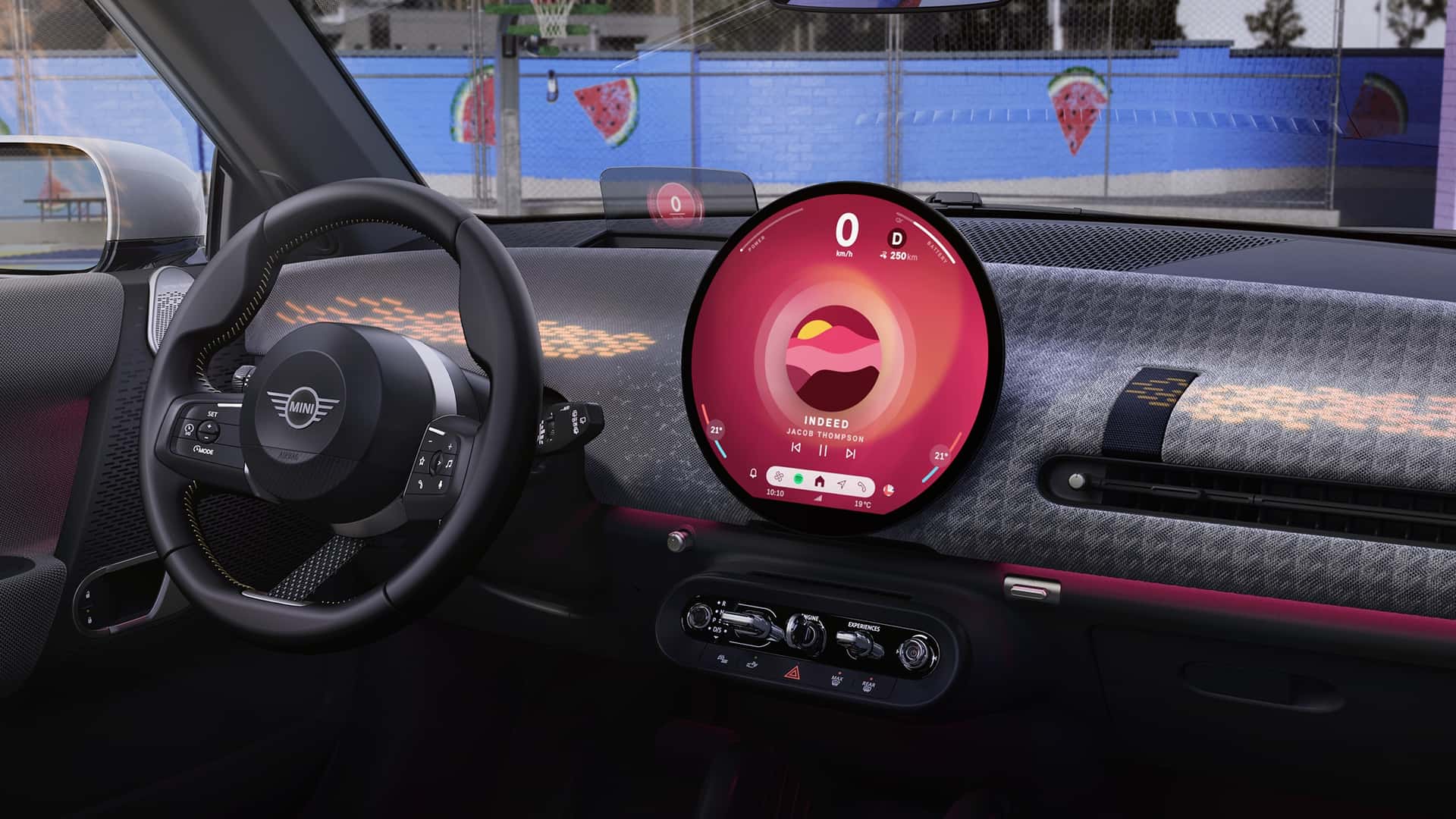
Every other automaker that went down this road, from Volkswagen to Volvo, is now scrambling to bring buttons back after years of customer complaints. Mini has acknowledged the tension without committing to a fix.
Brockhoff hinted that the display could evolve but offered nothing concrete. “Technology will always evolve further to make the integrations even better in the future,” he said. Translation: we hear you, but don’t expect a rectangle anytime soon.
His pitch for the native navigation system was more direct. Use Mini’s own software instead of CarPlay, he suggested, and the round screen actually works. “When customers actually go and experience it, I think it works quite well,” he said. That is a tough sell when most buyers treat CarPlay and Android Auto as non-negotiable.
Asking people to abandon their phone ecosystem to make a circle look pretty is asking a lot.
When Mini introduced the system, former global boss Stefanie Wurst framed it as a leap into the digital world while preserving charisma. Charisma is doing heavy lifting in that sentence. What Mini actually built is a design statement that doubles as a user-experience compromise, packaged in language about DNA and heritage.
Other brands have started retreating from the all-screen gospel. Porsche kept its physical climate controls. Hyundai added buttons back to the Ioniq 5. Even BMW, Mini’s parent company, still offers tactile switches for core functions.
Mini is swimming against a current that its own corporate family helped reverse. The circle will stay. The buttons probably won’t come back soon.
Every time a Mini owner plugs in their iPhone and watches Google Maps shrink into a rectangular window floating inside a round bezel, they will experience the cost of heritage preserved at the expense of common sense. Mini is betting that personality outlasts frustration. It is a gamble that gets tested every single day, one awkward CarPlay session at a time.



Share this Story