
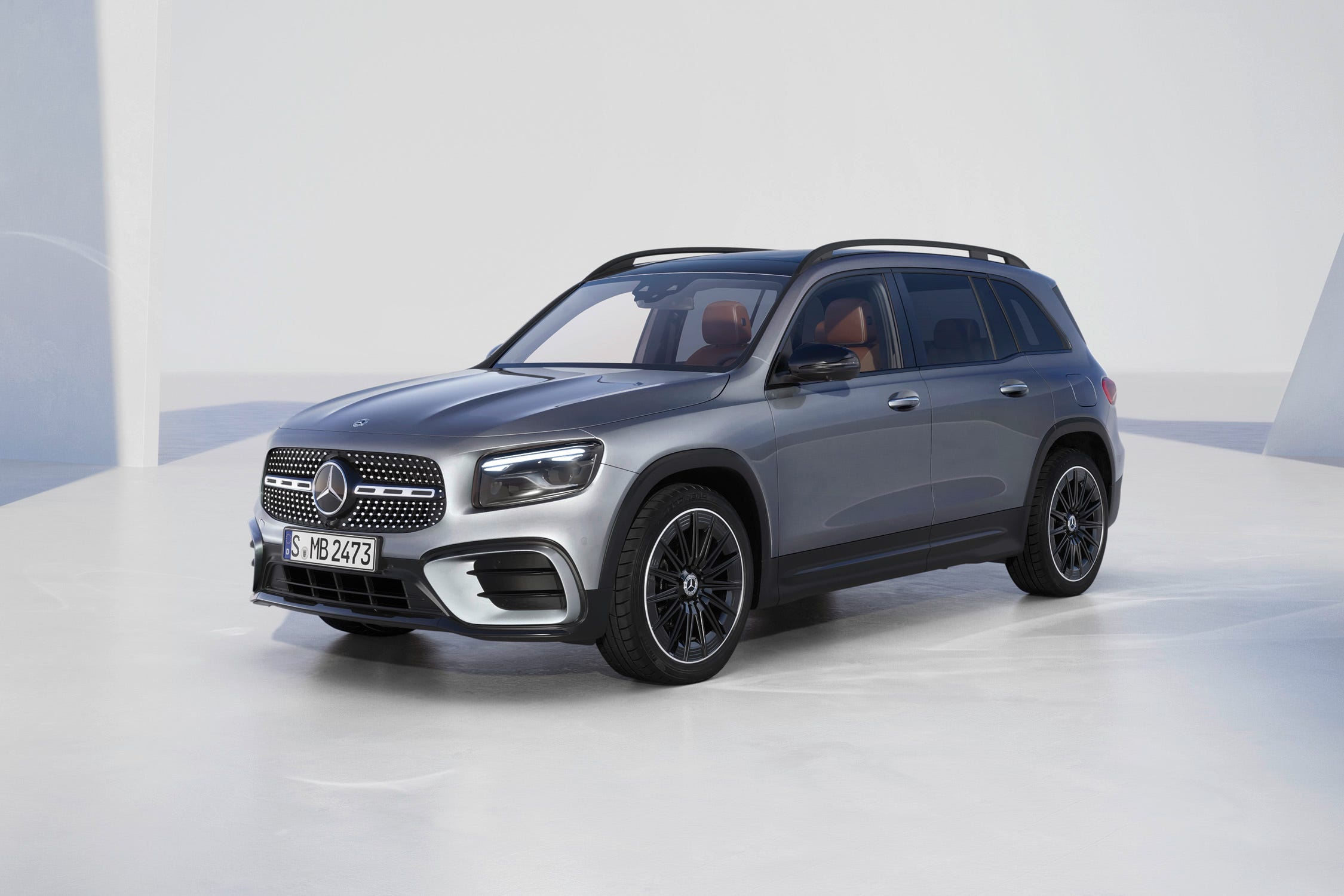


A corroded microswitch smaller than a thumbnail. That is what could send more than 310,000 Mercedes-Benz vehicles rolling away from their owners, according to recall documents filed with NHTSA.
The recall covers seven models spanning seven model years: some 2019-2022 A-class, 2020-2021 CLA, 2022-2023 C-class, 2024 CLE, 2020-2026 GLA and GLB, and 2023-2024 GLC vehicles. The range is broad enough to touch nearly every compact and entry-level Mercedes sold in the U.S. over the past half-decade.
The root cause is embarrassingly mundane for a brand that charges premium prices. A housing material on the door-lock microswitch lets moisture seep in. Over time, that moisture corrodes the switch, and the car no longer knows the driver’s door has opened.
That matters because Mercedes ties its electronic parking brake and Auto Park feature to door-open detection. If the system does not register that you have stepped out, it may never engage the parking brake on its own. The car sits there, transmission not parked, brake not set, waiting for gravity or a slight incline to do the rest.
Mercedes says no actual rollaways have been reported. That is the one piece of genuinely good news in the filing. But the failure mode is dangerous precisely because it can develop silently over months or years as corrosion slowly eats through the switch internals.
The documents reveal that the faulty housing material traces back to a supplier’s deviation from the development process. In plain language, the parts did not meet durability specifications, and they shipped anyway. Mercedes did not name the supplier.
Owners might get an early warning if comfort features start acting strangely. The filing specifically mentions the radio staying on after the driver exits the vehicle. Most people would dismiss that as a software glitch rather than a precursor to a rollaway scenario.
Affected owners will be notified by September 18. The fix is a straightforward replacement of the driver’s door lock assembly with one containing a microswitch that actually meets the robustness standards it should have met from the start. The repair will be performed at Mercedes dealerships at no cost.
This is not an isolated trend. Ford recalled 741,000 trucks and SUVs earlier this year for a rollaway problem of its own. The common thread across the industry is an increasing reliance on electronic systems to perform functions that mechanical interlocks once handled without ambiguity.
A traditional parking pawl clicking into place does not need a door sensor to do its job. An electronic parking brake that waits for a digital handshake from a microswitch does.
Mercedes has built its reputation on engineering precision. Charging $40,000 and up for vehicles where a $2 switch housing was sourced below spec is the kind of detail that erodes that reputation from the inside out.
Owners who want to check whether their vehicle is included can search by VIN on the NHTSA recalls website. Given the seven-year model span and seven affected nameplates, the odds are decent that more than a few Mercedes owners will find their car on the list.
Share this Story