
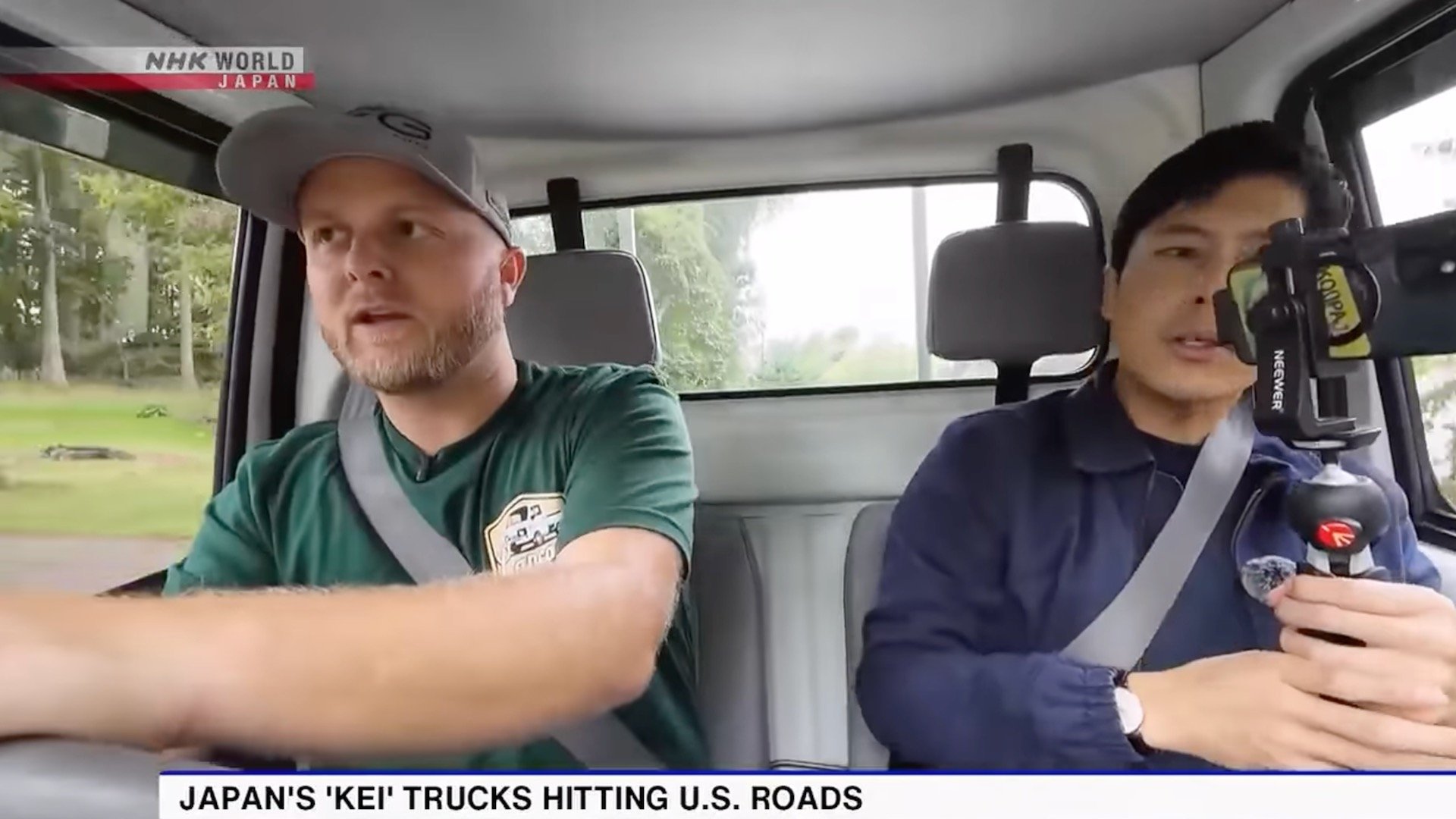


An estimated 30,000 Japanese kei trucks have crossed the Pacific into American driveways over the past five years. NHK World, Japan’s public broadcaster, found this curious enough to send a correspondent to Pennsylvania to figure out why Americans are losing their minds over vehicles smaller than most riding lawnmowers.
The answer, it turns out, has nothing to do with JDM fandom or Skyline worship. It’s pure pragmatism.
Jake Simpson, owner of Lancaster Mini Truck in Pennsylvania, told NHK he bought his first kei truck five years ago and couldn’t stop at a gas station without being mobbed. He turned that curiosity into a dealership importing 15 to 20 trucks a month. His sales pitch is simple: four-wheel drive, 40 miles per gallon, and a price tag between $6,000 and $8,000.
Then he did something devastating to every full-size pickup on his lot. He pulled out a tape measure and compared the bed of a kei truck to a late-model Ram 3500 crew cab. Same length. The kei truck also has fold-down bed sides for waist-height unloading, something no American pickup offers.
A $75,000 Ram with the same cargo bed as a $7,000 Japanese miniature is the kind of comparison Detroit would prefer you never see.
The kei class exists because Japanese regulations cap vehicle size, engine displacement, and power output in exchange for lower taxes and insurance. That bargain produces trucks roughly the size of a golf cart with the utility of a half-ton. Americans, raised on the doctrine that bigger equals better, are discovering that doctrine has an expiration date.
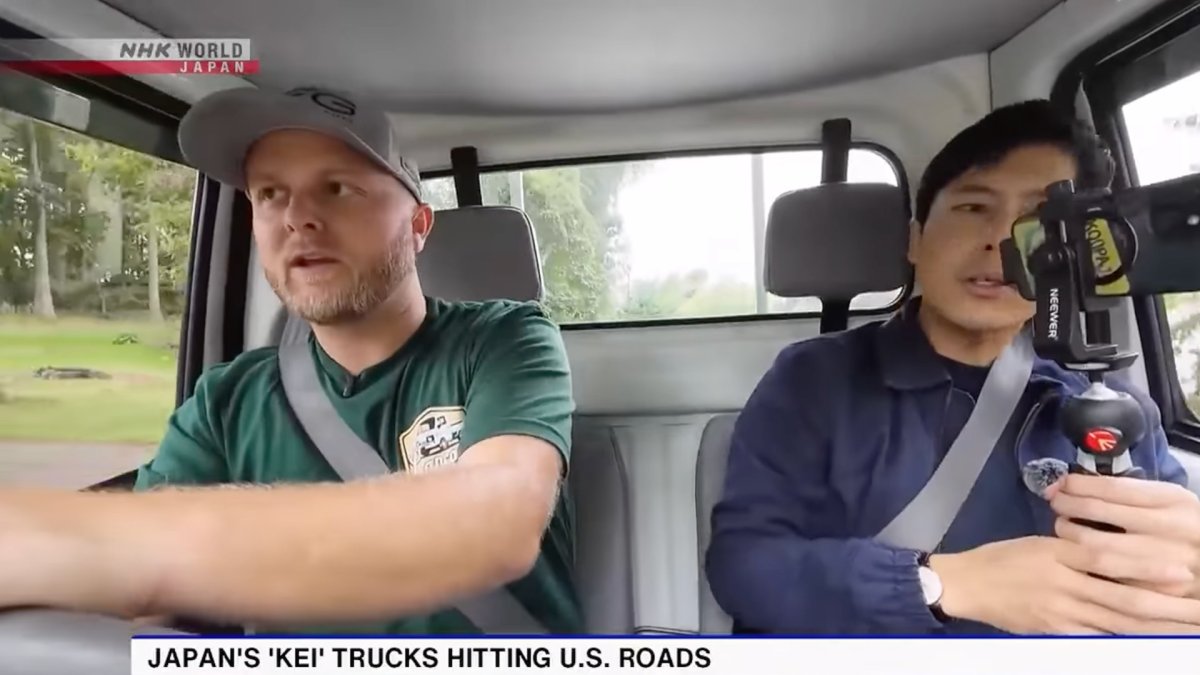
The federal 25-year import rule allows these trucks into the country legally, but state registration is another fight entirely. New York still won’t let kei vehicles on public roads. Joey Iorio co-founded Empire State Kei Advocates to change that, telling NHK he has probably called every single state senator in New York to push for legislative action.
Grassroots lobbying is working elsewhere. Texas legalized kei vehicles last year after enthusiasts pressured lawmakers. The pattern is repeating state by state, driven not by industry lobbyists or trade associations but by individual owners who want to register the trucks they already bought.
The American auto market has spent two decades inflating trucks and SUVs to absurd dimensions. The average new pickup weighs north of 5,000 pounds and prices hover near $60,000. Meanwhile, a retired Japanese kei truck does 90 percent of the actual truck work most people need for less than a down payment on a Tacoma.
The fact that a Japanese public broadcaster flew a crew to rural Pennsylvania to cover this trend says something about how strange it looks from Tokyo. In Japan, kei vehicles are appliances, the equivalent of a toaster. Roughly a third of all vehicles sold there fall into the kei category.
Nobody fetishizes them. Nobody starts advocacy groups for them.
Americans are treating these trucks like a movement because the trucks expose a gap in their own market. There is no new vehicle sold in the U.S. today that is small, cheap, four-wheel drive, and genuinely useful. Detroit stopped building that vehicle decades ago. Japan never did.
Simpson’s dealership lot, stocked with 660cc trucks and at least one wonderfully bizarre Nissan S-Cargo, looks like a showroom from an alternate timeline where American automakers still cared about affordability. The waiting list for imports keeps growing, and the list of states willing to register them keeps expanding.

Share this Story