
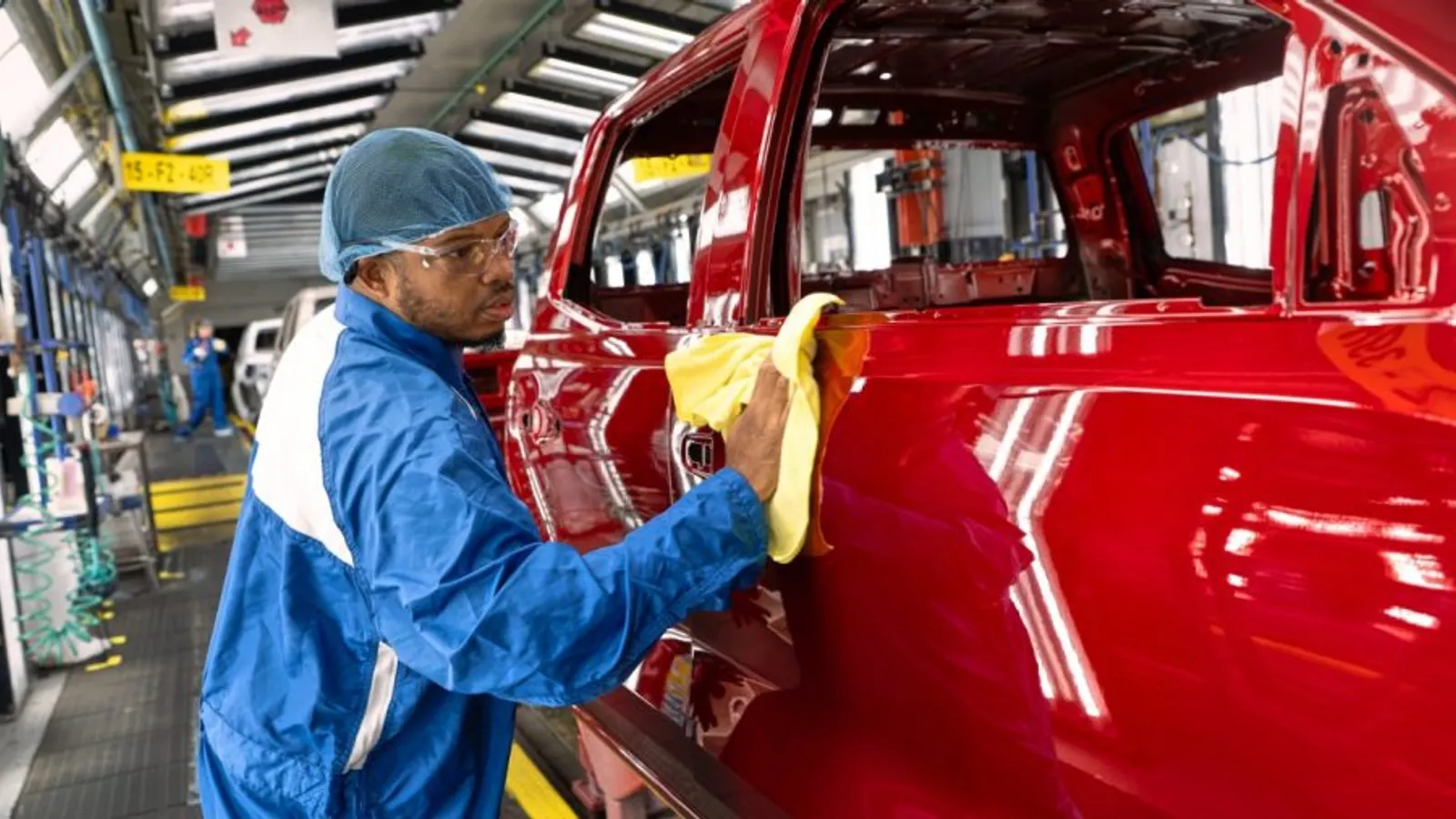


General Motors is spending $157 million to overhaul the paint shop at its Wentzville Assembly plant in Missouri, adding roughly 28,000 square feet of new space and fresh processing equipment to a facility that first opened in 1983.
The plant builds the Chevrolet Colorado, GMC Canyon, Chevrolet Express, and GMC Savana. More than 4,000 workers clock in there. GM wants it running for a long time.
On its own, a paint shop refurbishment wouldn’t raise eyebrows. But Wentzville isn’t an isolated check. It’s one line item in a spending spree that now totals approximately $9 billion in U.S. manufacturing investment this year alone, plus another $7 billion earmarked for domestic R&D.
The pattern tells the real story. In May 2025, GM committed $888 million to the Tonawanda plant in New York for next-generation 5.7L and 6.6L V8 gas engines destined for the redesigned 2027 Silverado. In June, another $275 million went to Spring Hill, Tennessee, to support a new 2.7L inline four-cylinder engine and launch a new combustion-powered Cadillac XT6.
Orion Assembly near Detroit is being converted from its original EV mission to full-size ICE trucks and SUVs starting early 2027. Every dollar flows in one direction: away from electrification, toward the gas-powered trucks and SUVs that actually print money.
GM posted a 55 percent year-over-year collapse in net income in 2025, driven largely by EV-related write-downs that included a staggering $6 billion charge in the fourth quarter alone. Those losses forced a reckoning. The company that once marketed itself as an electric future leader is now quietly rebuilding its identity around combustion engines and the full-size pickup segment where it commands more than 42 percent market share through the first half of 2026.
Mike Trevorrow, GM’s SVP of Global Manufacturing, framed the Wentzville investment in deliberately vague terms. “These announcements are about more than any one program, product, or facility,” he said. “They show how we’re building flexible, long-term manufacturing sites.”
Flexible is the operative word. It has become the auto industry’s polite way of saying “we’re not sure what regulations or market conditions will look like in five years, so we want options.” Few say what they actually mean: the EV transition stalled, customers still want trucks, and the margin math is unforgiving.
GM is also pulling production closer to home. The Chevy Blazer, both gas and electric versions, currently rolls off the line at Ramos Arizpe Assembly in Coahuila, Mexico. The gas Blazer is slated to move to Spring Hill next year. With tariff threats and political pressure swirling around cross-border manufacturing, the timing is no accident.
The $4 billion commitment across three U.S. plants announced last year was framed as a jobs and capacity story. The $9 billion figure for 2026 is bigger, louder, and aimed squarely at Washington as much as at Wall Street.
CEO Mary Barra, on the Q2 earnings call July 21, reported $48 billion in quarterly revenue and updated full-year guidance. The numbers were strong enough to keep analysts satisfied, but the subtext was clear: GM’s near-term future runs on gasoline, and the company is betting billions that it stays that way long enough to matter.
Whether that bet ages well depends on forces GM cannot control. Battery costs keep falling. Chinese EV competition keeps intensifying globally. For now, though, Wentzville gets a new paint shop, Tonawanda gets new V8 lines, and the assembly plants keep humming on the fuel that built Detroit in the first place.

Share this Story