
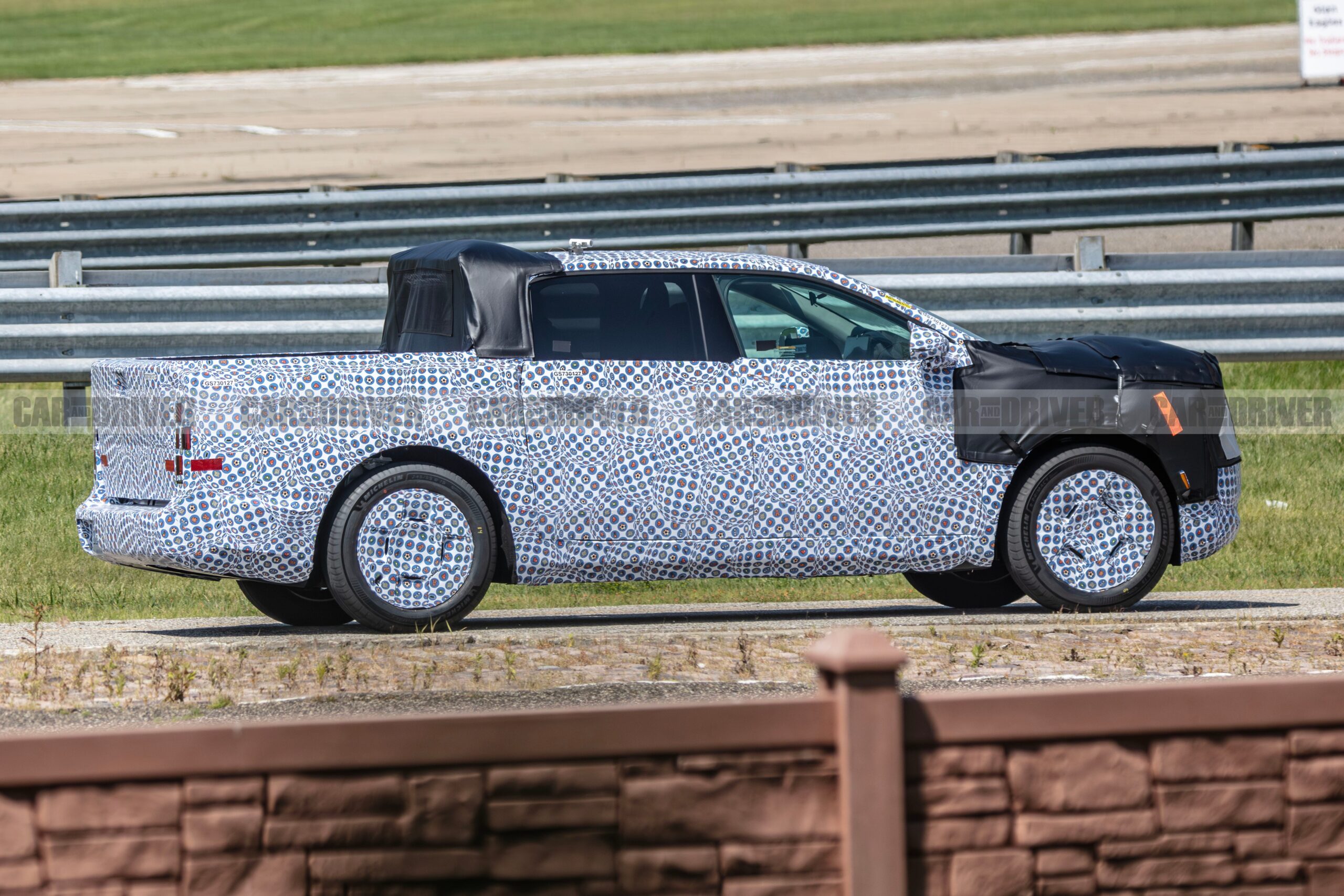


Ford’s upcoming electric pickup — the one the company hopes will be its modern Model T — was caught testing near Dearborn with more of its secrets exposed than the automaker probably wanted. Spy photographers captured details Ford hasn’t officially shared yet: the interior screen, a front-facing camera, and a rear window that appears to offer a sliding section like a traditional truck.
The prototype was wrapped in heavy camouflage, but the disguise only goes so far. The bulky front cladding suggests a tall, blunt grille in the mold of Ford’s conventional trucks, but that’s almost certainly misdirection. Ford’s own teaser images show air flowing around a low, aerodynamic nose — exactly what you’d expect from an EV that needs every mile of range it can squeeze from its battery pack.
Tire specs are now confirmed: Michelin E Primacy all-seasons, 245/55R-19, mounted on 19-inch wheels Ford has already previewed on its own website. The choice of an efficiency-focused tire tells you where Ford’s engineering priorities sit. Range anxiety still sells — or rather, still kills sales — and Ford learned that lesson the hard way with the F-150 Lightning.
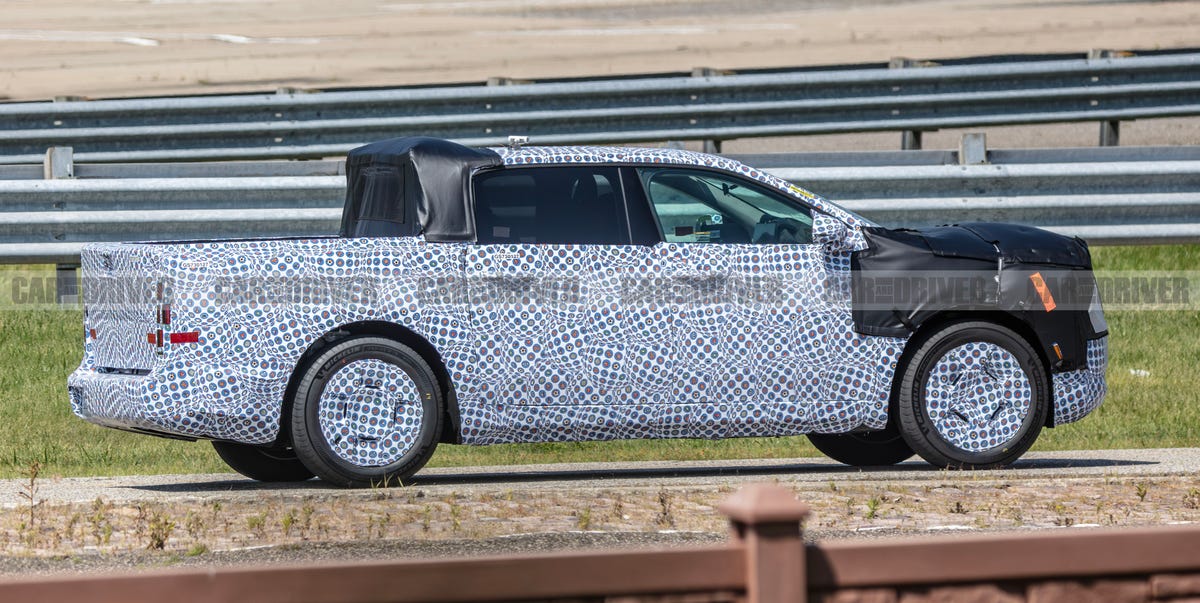
The interior shot reveals a large center touchscreen, which surprises exactly no one. The real question is whether Ford goes full Tesla-minimalist — stripping out physical controls in favor of software — or keeps enough buttons to avoid alienating truck buyers who actually use their vehicles as tools. Ford claims the cabin will offer more interior space than a Toyota RAV4, a bold comparison for something Maverick-sized.
Headlights show an intricate new lighting signature that doesn’t match anything in Ford’s current lineup. A spoiler-like element extends from the rear of the cab, though it’s unclear whether that’s a production piece or more camouflage theater.
The name remains officially unannounced, but Ranchero feels increasingly likely after Ford trademarked it last fall. It’s an interesting gamble — resurrecting a nameplate from a car-based pickup that ended production in 1979. Most buyers under 50 have never heard of it.
Whether nostalgia carries enough weight to launch the most important vehicle in Ford’s pipeline is a legitimate question. And this vehicle is critically important. Ford has said it will cost around $30,000 and start production at its Kentucky plant sometime in 2027.
It rides on the new Universal EV platform, which Ford designed from scratch with fewer parts and simplified manufacturing to hit that price point. After the F-150 Lightning stumbled — slow sales, price cuts, inventory pileups — Ford essentially admitted the brute-force approach of electrifying an existing truck didn’t work. This is the reset.
The Universal platform is Ford’s clean-sheet answer to the problem every legacy automaker faces: building EVs that people can actually afford without losing money on every unit sold. GM is chasing the same target with its own affordable EV push, and so is Volkswagen. The difference is Ford has committed to a specific price and a specific timeline, which leaves very little room to hedge.
A $30,000 EV truck the size of a Maverick, with more room than a RAV4 and enough range to make the tires worth specifying — that’s the pitch. Ford is betting the company’s electric future on it. The spy photos suggest the hardware is real and the engineering is progressing, but now Ford just has to deliver on a promise that has broken bigger companies than this.

Share this Story