
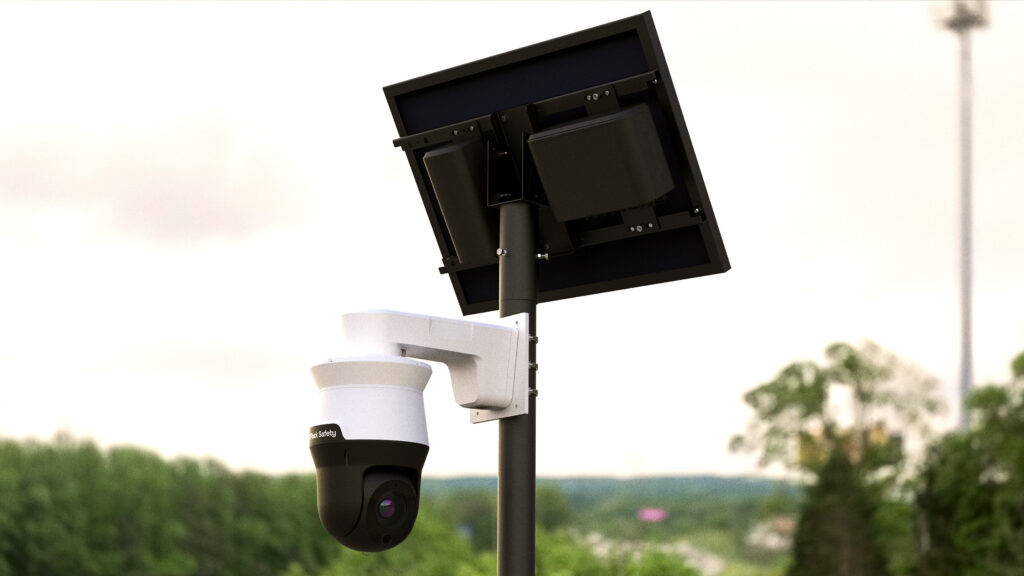


Police in Roseville, California ran the numbers on their Flock Safety license plate cameras and discovered something that should make every city council reconsider the sales pitch. Out of 1,427 alerts generated during 2023 and 2024, 71 percent were flat wrong.
The cameras misread plates, captured blurry images, and confused similar characters with enough regularity that supervisors started documenting what they called “blatant misreads.” In one particularly absurd case, the system kept flagging the same innocent driver because the software couldn’t tell the difference between a 9 and an 8, repeatedly matching the plate to a stolen vehicle.
Internal emails obtained by Business Insider paint a picture of a police department growing increasingly frustrated with technology it was sold as a crime-fighting tool. One Flock product manager, caught in the crossfire, admitted he was “writing code as we speak” to address the problems. He also acknowledged the company was developing tools to automatically detect missed vehicles.
Flock Safety’s response follows a familiar playbook. The company doesn’t deny the problems but pins them on Roseville’s deployment. The city requested rear-facing cameras mounted higher and farther from the road than Flock typically recommends, and the hardware was older.
That defense only goes so far. Flock is the vendor. If a city installs cameras under conditions that produce a 71 percent failure rate, and the system keeps generating alerts anyway, the technology is not failing gracefully. It is failing loudly, flooding officers with bad data and trusting humans to sort out the mess.
Roseville says none of the bad alerts led to a traffic stop or arrest because officers independently verify plates before acting. That’s a credit to the department’s protocols, not to the technology. And it raises an obvious question: if officers have to verify every alert manually, what exactly is the automation buying them?
The city still uses the system. Officials say the cameras have helped solve crimes that would have otherwise gone cold. That’s the tension at the center of every license plate reader debate, because even a deeply flawed tool occasionally delivers a hit, and that single solved case becomes the justification for thousands of false reads.
Flock has roughly 5,000 communities using its cameras across the country. The company pushes for maximum coverage, wanting as many lenses on as many streets from as many angles as possible. Scale is the business model, but scale also means multiplying errors across jurisdictions where oversight may not be as disciplined as Roseville’s.
Not every department documents its false alert rate. Not every department requires manual verification before a stop. A sheriff in Florida recently pulled Flock cameras from his county over concerns about a single detective’s use of the system.
Roseville’s data does not prove that all Flock cameras are unreliable. What it proves is that when someone actually checks the math, the numbers can be ugly. Most cities never check, they just trust the technology, renew the contract, and add more cameras.
The real question is how many other departments are sitting on similar failure rates and simply don’t know it.




Share this Story