
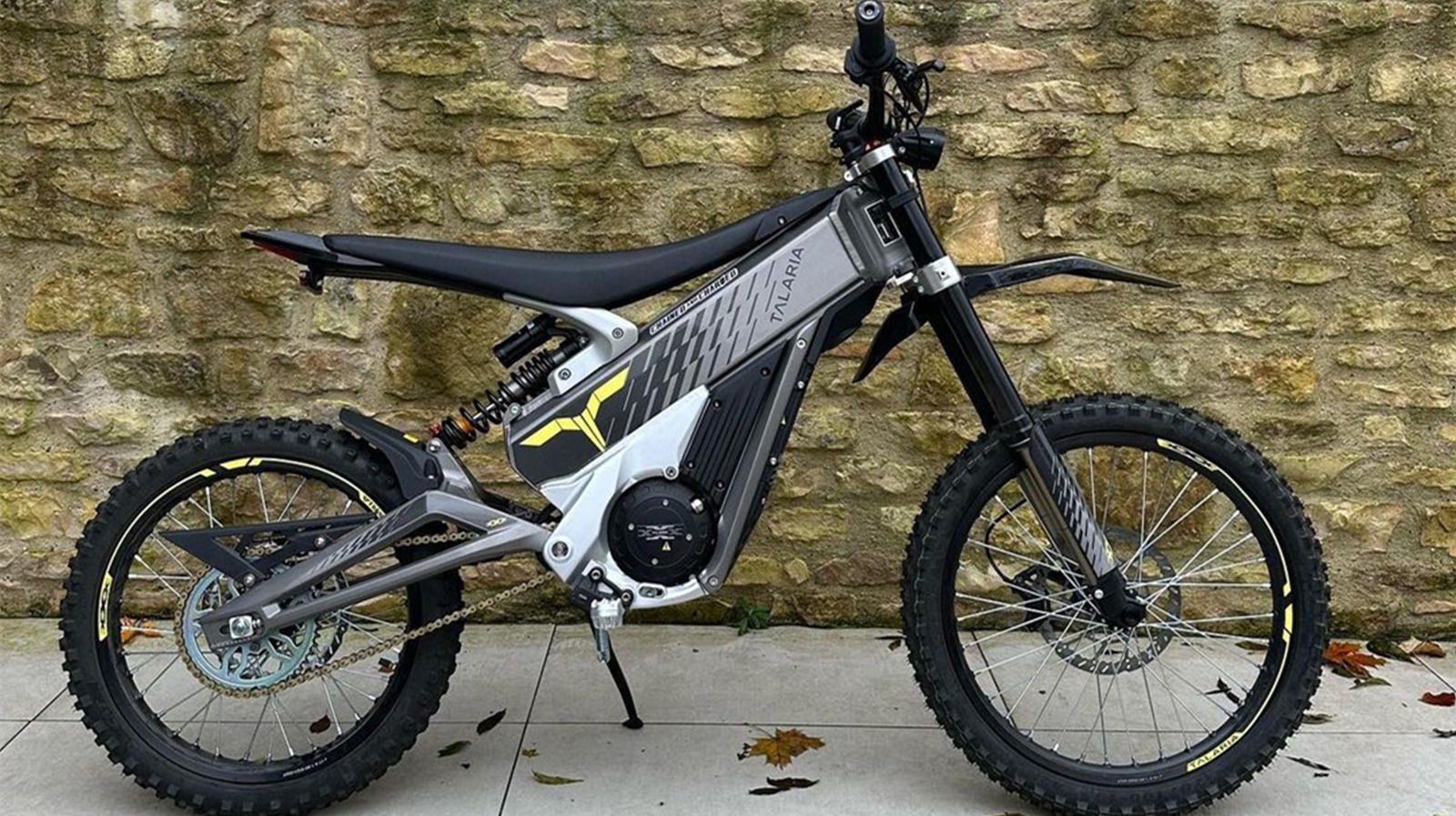


A 41-year-old man in British Columbia allegedly looked a police officer in the eye, declared “You’re not taking my bike,” and then sped off on an electric dirt bike. The Royal Canadian Mounted Police took his bike.
The encounter happened on the evening of October 8 near Lougheed Highway and the Cedar Valley Connector. Officers tried to stop the rider because he was operating an electric dirt bike, which is not the same thing as a street-legal e-bike under Canadian law. These machines are prohibited from roads, sidewalks, and bike lanes.
The distinction matters. Standard pedal-assist e-bikes are legal in most Canadian jurisdictions. Electric dirt bikes, with their higher speeds and off-road configurations, fall into a different regulatory category entirely. Riding one down a public highway is roughly equivalent to taking a motocross bike through a school zone and hoping nobody notices.
Somebody noticed.
When officers made contact, the rider delivered his one-liner and bolted. The escape was brief. Police caught up, arrested him for fleeing, and noted signs of alcohol impairment. He refused to provide a breath sample at the scene.
That refusal triggered an automatic 90-day driving prohibition under British Columbia law. It also gave officers the authority to impound the bike. The very machine he swore they wouldn’t take was hauled away while he watched.
The stack of potential penalties goes beyond the driving ban. While the RCMP didn’t itemize every charge, the math adds up fast. Operating without a license carries a CA$276 fine. Driving without insurance adds another CA$598. Fleeing police, impaired driving indicators, and riding a prohibited vehicle on public roads each come with their own consequences.
British Columbia has been tightening enforcement on electric two-wheelers as their popularity outpaces regulation. The province distinguishes between motor-assisted cycles, which max out at 500 watts and 32 km/h, and more powerful electric machines that require registration, insurance, and a valid license. Riders who blur that line are increasingly finding that police know the difference even if they don’t.
The Talaria-style electric dirt bikes at the center of cases like this occupy an awkward space. They’re marketed for off-road recreation but show up constantly on urban streets, ridden by people who assume that “electric” and “bicycle” together form some kind of legal shield. They don’t.
What the rider ended up with is a textbook example of escalation through poor decision-making. A stop that might have resulted in a fine and a warning to stay off public roads became an arrest, a driving ban, an impounded vehicle, and potential criminal charges. Each choice compounded the last.
The RCMP’s public account of the incident reads like a cautionary tale they were eager to share. They posted it weeks after the arrest, complete with a photo of the seized bike, clearly hoping the story would circulate. It did.
Whether the rider gets additional charges remains to be seen. The 90-day prohibition is already in effect. The bike sits in impound. And somewhere in British Columbia, a man who was very confident about the outcome of a police encounter is reconsidering his predictive abilities.


Share this Story