
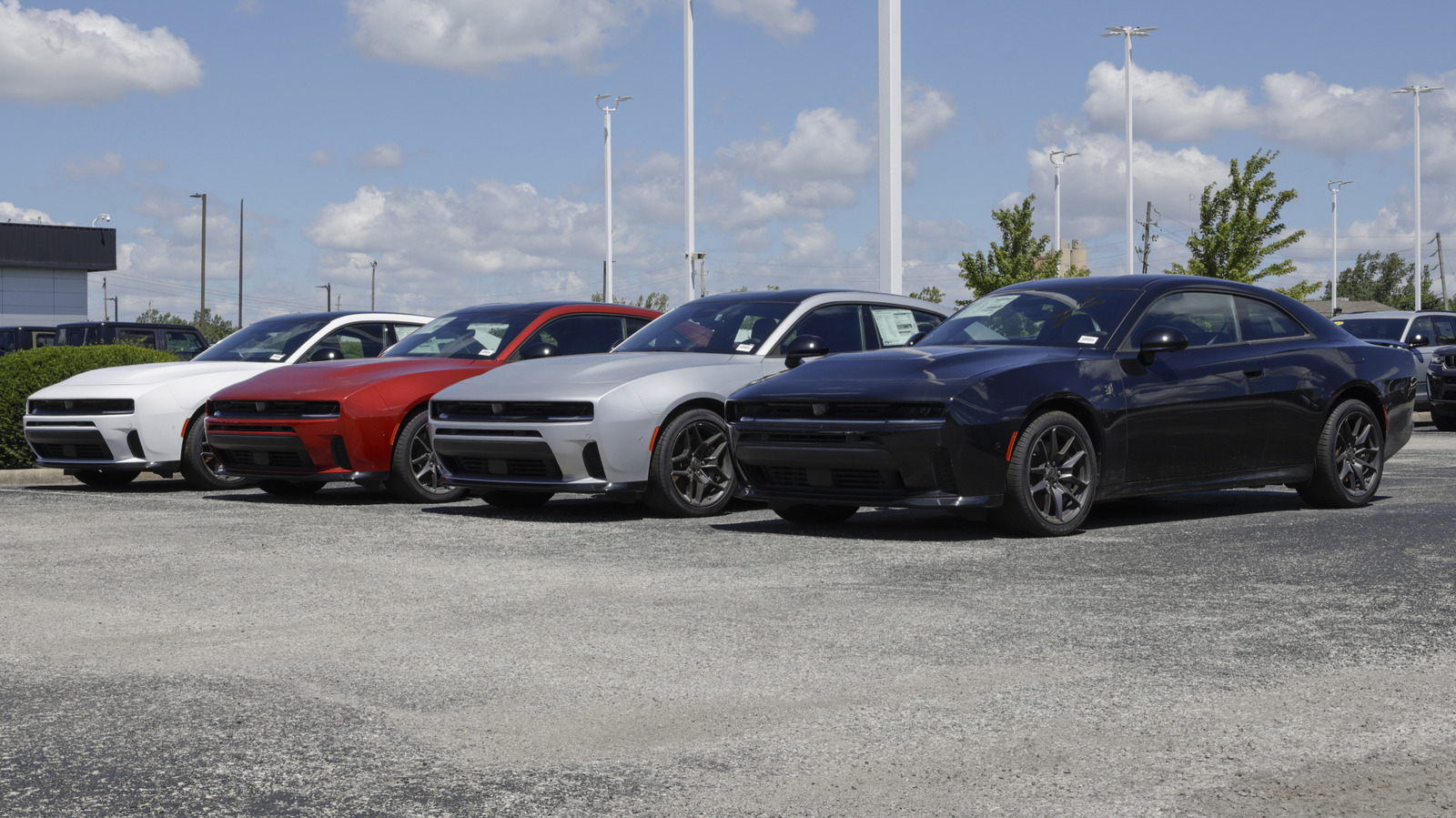


Two years ago, Dodge executives said there was no chance the Charger would ever see a Hemi V8 again. That position is now dead.
Dodge is planning to revive the Charger Hellcat with a supercharged 6.2-liter V8, targeting the end of 2027 as a 2028 model. The automaker expects to build roughly 12,000 units per year, according to Automotive News. That production target alone tells the story of just how badly the current Charger experiment has gone.
Consider the math. Through the first nine months of 2026, Dodge moved 8,786 examples of the current Charger, combining its EV and inline-six variants. The company is betting it can sell more Hellcats annually than it currently sells of the entire Charger lineup. That’s not optimism. That’s a confession.
The all-electric Charger Daytona has been a disaster by any honest measure. Just 767 sold through three quarters of 2026. That number is so small it barely registers as a production car. It’s a rounding error in a segment Dodge once owned.
When the current Charger was conceived, the EV future looked inevitable and imminent. Dodge downsized from the V8 to an inline-six for the gas model and rolled out a battery-electric variant as its halo. The market responded with a collective shrug.
Enthusiasts who made the old Charger Hellcat a cult car weren’t interested in a turbocharged six-cylinder, and EV shoppers weren’t cross-shopping muscle cars.
The supercharged 6.2-liter has never actually gone away. It’s been powering the Ram 1500 SRT TRX and was recently dropped into the 777-horsepower Ram Rumble Bee SRT. The engine works. The supply chain exists. Dodge just has to bolt it into a different body.
Technical details remain scarce, but expectations point to more than 700 horsepower sent exclusively to the rear wheels. Visual upgrades are expected too, including a large hood scoop and possibly flared fenders. A teaser released months ago appeared to show a Charger wearing a large rear wing, which first set the rumor mill spinning.
This is a full reversal, and Dodge isn’t even trying to dress it up as anything else. The brand built its modern identity on the Hellcat. The original Charger Hellcat, the Challenger Hellcat, the Redeye, the Demon, the Jailbreak editions — those cars moved metal and moved culture.
They were loud, irresponsible, and wildly popular. Replacing all of that with an EV and a six-cylinder was always a gamble. Now we know the house won.
The question hanging over Stellantis is what happens to the electric Daytona. At 767 units in nine months, the business case for continued production is thin to nonexistent. Dodge can’t exactly kill it quietly while launching a Hellcat with a straight face, but the market is making the decision for them.
Twelve thousand Hellcats a year is an aggressive number. The original Hellcat peaked at similar volumes during its best years, but it also had years of cultural momentum behind it. This new version will need to recapture that energy after a two-year gap where Dodge told its core audience to look elsewhere.
Whether those 12,000 buyers show up depends on pricing, timing, and whether Dodge can rebuild the trust it burned. The V8 is coming back. The harder part is convincing the faithful that this time, Dodge actually means it.
Share this Story