
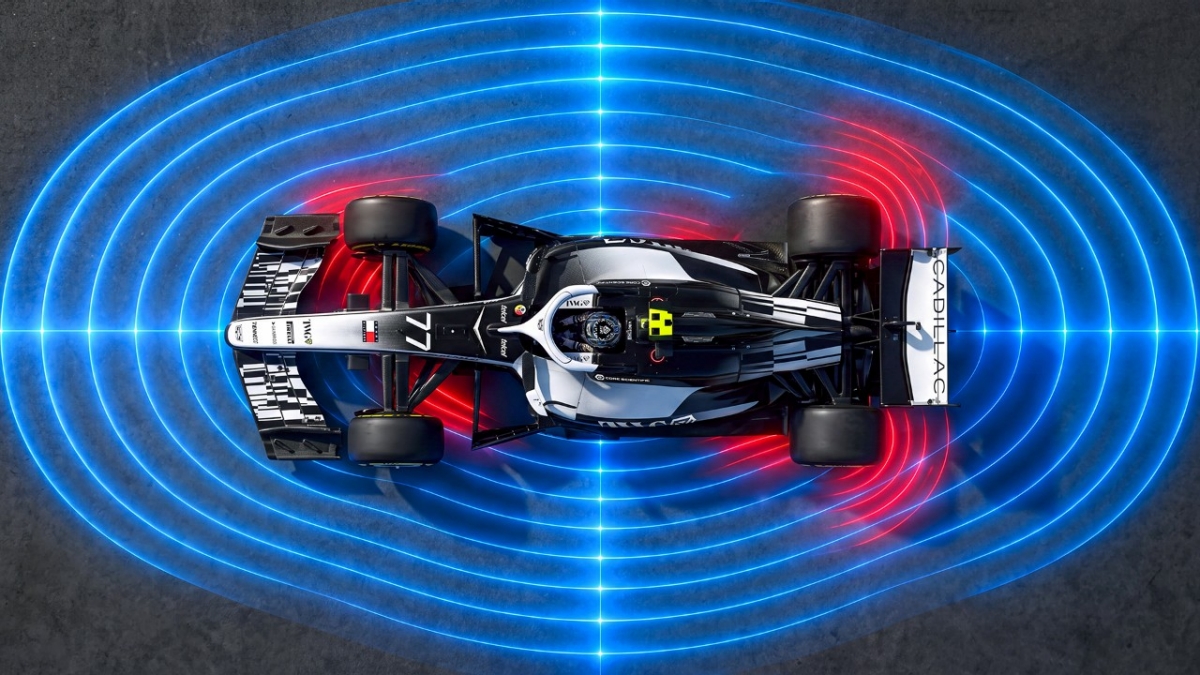


Every nut, bolt, and carbon fiber panel on the Cadillac Formula 1 car gets a serial number. Every single one. That is the premise behind Race Vehicle Gateway, a GM-designed software platform the team uses to monitor tens of thousands of individual components across the life of each race car.
The latest episode of the team’s docuseries What Makes Fast pulls back the curtain on the system, known internally as RVG. Engineers log when, where, and how each serialized part was used. They track mileage on every component because F1 parts have finite lifespans, and knowing exactly when to retire a piece before it fails is the difference between finishing a race and a catastrophic mechanical DNF.
After each session, engineers physically inspect parts and cross-reference their findings with data stored in RVG. If something looks wrong, the software trail helps them pinpoint when and why the degradation started.
RVG does not work alone. Its companion system, Race Vehicle Simulation, feeds off the same dataset. The two platforms together form what GM calls Race Vehicle Platform.
Simulation data tells the team which specific parts, identified by serial number, should go on the car for a given event. Real-world data from the car then flows back into the simulation models to refine future predictions.
This is where the corporate story kicks in, and where GM wants you to pay attention. Sterling Anderson, GM’s Chief Product Officer, appears in the episode to make the pitch explicit. “Motorsports is part of the global product organization,” he says. “Part of the value of that is there’s bilateral exchange of tools, data, and techniques.”
Anderson points to aerodynamics as a concrete example. GM has built machine learning tools using production vehicle data that accelerate aero development for both road cars and the F1 program. The flow of knowledge, he insists, runs both directions.
It is a familiar argument. Every manufacturer that enters F1 makes it. The technology transfer story has been told by Ferrari, Mercedes, and Renault for decades with varying degrees of credibility.
GM’s version leans on software rather than hardware, which at least reflects where the actual competitive battleground sits in modern motorsport.
The deeper question is whether a team that has not yet turned a competitive wheel can generate datasets rich enough to matter. Cadillac’s F1 operation is still in its buildup phase, running through the enormous checklist of preparations required before a new constructor hits the grid. Tracking parts meticulously is table stakes in this sport, and every team on the grid does it with proprietary systems refined over years or decades of racing.
What Cadillac is really showcasing here is not the practice itself but the integration with GM’s broader engineering infrastructure. The bet is that a unified data architecture spanning motorsport and production vehicles creates a multiplier effect that standalone racing teams cannot match. It is the same logic that drove GM’s multi-series motorsport strategy across IMSA, IndyCar, and now F1.
Whether that integration delivers real pace on a Sunday afternoon remains an open file. Software does not win races by itself. But when you are an 11th team walking into a paddock full of entrenched operations, knowing where every bolt has been and how many miles it has left is the kind of discipline that keeps you from tripping over your own ambition.



Share this Story