


Since 1999, BMW has employed a team of trained odor specialists whose entire job is sniffing car interiors. The automaker calls them the “nose team,” and their work has quietly shaped how every BMW cabin smells before a single customer sits inside one.
It sounds like a punchline, but the science behind it is dead serious. Interior materials release volatile organic compounds, aldehydes, and other chemical substances that affect both air quality and the sensory experience of sitting in a new car. Leather ages and develops odors from animal-derived proteins. Plastics off-gas. Adhesives emit fumes.
BMW wants to catch all of it before anything reaches a production line. The company runs two dedicated odor laboratories, the original in Munich and a second in Shenyang, China, that opened in 2014. The two facilities share data and feed findings into BMW’s global product development pipeline, meaning what gets discovered in China influences vehicles built for every market.
Instruments measure emissions, but machines can’t tell you whether something smells bad. That’s where the human noses come in. The specialists evaluate samples from leather, fabrics, plastics, adhesives, and other interior components, helping engineers choose between materials that might hit identical technical benchmarks but smell completely different in practice.
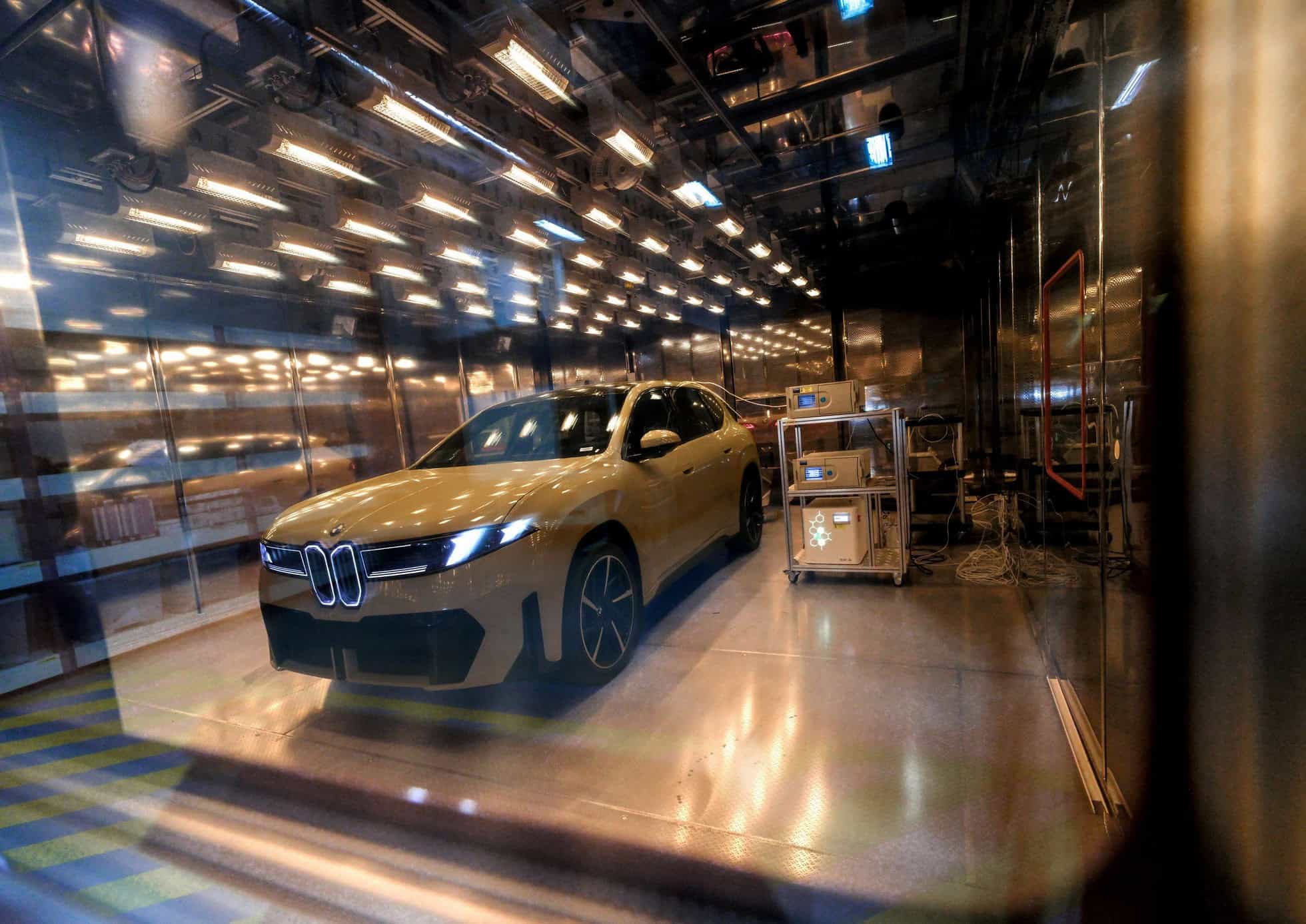
A three-stage validation process tests individual materials first, then assembled components like seats and dashboards, and finally the complete vehicle. That last stage matters because materials that smell fine alone can produce unexpected results when combined in a sealed cabin on a hot day.
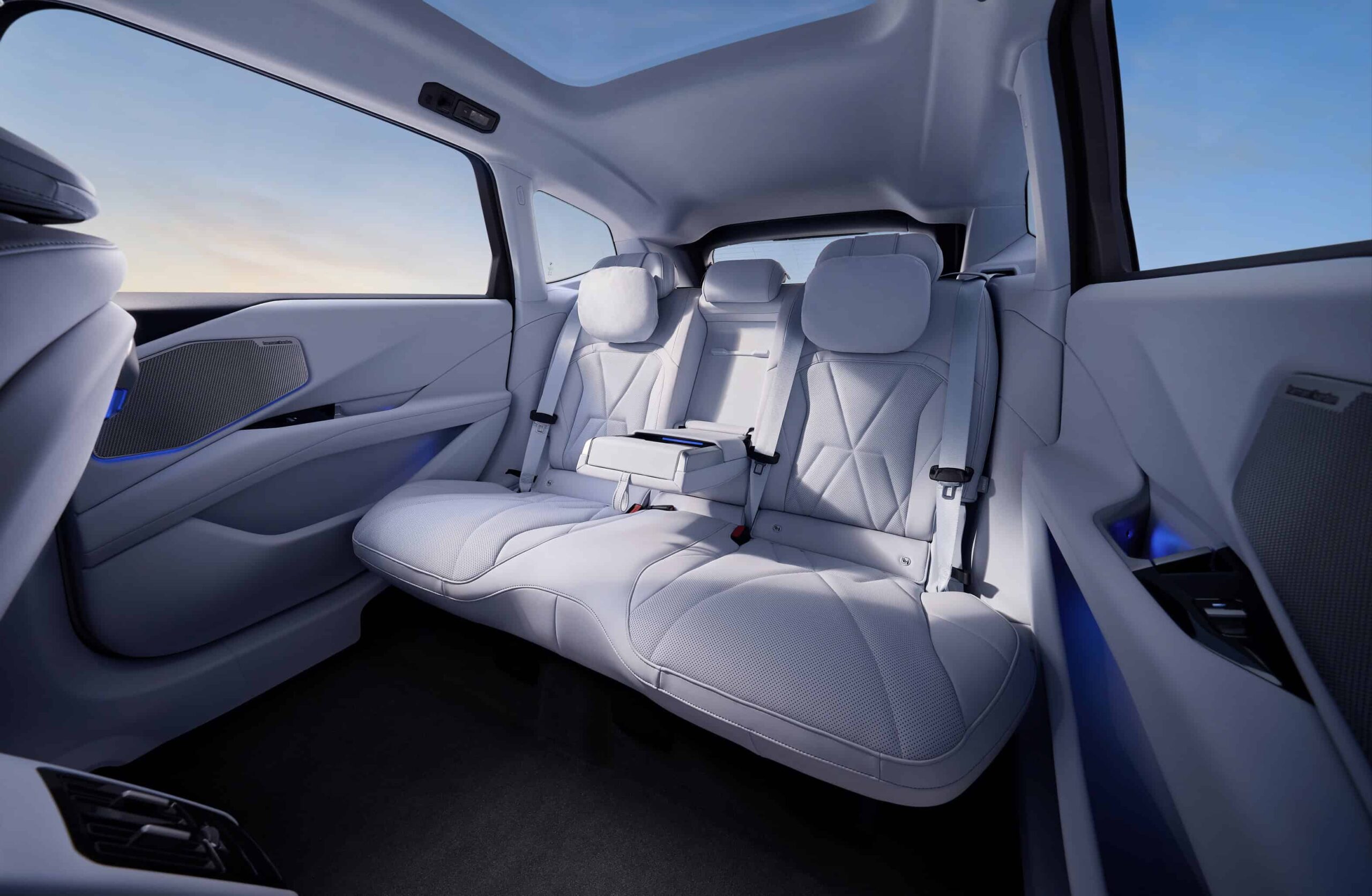
The Neue Klasse lineup is where this work gets its most visible showcase. BMW’s new long-wheelbase iX3, built for the Chinese market, pairs low-emission interior materials with what the company calls active air management. A multi-stage Nano Filter system cleans incoming air while sensors detect tunnels and heavy traffic, then automatically switch to recirculation mode to block polluted air before it enters the cabin.
The car can even ventilate itself while parked and refresh the cabin air before you walk up and open the door. Some of the changes are small but telling. Certain speaker grilles in Neue Klasse vehicles swap plastic for steel, cutting plastic content and eliminating a source of off-gassing.
BMW’s latest automotive-grade microfiber materials reduce VOC and aldehyde emissions while ditching animal proteins entirely. China’s role in all of this is not accidental. The country’s consumers have been vocal about interior air quality for years, and Chinese regulatory standards for cabin emissions are among the strictest anywhere.
BMW’s Shenyang lab doesn’t just serve local production. Methods and material innovations developed there are flowing upstream into vehicles destined for Europe and North America. The cooperation extends to local suppliers, research institutions, and testing organizations.
None of this shows up on a spec sheet. No buyer cross-shops an iX3 against a Mercedes EQB based on aldehyde emission rates from dashboard plastics. But the difference registers the moment you open the door.
That new-car smell, or more precisely the absence of a chemical assault, is engineered deliberately. BMW has been doing this work for over a quarter century now, long before cabin air quality became a marketing talking point for the broader industry.
The Neue Klasse iX3 is the first vehicle where all the pieces, material science, filtration hardware, and software-driven air management, come together in a single package. Whether competitors are running similar programs at this scale remains an open question, and one BMW seems happy to let hang in the air.

Share this Story