
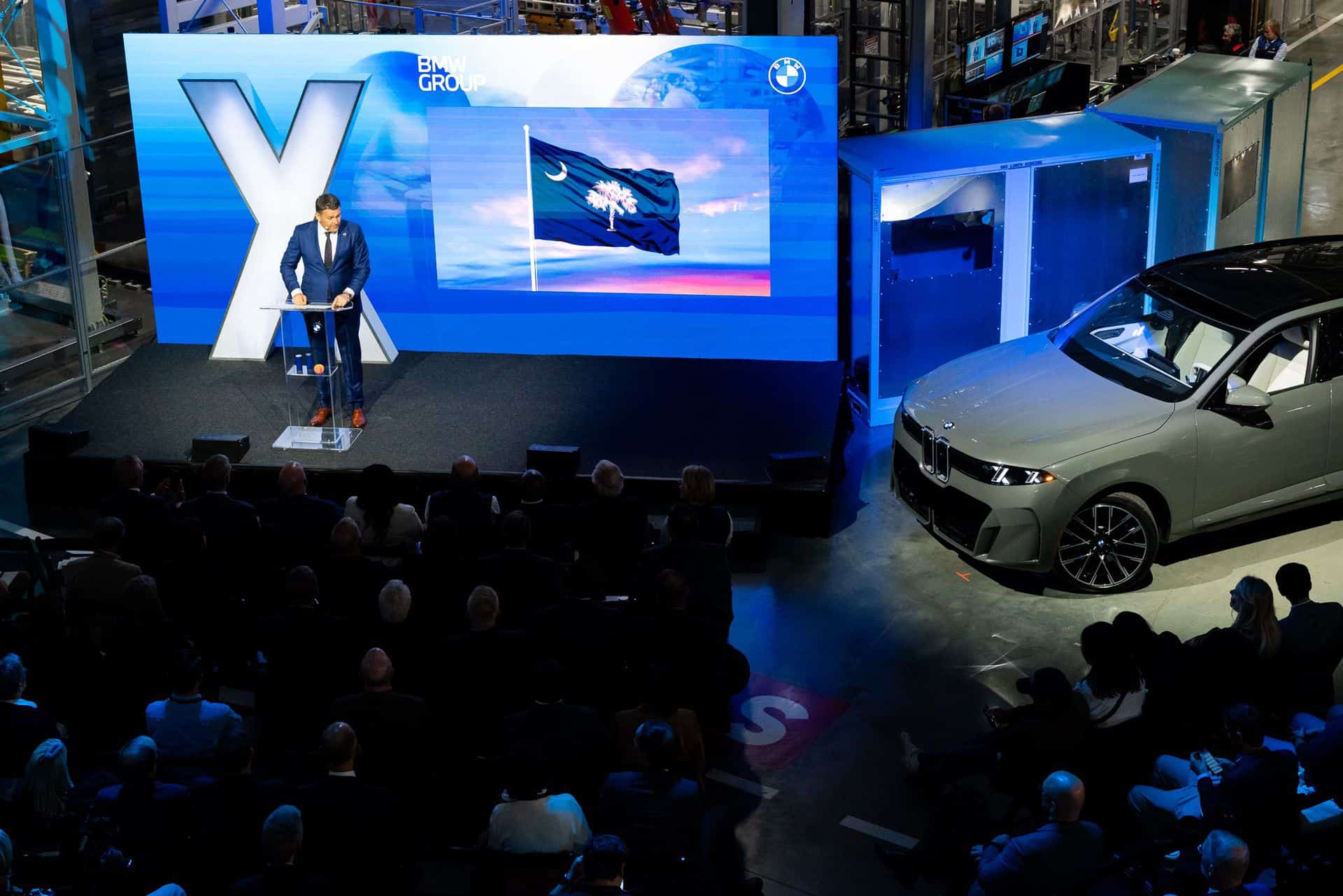


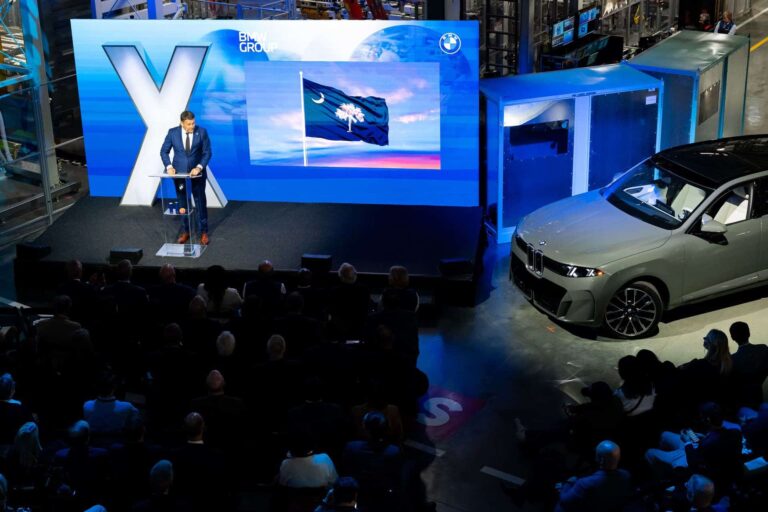
BMW cut the ribbon on Plant Woodruff on November 13. It is the company’s first U.S. battery assembly plant, built on a former peach farm 15 miles from Spartanburg, where about 300 employees and 250 robots now build Gen6 high-voltage packs.
The same company has reportedly told suppliers to expect 60,000 electric vehicles in 2027. The earlier forecast was 100,000.
Those two facts sat side by side through BMW’s two-day “Beyond the Machine” program in South Carolina. The celebration was real. So was the math underneath it.
The night before the Woodruff opening, a University of South Carolina study put BMW’s annual economic impact on the state at $36.1 billion. In 2022 it was $26.7 billion.
Economist Joseph Von Nessen of USC’s Darla Moore School of Business credited BMW with 55,327 supported jobs and $4.4 billion in wages. His key figure was a jobs multiplier of 4.2, meaning every 10 jobs at BMW Manufacturing support another 32 elsewhere in the state. The average South Carolina manufacturer manages 1.7.
The iX5 is now rolling off the Spartanburg line at about 70 a day. It is the first fully electric BMW built in America. Until now, every electric BMW sold here crossed an ocean first.
Seventy a day is a small number in a plant that builds roughly 1,500 vehicles daily and can produce 450,000 a year. BMW still plans at least six fully electric models in the U.S. by 2030.
Board member Wittmann called electromobility the company’s top growth area. In early November, BMW also announced new battery cell partnerships, including one with LG Energy Solution for the U.S.
The hedge is visible anyway. You just won’t find it in the speeches. You’ll find it in the supplier forecast.
Trade carries the same split. BMW Manufacturing CEO Robert Engelhorn told the Greenville audience that BMW stands for free trade. Spartanburg ships half its output to 120 countries, which has made BMW the largest U.S. car exporter by value for more than a decade.
BMW is also reportedly pointing to the Spartanburg expansion as it presses the Trump administration for tariff relief. Free trade on stage. Leverage in Washington.
The localization story is harder to argue with. Spartanburg consumes about 400,000 metric tons of steel a year, and BMW imports only about a third of it, according to Wayne Copeland, who runs steel purchasing for its Americas plants.
Nucor has won about 27,000 tons of X5 steel from its Berkeley County mill, covering roughly 100 body parts. Since late 2024, scrap from BMW’s press shop has gone back to that mill to return as steel for future X5s. About 20,000 tons are expected this year.
Tier one supplier sites in North America have tripled since 2015, to about 750. BMW expects more than 850 next year.
Then there is the software. An AI tool called Titan, built with AWS in a few months using coding agents like GitHub Copilot, cut the decision on which supplier trailer to unload next from eight minutes to 45 seconds. The line runs a 90-second takt time, so the old process was never going to keep up.
In 2027, Spartanburg becomes the fifth BMW plant where new cars drive themselves off the line. They will be guided by plant-mounted lidar and cloud software from Swiss partner Embotech. BMW has already logged more than one million driverless moves in Europe.
People still have to run it. Paul Sinanian, who heads talent and training at Spartanburg, pointed out that the average licensed U.S. electrician is 57. His BMW Scholars apprenticeship has about 130 participants, up from just five during COVID.
The first X5 left Spartanburg in 1999. More than a quarter century later, the nameplate leads BMW’s electric push in America, on a production plan that just got 40,000 units smaller.
Share this Story