
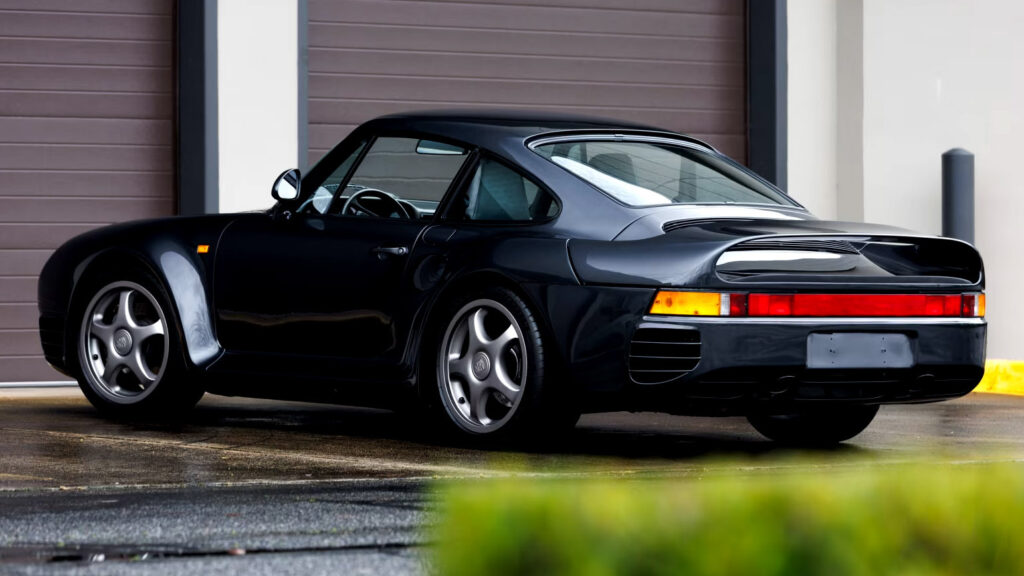


Only 292 road-going Porsche 959 Komforts were ever built. One of them, carrying just 3,521 miles on its odometer, is heading to Mecum’s auction block next month with no reserve price. For a car that once held the title of fastest production vehicle on earth, that’s a gutsy move — or a supremely confident one.
The 959 was Porsche’s moonshot in 1986: twin-turbocharged flat-six, all-wheel drive with electronically controlled torque split, tire pressure monitoring, and a 198-mph top speed. It was an engineering seminar disguised as a supercar. Most of its 292 Komfort siblings have lived pampered lives in European or Japanese collections ever since.
This particular car spent its early years in Japan before crossing the Pacific in the early 2000s. Canepa, the California-based specialist that has federalized more 959s than anyone, handled the modifications necessary to make it street-legal in the United States. That detail matters.
The 959 was never officially sold here. Every example on American soil exists because someone went through the expensive, painstaking process of making it compliant — or secured a “Show or Display” exemption.
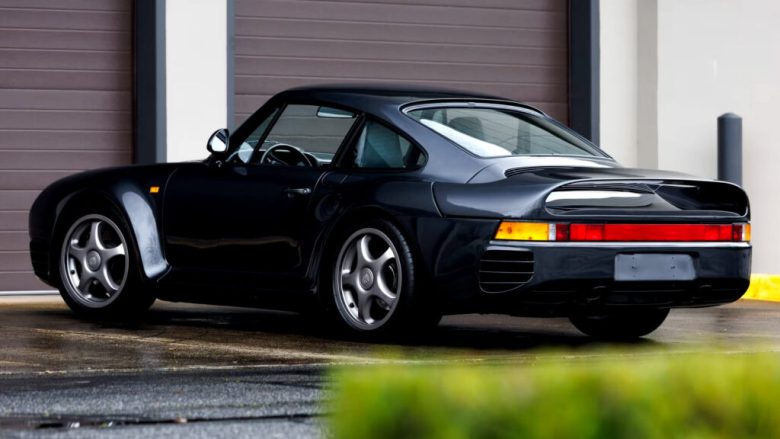
The car wears its original dark gray paint and rolls on factory 17-inch wheels wrapped in Michelin rubber. The body, with its impossibly smooth curves designed to cheat the wind, looks nothing like the angular poster cars of its decade. Porsche’s engineers were already living in the future, and the shape aged better than anything else from 1986.
Inside, black leather covers the seats, door panels, and dashboard, with silver and cream inserts on the bolsters — a combination not found on every 959. Whether anyone ever pushed this car toward its terminal velocity remains unknown. At 3,521 miles, it’s fair to guess the answer is no.
The no-reserve format is the headline within the headline. Sellers typically protect cars at this level with a safety net. Skipping that signals either total confidence in the market or a consignor who simply wants the car sold, full stop.
A decade ago, you could find a 959 for under a million dollars if you were patient and well-connected. That era is dead. Prices now routinely clear $2 million, and earlier this year a 959 hammered at $2.53 million in Arizona. The analog supercar market, fueled by collectors who grew up worshipping these machines on bedroom-wall posters, has repriced the entire category.
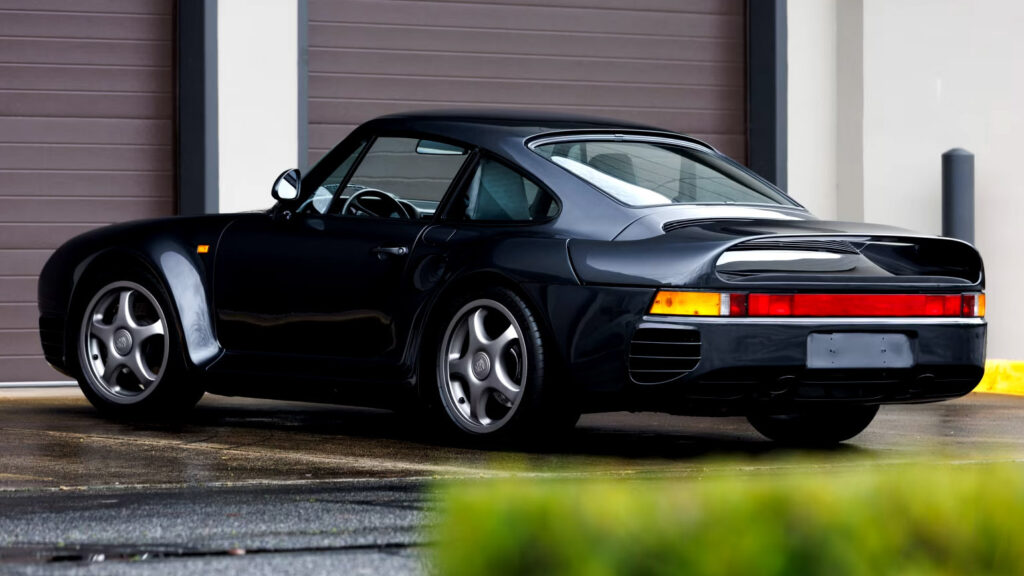
The 959 sits at the intersection of every force driving that surge: genuine rarity, genuine engineering significance, and a driving experience that no modern hypercar can replicate. There are no drive modes, no touchscreens, no over-the-air updates. There’s a boost gauge, a mechanical symphony, and your own reflexes.
Mecum hasn’t announced the exact date, but the auction is scheduled for next month. Expect paddles to stay raised well past the $2 million mark. The only real question is how far past.
In a room full of collectors who remember when this was the fastest thing on four wheels, sentiment has a way of adding zeros. No reserve means no floor. But for a car like this, the floor was never the concern.

Share this Story