
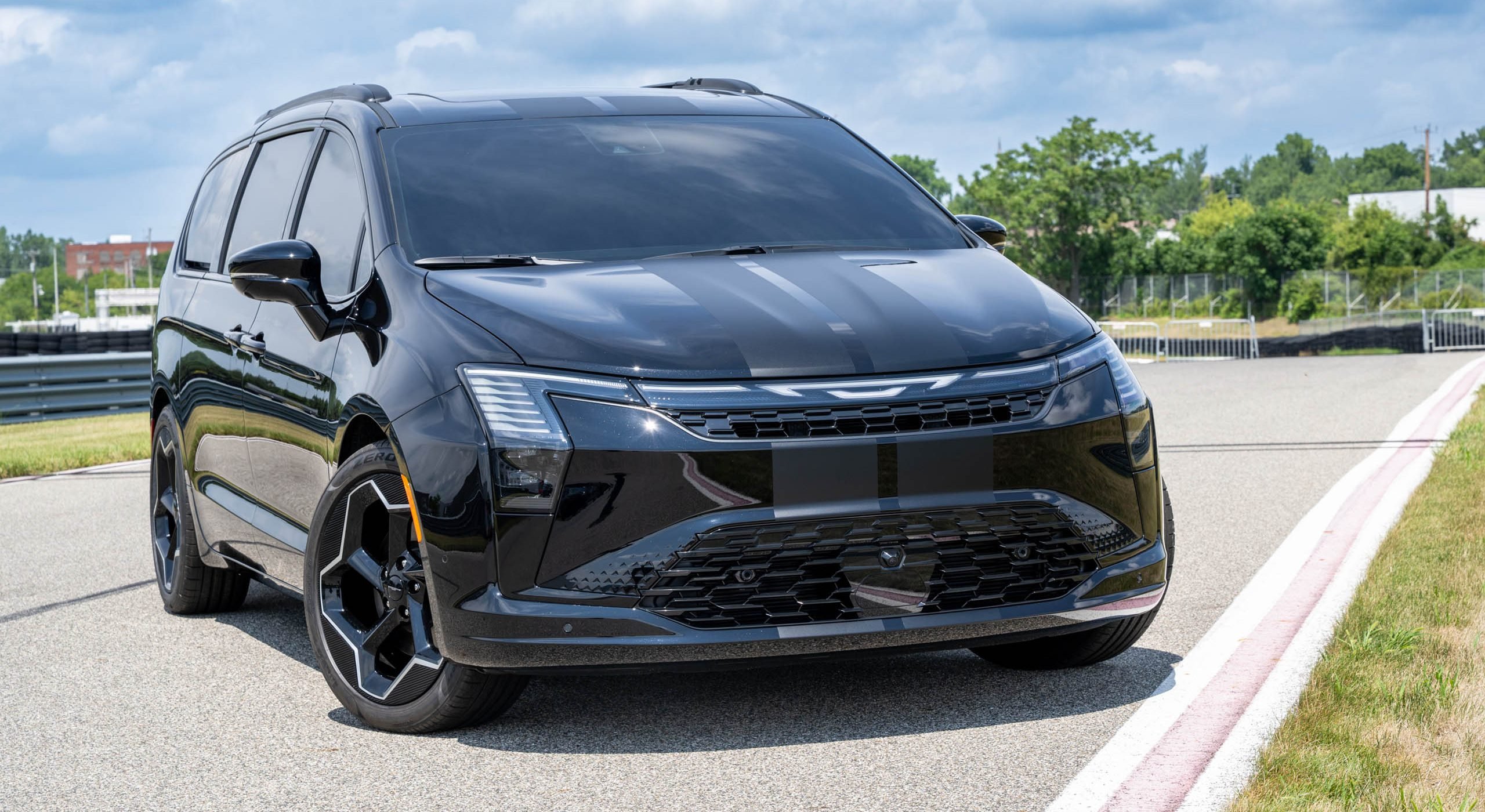


Two modified Chrysler Pacificas rolled into Roadkill Nights in Pontiac, Michigan on Saturday, both sitting closer to the pavement than any factory minivan has a right to. One was a collaboration with VANkulture, easy enough to dismiss as a custom show piece. The other one is harder to ignore.
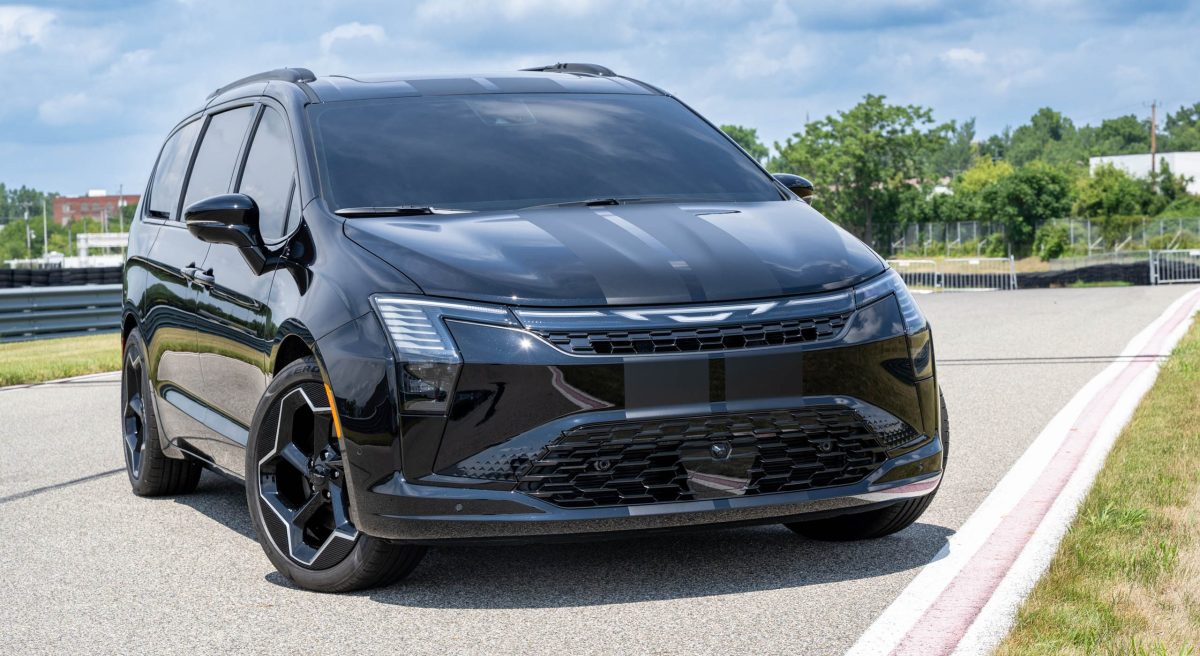
The black Pacifica, labeled simply the “Chrysler Pacifica Concept,” started life as a 2027 Pacifica Limited AWD with the S Appearance Package. Chrysler added Mopar stripes, black-painted brake calipers, a 1-inch lowering kit, 21-inch wheels with a specific design name (Geode), Pirelli P Zero summer rubber, and red seat belts borrowed from the America250 special edition.
That parts list reads like a dealer-installed accessories catalog, not a concept car. Every piece is a bolt-on. The wheels already have a production-style name.
Stellantis even used the word “factory” twice in one sentence describing the modifications. When The Drive asked directly whether a factory-lowered Pacifica was headed to production, Stellantis deflected to the recently launched America250 special edition.
Then Chrysler CEO Matt McAlear offered a carefully worded non-denial: “Concepts give us an opportunity to explore ideas that resonate with customers and demonstrate the flexibility of the Pacifica platform. Stay tuned.”
This is the second time in 12 months Chrysler has floated a modified Pacifica and gauged the reaction. Last August, the brand unveiled the Grizzly concept, a lifted Pacifica riding on 31-inch BFGoodrich all-terrain tires with a light bar and a retractable awning. At the Los Angeles auto show in November, McAlear called the response “overwhelming” and said the company was “building business cases.”
Now the brand has shown a lowered version and a lifted version, testing opposite ends of the spectrum. One Pacifica for the trail crowd, one for the stance crowd. Both designed to pull buyers who would never have walked into a Chrysler dealer five years ago.
Chrysler says its S Appearance Package already accounts for a third of all Pacifica sales, which tells you something about who is buying these vans and what they want them to look like. The brand also claims minivan purchases among Gen Z and Millennial buyers have jumped 143 percent over the last decade, with retail sales forecast to grow 18 percent in the next five years. Chrysler provided no source for those numbers.
Sam Abuelsamid, Vice President of Market Research at Telemetry, sees room for growth. “New generations like to shift directions from the prior generation,” he said, pointing to fatigue with the crossover-SUV formula that has dominated for over a decade. He noted that the pandemic-era van life trend opened eyes to what a van platform can actually do.
Chrysler desperately needs this kind of momentum. The brand has shrunk to a single nameplate and has been treading water while Stellantis promises three new SUVs under $40,000 as part of a broader 60-vehicle offensive by 2030. Those SUVs are still in the pipeline.
The Pacifica is here now, freshly refreshed with its angular new face, and Chrysler appears to be squeezing every drop of relevance it can from the platform while it waits for reinforcements. A lowered minivan on summer tires with named production wheels is not really a concept. It is a trial balloon with a price sheet waiting in a drawer somewhere.
McAlear’s “stay tuned” landed less like corporate hedging and more like a countdown.
Share this Story