
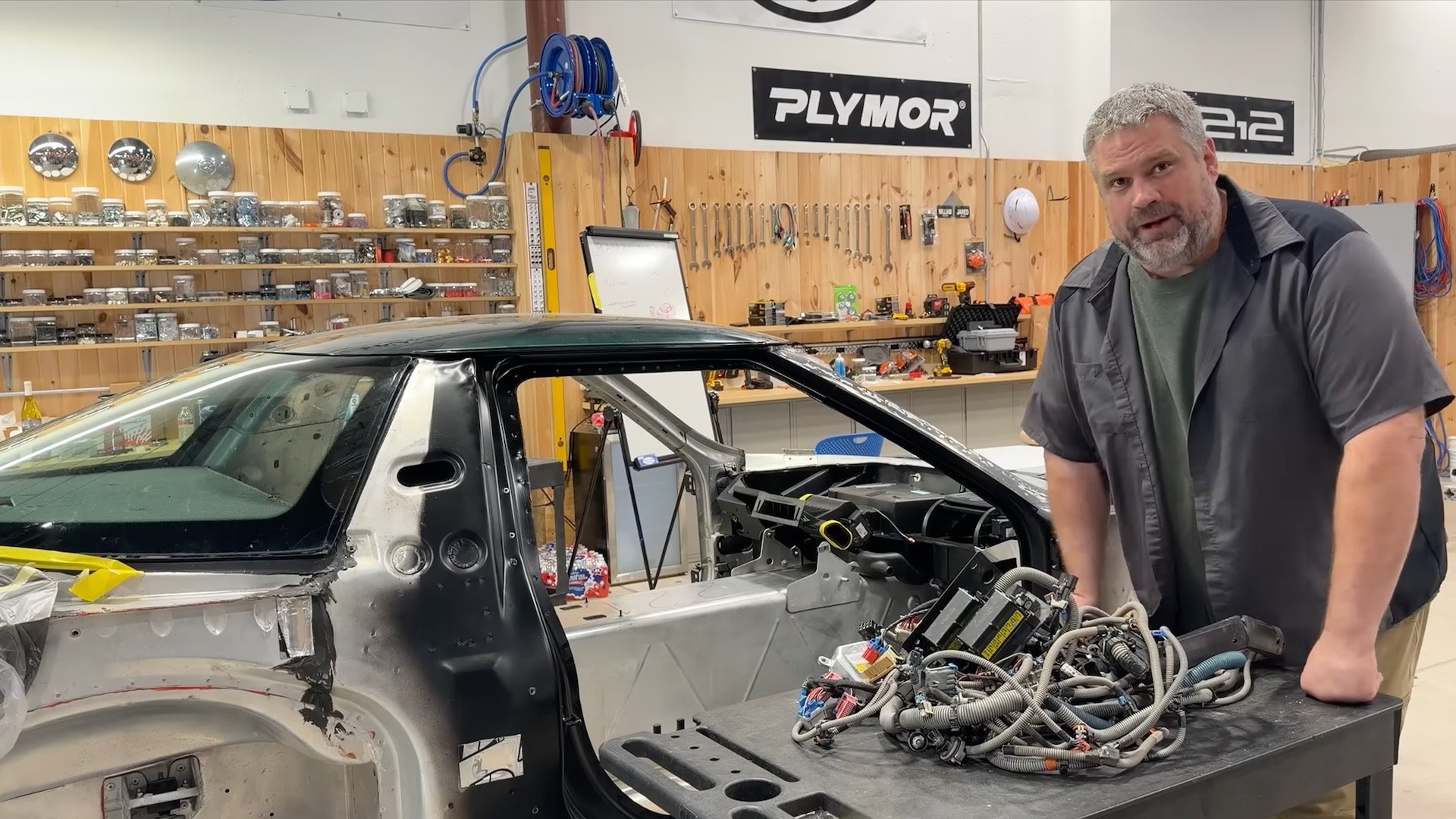


VIN 212 has power. After decades of sitting dead and decommissioned, a General Motors EV1 bought from an impound auction for $104,000 late last year has its 12-volt electrical system running. The dashboard glows, the radio works, and the odometer reads 28,832 miles.
The brake lights fire. And the car accepted its security code. That last detail matters more than it sounds.
Without the security handshake, the EV1 can never be driven again. With it, the path to making this car move under its own power just got considerably shorter.
The Questionable Garage, a YouTube channel running what might be the most audacious restoration project in the hobby right now, shared the progress in a recent video. The work is painstaking and unglamorous. Decades of outdoor storage left the wiring harness connectors coated in corrosion, so the team ran them through an ultrasonic cleaner before mounting the entire harness on a test buck outside the car.
The shifter panel got torn down, cleaned, and rebuilt with new bulbs for its backlit buttons. During disassembly, the crew found a screw taped over the park-interlock switch. That was almost certainly a deliberate modification from when GM donated the car to Clark Atlanta University, allowing it to be rolled around in neutral after its powertrain had been gutted.
GM wanted these cars preserved as classroom props. Not as running vehicles.
That distinction sits at the heart of why this restoration is so improbable. GM leased the EV1 to customers starting in 1996, then recalled every single one when those leases expired. Most were crushed.
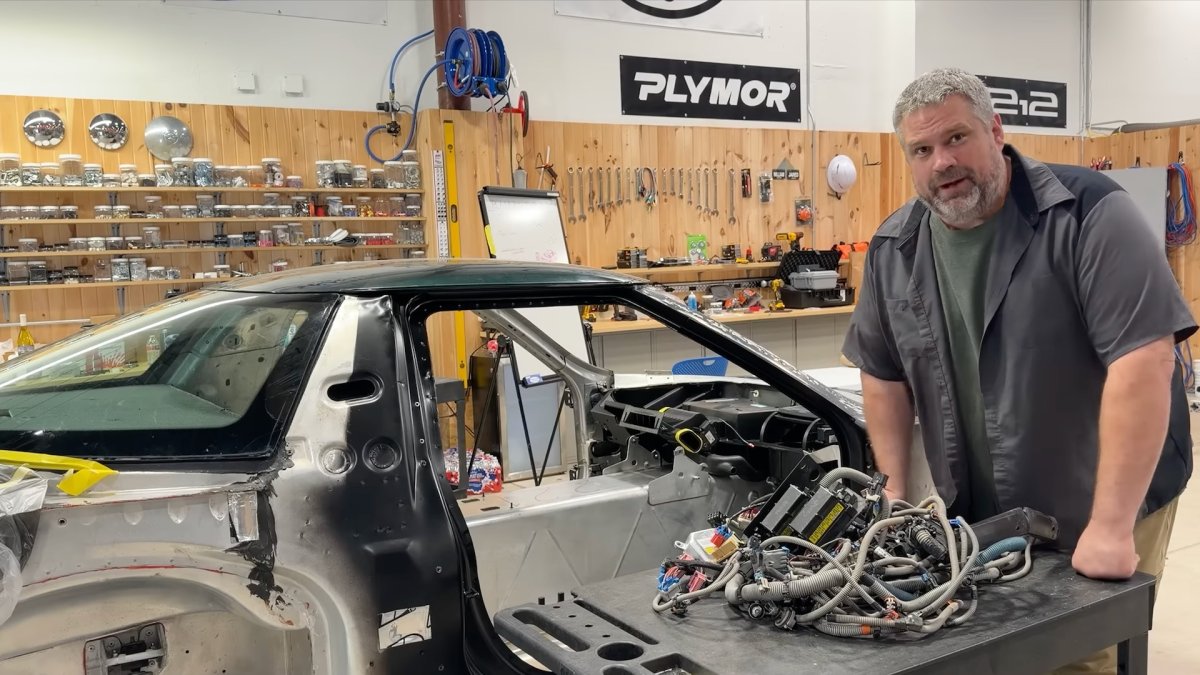
The handful that survived were stripped of critical components, their power control modules yanked, their drivetrains neutered. Finding parts is not like calling a junkyard. There is no junkyard for this car.
The next major challenge underlines that reality. The team needs to install EV1-specific software onto a powertrain control module sourced from a Chevrolet S-10 EV, a related but different platform. Making that module speak fluent EV1 is not a plug-and-play job.
GM itself is now backing the project, which adds a layer of irony thick enough to cut with a plasma torch. This is the same company that pulled these cars off the road in 2003 and sent them through the crusher, sparking a documentary and years of bitter criticism from early EV advocates. Four years after killing the EV1 program, GM unveiled the Chevrolet Volt concept, essentially admitting the market it had just abandoned was real.
Two decades later, the company is helping resurrect one of the cars it tried to erase.
The EV1 was never produced in large numbers. Fewer than 1,200 were built across two generations, with meaningful engineering differences between earlier and later models that make parts interchangeability tricky even when components can be found. VIN 212 is a Gen 1 car, which narrows the donor pool even further.
Watching a disembodied instrument cluster and an Oldsmobile-sourced head unit flicker to life on a workbench is not exactly a shakedown run at Milford. But for a car that GM tried to make permanently inoperable, getting the electronics to wake up and recognize their own security protocols is a real threshold. The wiring works. The computers respond. The bones are alive.
Now comes the hard part. Getting those bones back into the body, reconnecting a powertrain that was never supposed to run again, and convincing software designed for a different truck to pretend it belongs in a two-seat electric coupe that the world was told it didn’t need.





Share this Story