
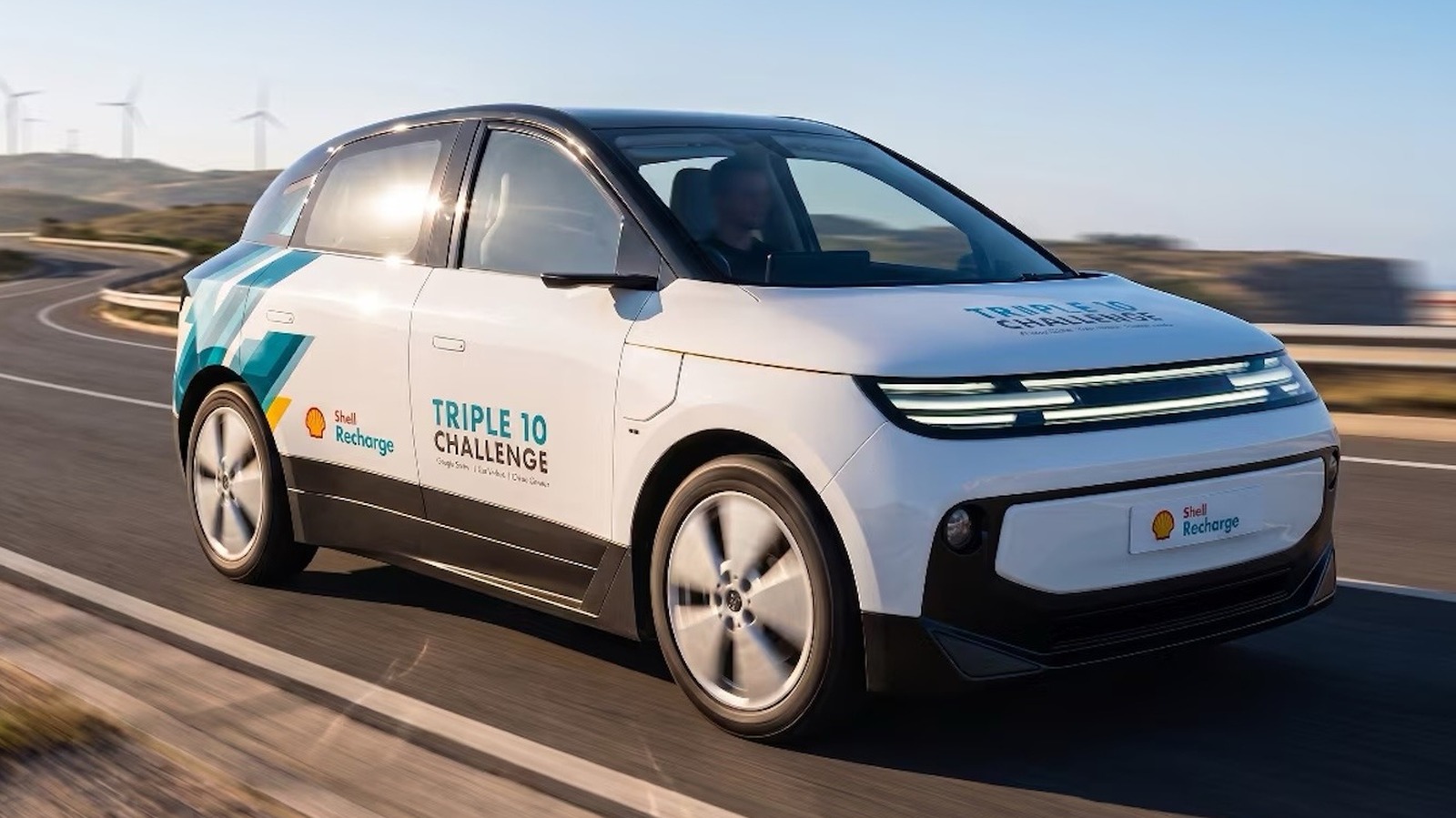


An oil company just built one of the more compelling electric car concepts of the year. That sentence should feel stranger than it does.
Shell’s Triple 10 Challenge is a small electric hatchback designed around three benchmarks: 10 kilometers per kWh of driving efficiency (roughly 209 MPGe), lifecycle CO2 emissions of 10 metric tonnes, and a 10%-to-80% charge in under 10 minutes. It hit all three. The charging figure came in at 9 minutes, 54 seconds.
Those numbers alone would be noteworthy from any automaker. The detail that makes them genuinely interesting is the charger Shell used to get them: a common 175-kW unit, not the 300-kW-plus hardware most EVs need to post similar times.
That gap is the story. Today’s fastest-charging EVs — Hyundai Ioniq 5, Porsche Taycan, Kia EV6 — rely on brute-force power delivery from high-output stations that remain relatively scarce in the real world. Shell’s approach flips the equation.
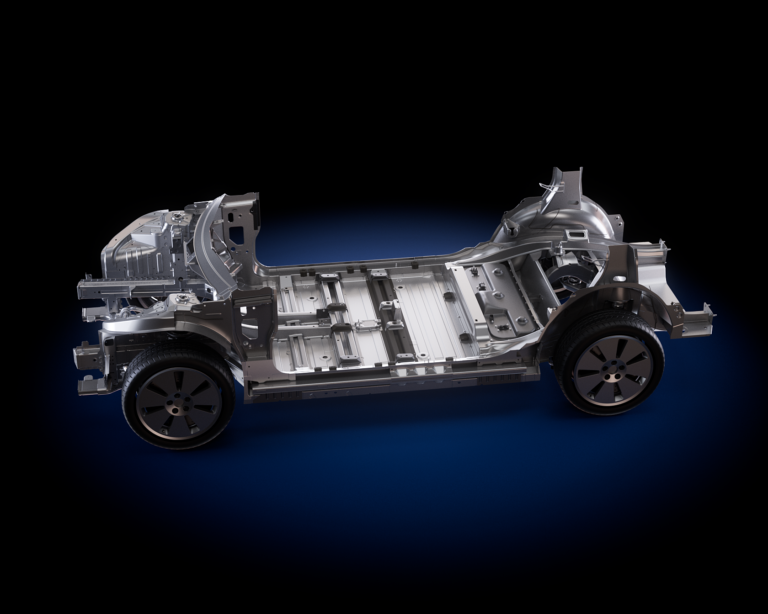
A smaller battery pack, immersed directly in Shell’s dielectric thermal fluid, manages heat so efficiently that it can absorb energy faster relative to its size without needing a fire hose of electrons to do it. Dielectric fluid — the kind that doesn’t conduct electricity — replaces the water-ethylene-glycol coolant found in conventional EV battery packs. Shell says the simplified cooling architecture cuts battery pack costs by 25%.
For context, Tesla’s single-motor Model 3 is rated at 139 MPGe combined and quotes 170 miles of range added in 15 minutes on a 225-kW Supercharger. The Triple 10 adds 152 miles in under 10 minutes on substantially less power.
Then there’s the car itself, which has no business looking as good as it does. The hatchback proportions are tight and purposeful, with original bodywork, bespoke headlights, and an interior featuring dual screens running Apple CarPlay. It doesn’t appear to be a rebodied Fiat 500e or some existing platform in a costume.
If an established automaker showed up with this exact shape and promised it for under $25,000 with these charging specs, the internet would melt. Shell has no intention of selling cars. The Triple 10 is a rolling pitch deck, a proof-of-concept meant to lure OEMs and battery suppliers into partnerships.
“We hope to partner with OEMs and battery suppliers to share our expertise,” the company’s press release states, targeting “next-generation EVs that are lighter, highly efficient, simpler to manufacture, and more cost-effective.”
The irony of a fossil fuel giant building a better EV mousetrap is impossible to ignore. But Shell already operates one of the world’s largest EV charging networks through Shell Recharge, and selling thermal fluids to automakers is a natural extension of selling lubricants and coolants — a business it has run for over a century. The product being marketed here isn’t the car. It’s the liquid inside the battery.
Whether any automaker bites remains to be seen. The major OEMs have spent billions developing their own thermal management systems and aren’t typically eager to hand a critical subsystem to a supplier with “Shell” on the invoice. But the data is hard to argue with: faster charging, lower power requirements, cheaper packs.
The EV industry has spent years chasing bigger batteries and more powerful chargers. Shell just suggested the smarter play might be a smaller battery that stays cool.

Share this Story