
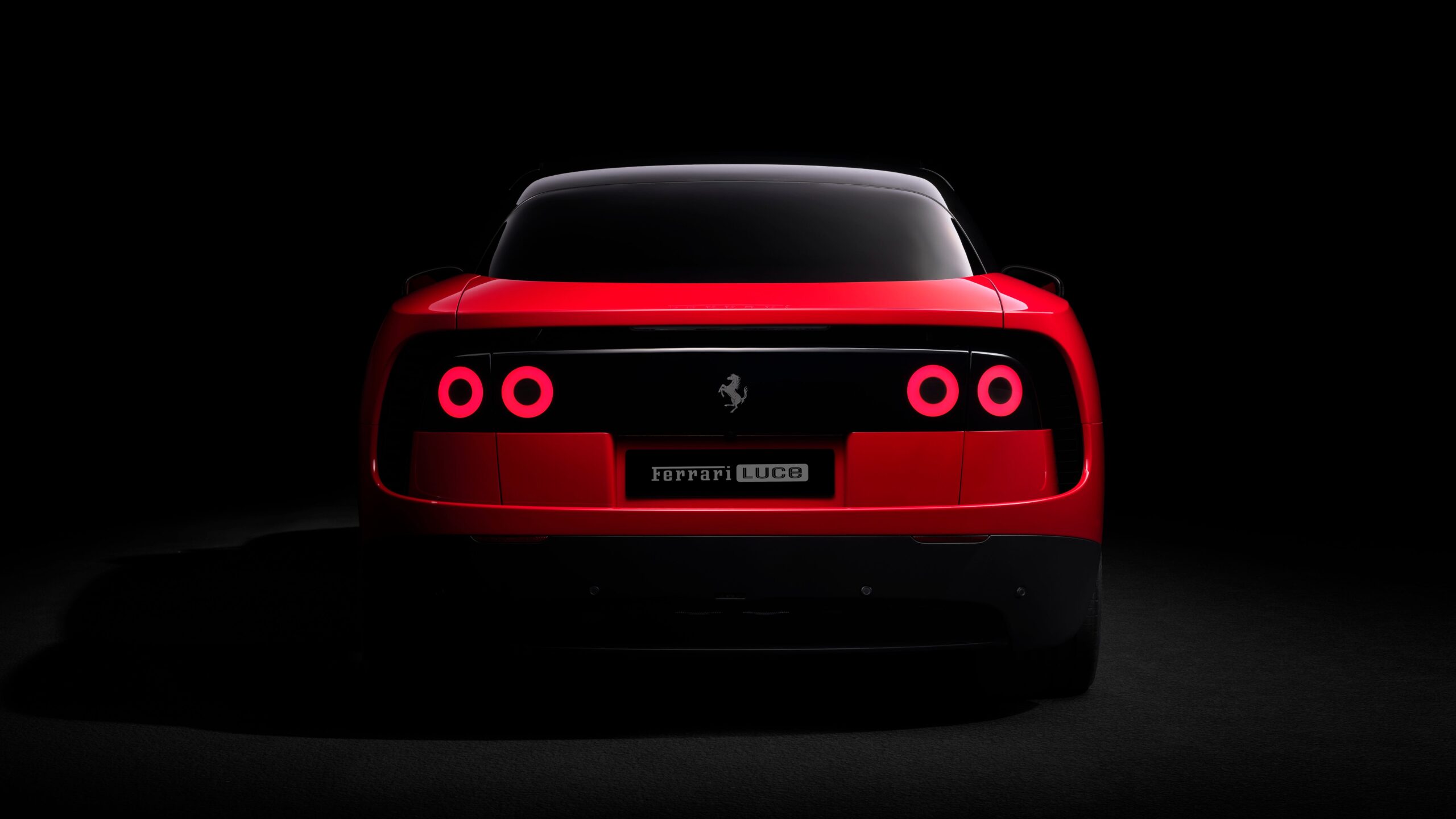


Ferrari’s first electric vehicle doesn’t look like one inside. That’s the point.
The 2027 Ferrari Luce, now revealed in full interior detail, rejects the tablet-on-a-dashboard approach that has consumed nearly every EV competitor. Screens are modest. Physical switchgear is abundant.
The center touchscreen pivots toward the driver or front passenger, a clever trick, but it’s not a 17-inch slab dominating the cabin like some Silicon Valley fever dream. This is Ferrari telling the EV world it doesn’t need to play by anyone else’s rules.
The Luce is a first in two ways: Ferrari’s inaugural battery-electric car, and its first five-seater. That rear bench seats three across, a sentence that would have read as parody five years ago. Ferrari building a family car.
Except it’s not framed that way. Rear-hinged doors give the back row a theatrical entrance. Rear passengers get their own screen integrated into the back of the center console, flanked by toggle switches that look like they belong in something that costs north of $300,000. Because it will.
The details tell you where Ferrari’s designers spent their time. A ceiling-mounted handle activates launch control, positioned overhead like something from a fighter jet. The steering wheel carries both a traditional Manettino dial in red and a new eManettino dial dedicated to powertrain modes.
Ferrari didn’t replace its analog language with digital equivalents. It added to the vocabulary.
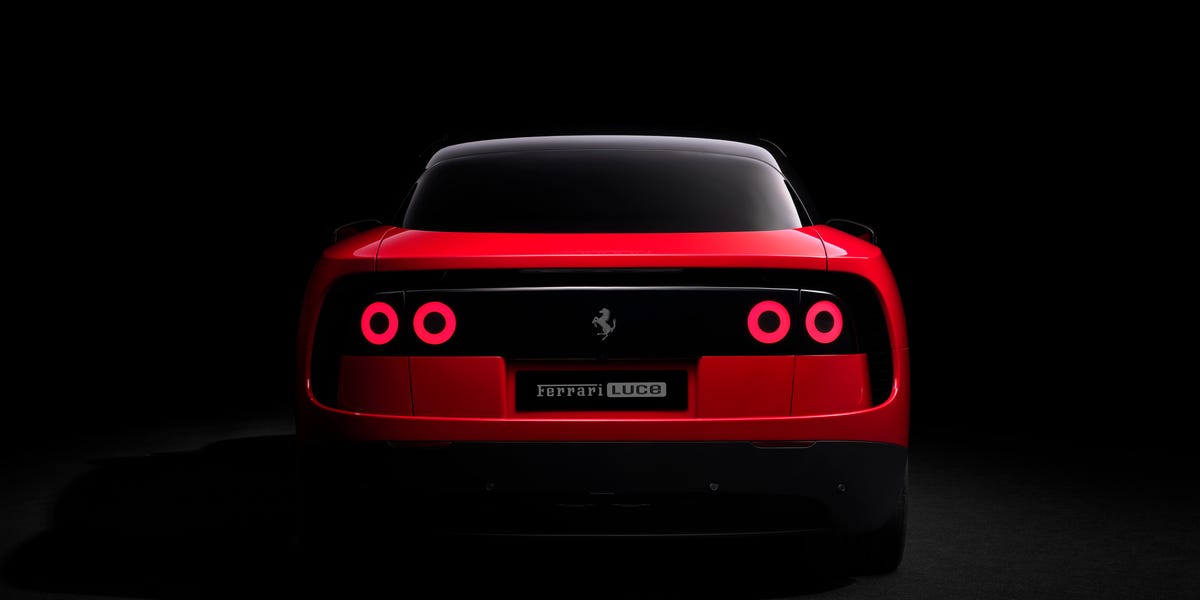
The trunk is the largest Ferrari has ever offered. That’s not a high bar, since most Ferraris treat cargo space as an afterthought. But it signals the Luce occupies genuinely new territory for Maranello.
What strikes you scrolling through the gallery is restraint. The industry trend for EVs has been minimalism taken to absurdity: strip everything out, replace it with a screen, call it futuristic. Tesla started it, Rivian refined it, and nearly everyone followed.
Ferrari went the other way. The Luce cabin is rich with physical controls, layered materials, and a cockpit architecture that feels designed for a driver, not a software update.
That choice carries risk. The EV buyer demographic skews toward tech-forward consumers who expect over-the-air upgrades and app-controlled everything. Ferrari is betting its customer, the person writing a check well into six figures, wants something different.
They want to feel switches under their fingers. They want the car to feel like a machine, not a device.
It’s a bet rooted in knowing exactly who buys Ferraris. These aren’t early adopters chasing specs. They’re collectors, enthusiasts, and status buyers who want rarity and craft.
The Luce interior reads like a statement that electrification doesn’t require surrendering identity. Ferrari has watched the rest of the luxury EV market turn into glowing rectangles and touch-sensitive surfaces. The Luce says Maranello noticed and chose differently.
Whether the driving experience matches the interior’s promise remains to be seen. But on the evidence of what’s inside the cabin, Ferrari hasn’t lost its nerve going electric. It’s kept its personality and simply changed the fuel.


Share this Story