
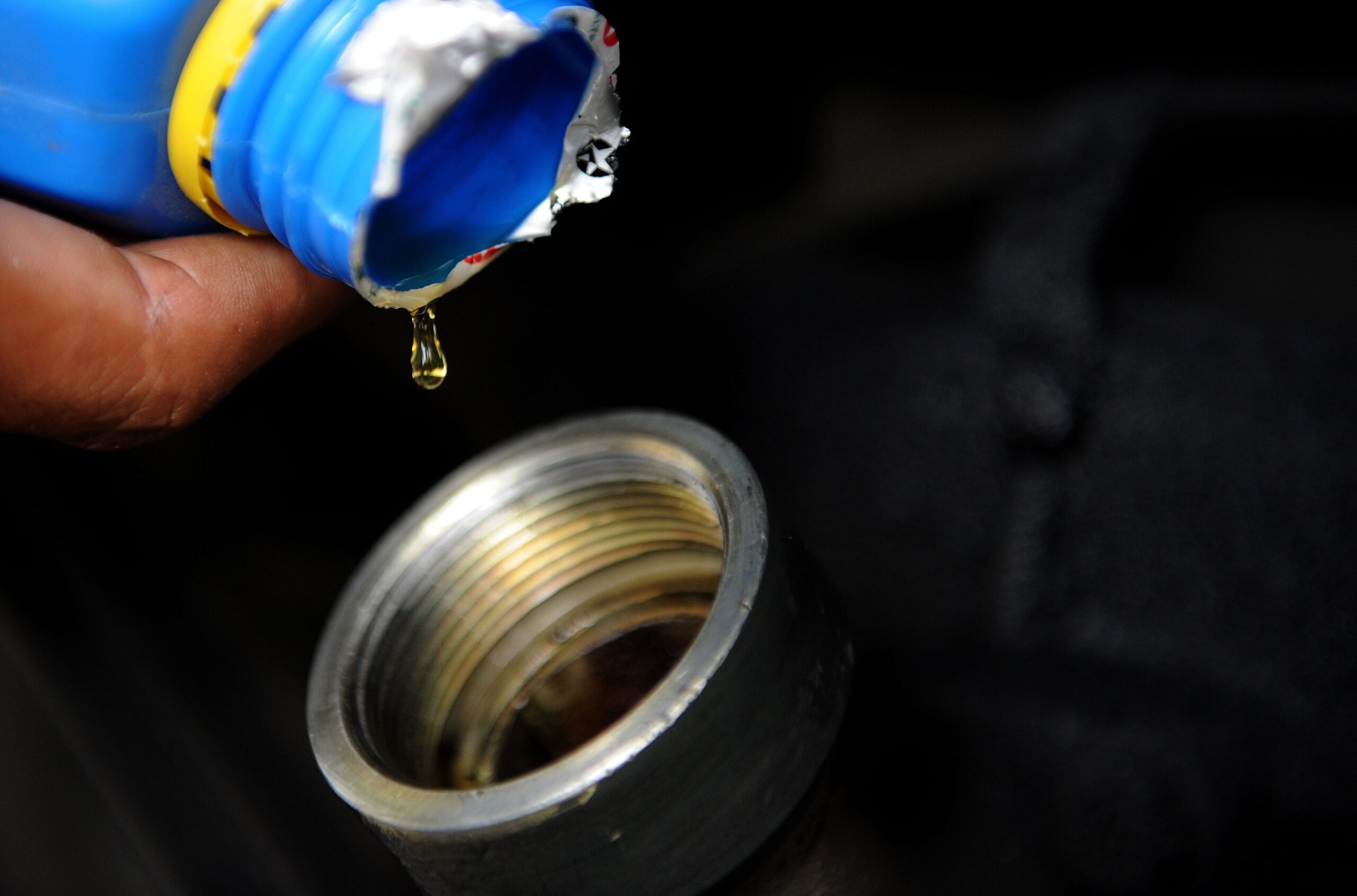


The war with Iran has done something no OPEC production cut ever managed: it’s threatening to drain America’s synthetic motor oil supply, and the damage will linger well past any ceasefire.
A new report from Automotive News lays out the math. The closure of the Strait of Hormuz has cut off roughly half of all Group III base oil imports to the United States. Group III is the essential ingredient in synthetic motor oil — the stuff modern engines are designed to run on, the stuff every owner’s manual specifies, the stuff you can’t just substitute with conventional dino juice.
Three facilities — Pearl GTL in Qatar, ADNOC in the UAE, and Bapco in Bahrain — supplied 44 percent of that oil by themselves. Iranian military strikes have left the Pearl GTL plant operating at half capacity, and it won’t be fully online for at least a year.
South Korea normally picks up about 30 percent of America’s Group III slack. Not this time. Korean producers are struggling with the same Middle East supply disruptions, and with diesel and jet fuel margins hitting 40-year highs, refiners are chasing bigger paydays on finished products rather than selling lower-margin base oils for motor oil production. The economic incentives are pointing the wrong direction.
The effects are already showing up at dealer service bays and quick-lube shops. Certain viscosities — 5W-30 and 0W-20, the two most common synthetic grades in passenger cars — are getting harder to keep on shelves. Toyota and Nissan have begun advising dealers on alternative lubricant options and rationing their existing supplies to prevent runaway pricing at the service counter.
That’s two of the largest automakers in America quietly telling their own dealer networks to start improvising. That’s not a normal Tuesday.
The Independent Lubricant Manufacturers Association projects that even if hostilities ended tomorrow, it would take months to rebuild inventory to pre-conflict levels. Full price normalization won’t happen until the U.S. strategic petroleum reserves are replenished. ILMA pegs that timeline at mid-2027 at the earliest.
This isn’t a hypothetical supply crunch. It’s a slow squeeze already in motion, and it lands hardest on everyday drivers who just need an oil change. Modern turbocharged engines are unforgiving about lubricant quality. Running the wrong oil, or stretching intervals too far, invites the kind of engine damage that makes a $120 oil change look like a rounding error.
America’s dependence on Middle Eastern base oil stocks was never a secret, but it was the kind of vulnerability that only mattered when things went wrong. Things have gone wrong. And the backup plan — Korean imports — turns out to share the same single point of failure.
Dealers rationing oil. Refiners chasing margins elsewhere. A critical production facility running at half speed for a year. No quick diplomatic fix changes the physical reality of rebuilding inventories across a global supply chain.
Nobody needs to panic-buy cases of Mobil 1. But anyone due for an oil change in the next six months should be ready for higher prices, longer waits, and the possibility that their preferred brand simply isn’t available. The synthetic oil aisle at your local parts store is about to get a lot thinner, and it’s going to stay that way for a while.


Share this Story