
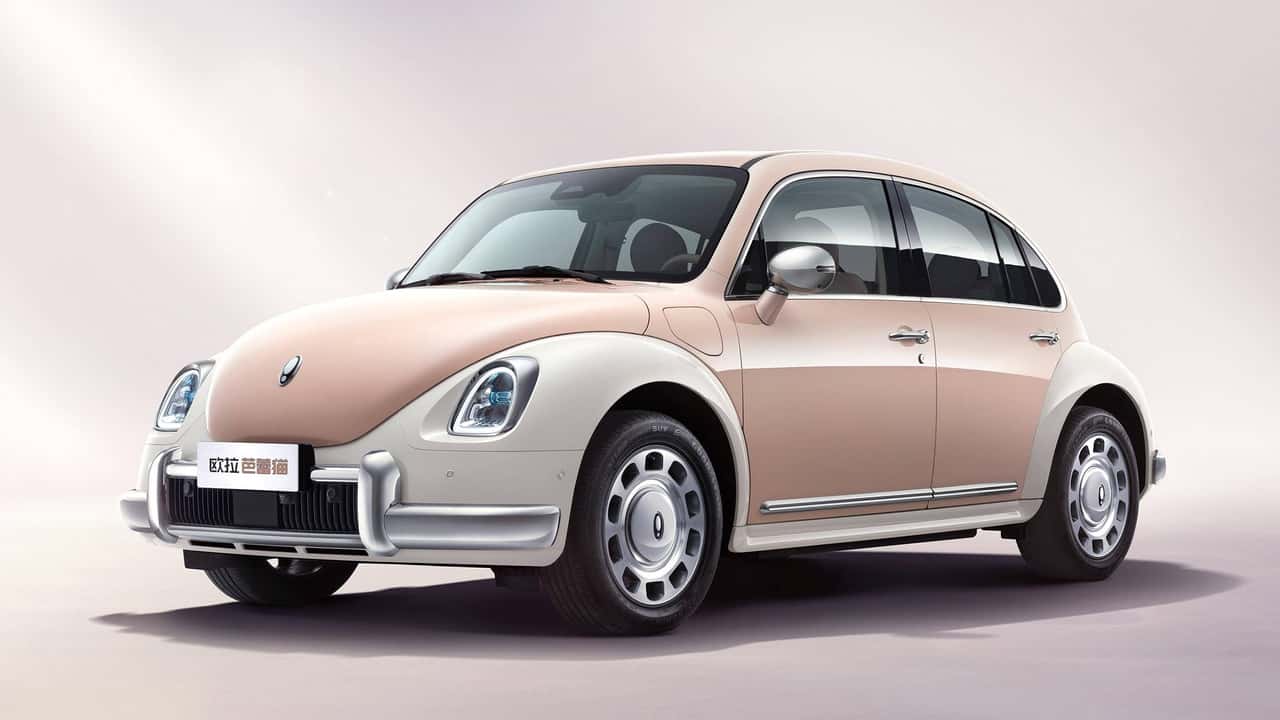


Volkswagen killed the Beetle in 2019. A Chinese automaker called Ora has been quietly building its spiritual successor ever since — and just gave it a meaningful upgrade for 2026.
The Ora Ballet Cat, a retro-styled EV that borrows liberally from the original Type 1 Beetle’s curves, now packs a 201-horsepower electric motor, up from 169 hp. Its top speed climbs from 96 mph to 112 mph. A new lithium-iron phosphate battery pack replaces the previous unit.
The details come from filings with China’s Ministry of Industry and Information Technology, first reported by CarNewsChina. None of this makes the Ballet Cat a performance car. But it makes it a more complete one.
The model debuted in 2022 and has remained stubbornly niche, moving only a few thousand units per year in China at a starting price of roughly $28,000. Ora is betting the powertrain refresh will broaden its appeal, though the car’s feature set suggests the company knows exactly who it’s targeting — and it isn’t gearheads.
The Ballet Cat comes with a large vanity mirror designed for applying makeup on the go. There’s a selfie camera that uploads directly to social media. A feature called “Warm Man Mode” rapidly heats the cabin at the push of a button. These aren’t afterthoughts or accessories. They’re central to the car’s identity.
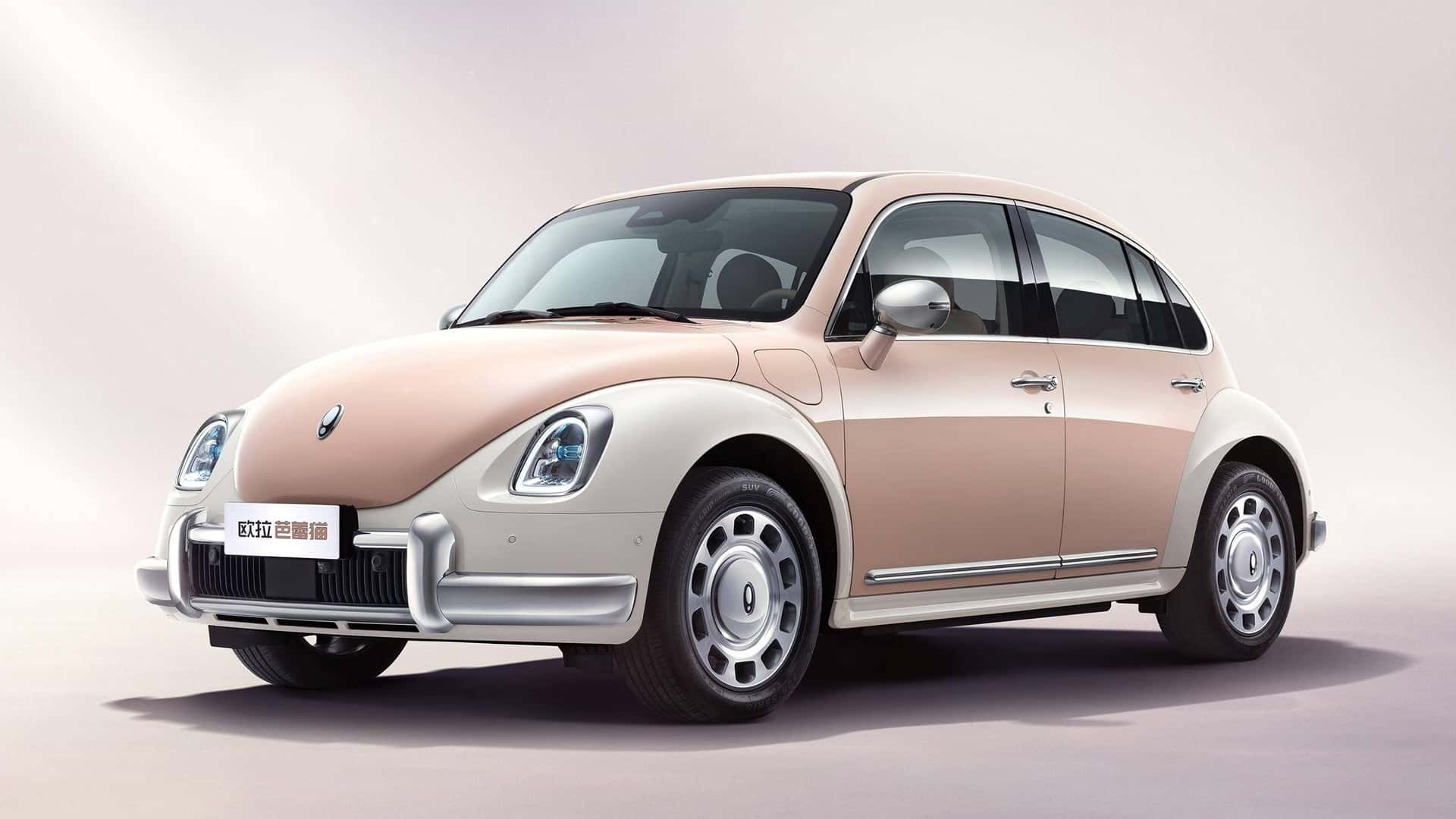
It’s a strange package by Western standards, but it reflects a Chinese EV market that has moved far beyond the “Tesla clone” stereotype. Manufacturers there are carving out hyper-specific niches, designing vehicles around lifestyle rather than lap times. The Ballet Cat doesn’t pretend to compete with a BYD Seal or a Zeekr 007.
The Beetle DNA is unmistakable — the rounded haunches, the friendly face, the compact proportions. Volkswagen itself has flirted with Beetle revival rumors for years without committing. Meanwhile, a subsidiary of Great Wall Motors went ahead and built one, electrified it, and stuffed it with features no German engineer would have greenlit.
There is zero chance the Ballet Cat comes to America. Ora has no US presence, and the current tariff environment makes Chinese EV imports effectively impossible. The car exists in a parallel automotive universe that American consumers can only observe from a distance.
But the Ballet Cat matters beyond its sales volume. It shows how Chinese automakers are willing to take creative swings that legacy manufacturers won’t. Volkswagen had the heritage, the brand equity, and the emotional connection to make an electric Beetle happen. It chose not to.
Ora, with none of those advantages, built something that at least captures the spirit. The 2026 updates are modest — a bit more power, a better battery chemistry, no significant exterior changes. Lithium-iron phosphate cells are cheaper, safer, and more thermally stable than nickel-based alternatives, which should help Ora hold the line on pricing.
Whether a few extra horsepower and a new battery move the needle for a car that sells in the low thousands remains to be seen. The Ballet Cat was never going to be a volume play. It’s a statement piece from a brand that understands the power of nostalgia, even when the nostalgia belongs to someone else.
Share this Story