
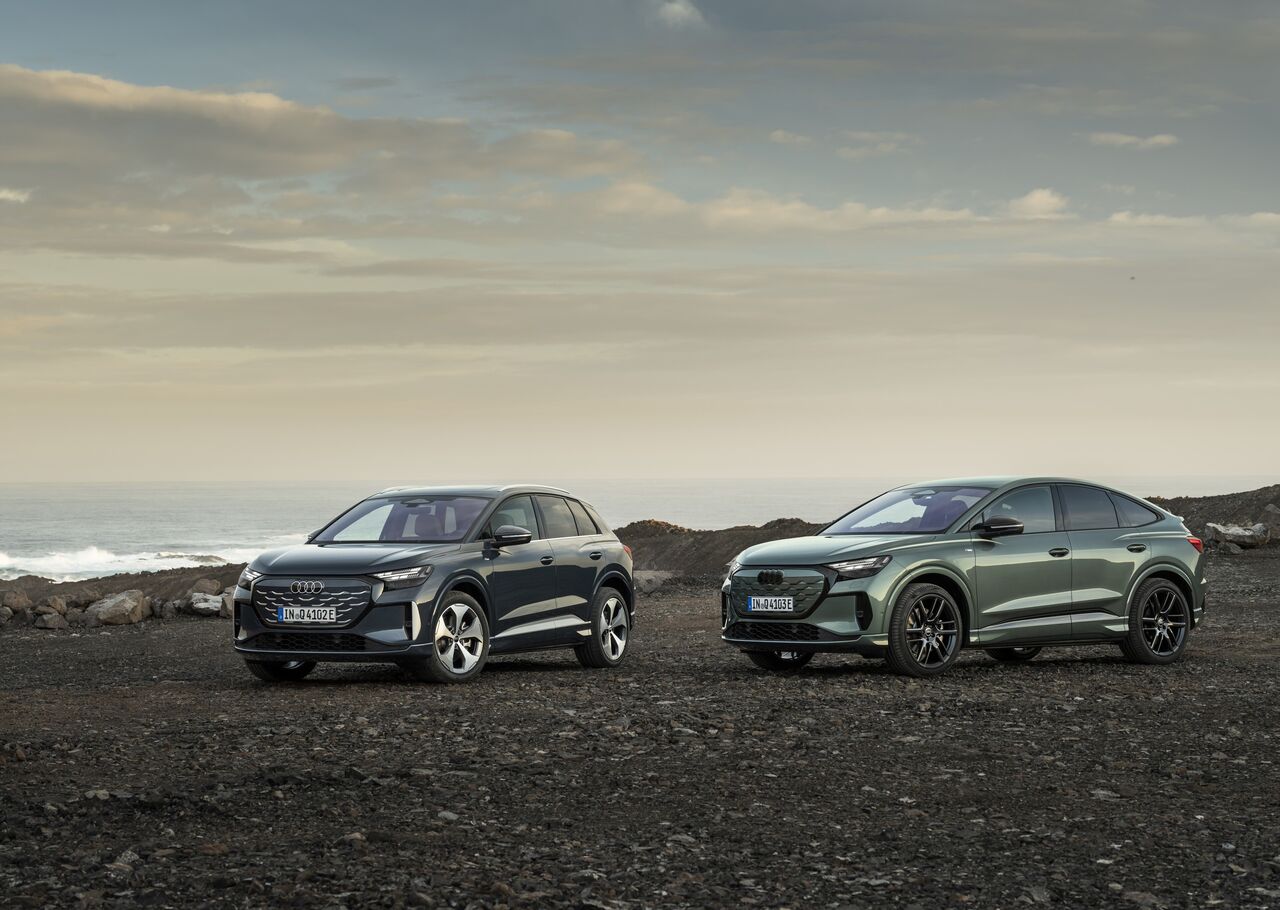


The Audi Q4 e-tron, the brand’s best-selling electric vehicle, is getting its most significant mid-cycle refresh yet — and the headline feature isn’t a bigger battery or a faster motor. It’s a power outlet in the trunk.
Audi announced Monday that the updated Q4 e-tron becomes the first model in its lineup to support bidirectional charging, allowing the car to feed energy back to external devices, and in Germany, Austria, and Switzerland, directly into the home grid. A domestic socket in the cargo area pushes 2.3 kW continuously. An optional adapter at the charging port bumps that to 3.6 kW through a camping-style connection.
Pair it with a compatible DC wallbox and a rooftop solar array, and your compact electric SUV becomes a household battery. That’s the play Audi is making here: not raw performance, but domestic utility.
A new APP350 rear motor with silicon carbide power electronics delivers roughly ten percent better efficiency than the outgoing unit. The Q4 Sportback e-tron performance now claims up to 592 kilometers of WLTP range — a figure that would have been fantasy for a compact EV just three years ago. Quattro models see DC fast charging climb from 175 kW to 185 kW, putting a 10-to-80-percent fill at about 27 minutes.
Ten minutes on a fast charger adds 185 kilometers. Those are competitive numbers, though they won’t rattle anyone at Tesla or Hyundai.
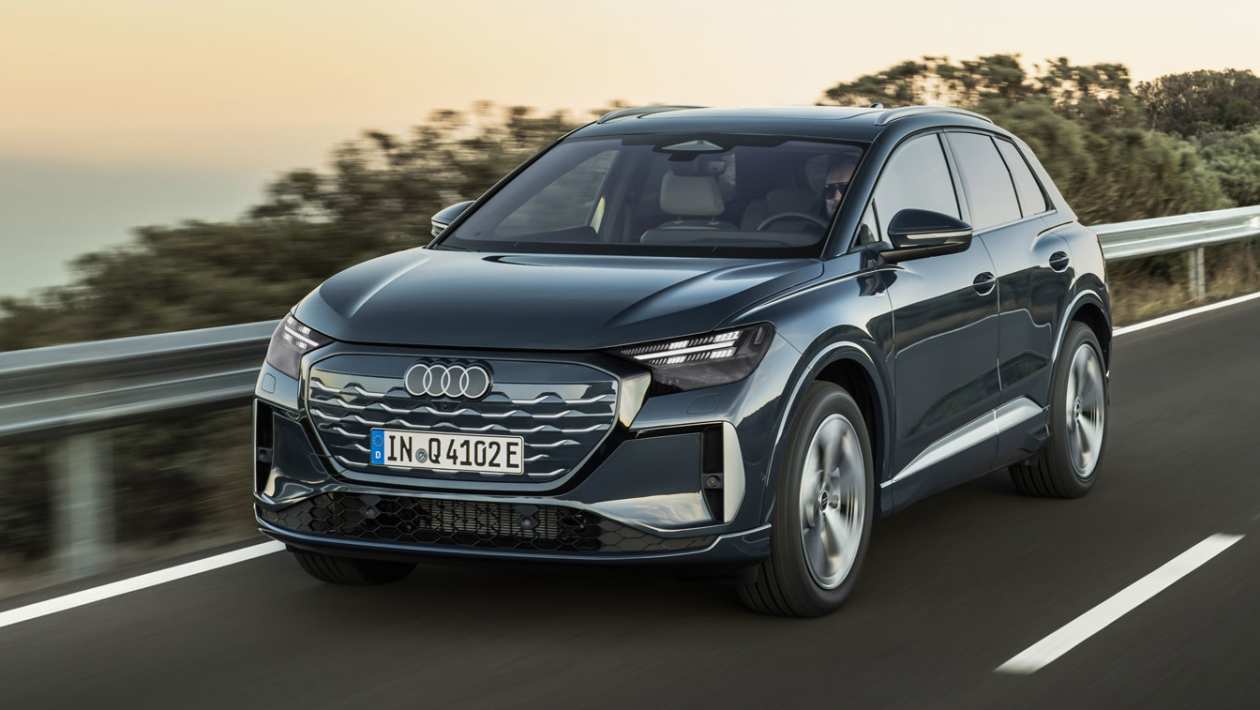
New low-viscosity transmission lubricant alone extends cold-weather range by up to twelve kilometers on a full charge. It’s a small detail that reveals where the real gains are coming from — not revolutionary chemistry, but incremental friction reduction across dozens of components.
Pricing starts at 47,500 euros in Germany for the SUV with the smaller 63 kWh battery. Quattro models run between 55,900 and 59,000 euros. The Sportback carries a 1,950-euro premium, with orders opening across Europe in May and deliveries expected over the summer.
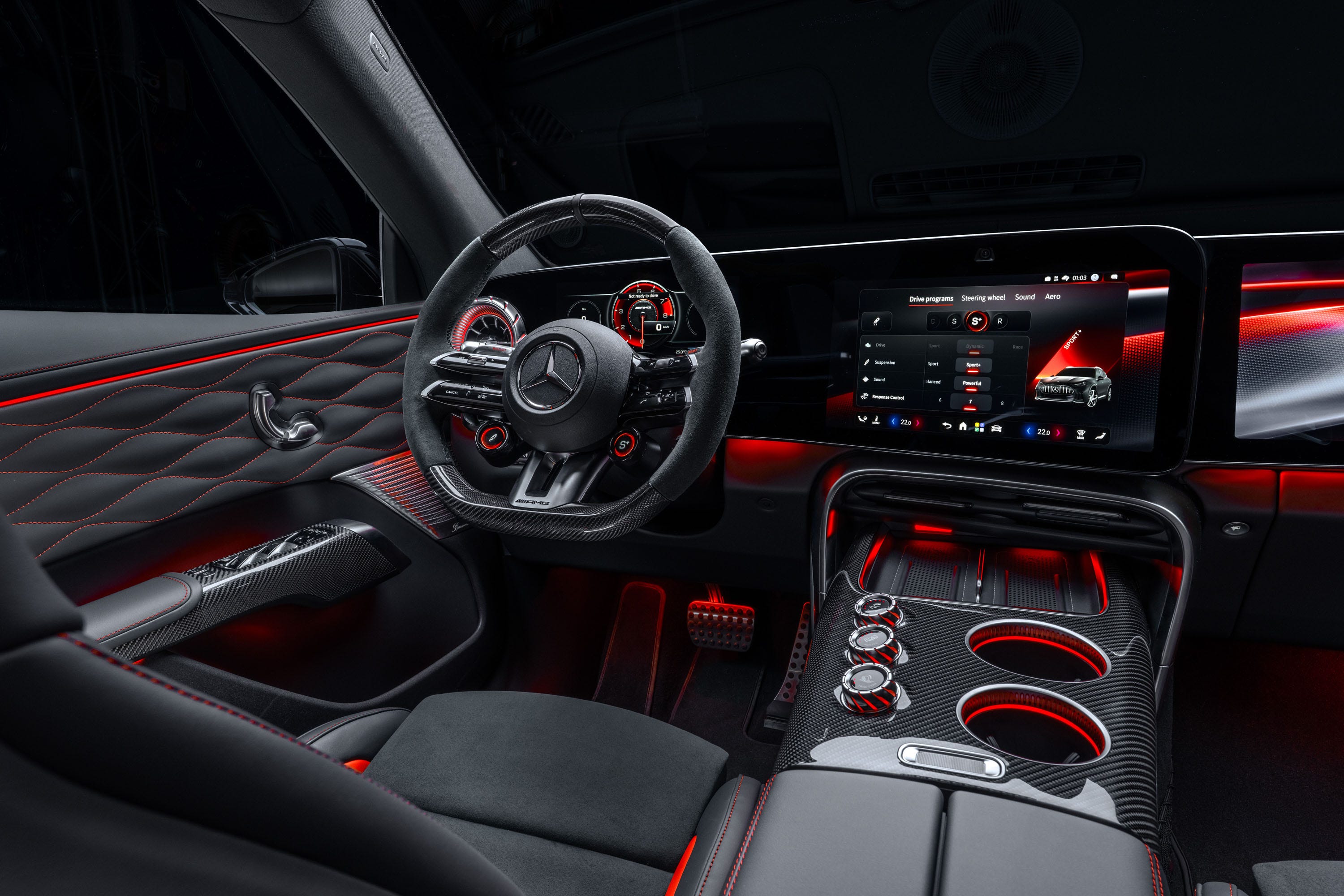
Inside, Audi has gutted the cabin and rebuilt it around what it calls the “digital stage.” An 11.9-inch instrument cluster pairs with a 12.8-inch MMI touchscreen. An optional 12-inch passenger display — the largest Audi has fitted to any model — sits opposite.
ChatGPT integration handles natural-language queries through the voice assistant. Two cooled wireless charging pads, each at 15 watts, sit in the center console. The Softwrap trim stretches unbroken from door to door across the dash, a clear attempt to close the perceived interior quality gap that dogged early Q4 e-tron models.
Towing capacity jumps by 400 kilograms to 1,800 kg on quattro variants, which quietly addresses one of the most persistent complaints from European families who wanted an electric SUV that could actually haul a caravan or boat trailer. An electric tailgate is now standard. The 515-liter trunk expands to 1,487 liters with the rear seats folded.
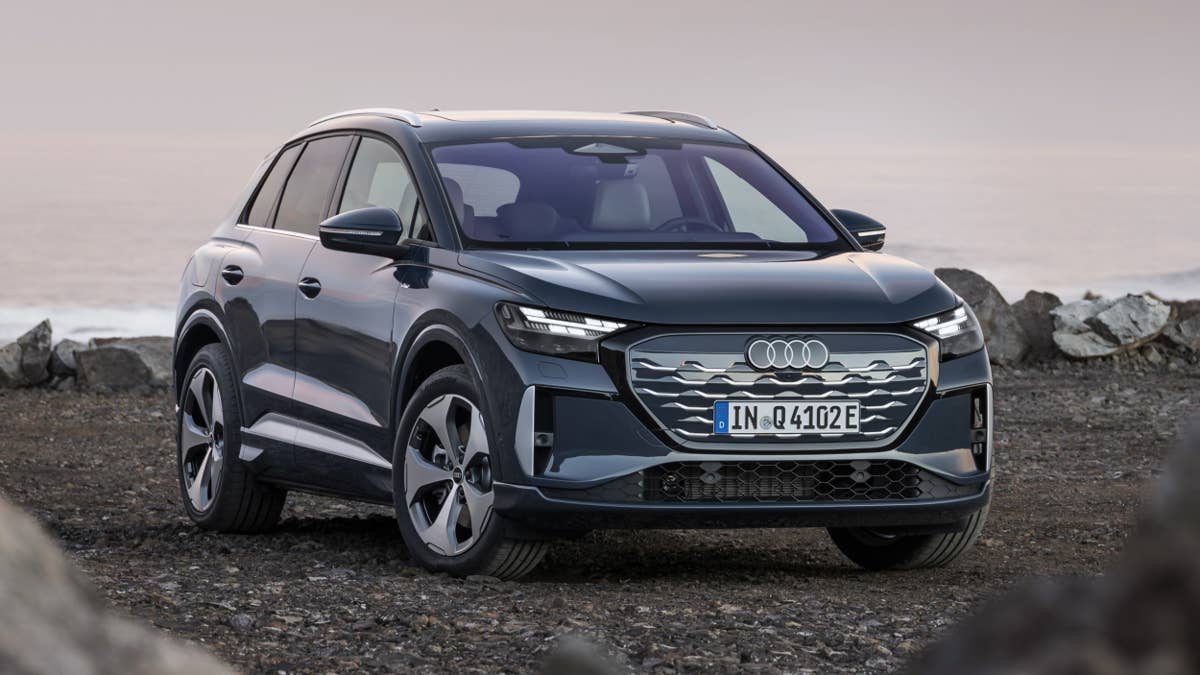
Outside, the Singleframe grille is now body-colored. Second-generation digital OLED taillights use 284 individually controlled segments across six panels, generating new light patterns multiple times per second. An optional proximity warning illuminates when a trailing vehicle gets too close to the stationary Q4 — a safety feature Audi first introduced on the Q6 e-tron.
The real tension in this refresh is strategic. Audi isn’t chasing the performance EV arms race. It isn’t unveiling a radical new platform.
Instead, it’s betting that what sells compact electric SUVs in 2026 is the unsexy stuff: the ability to charge an e-bike from your car, feed solar energy back through your garage, tow a real load, and charge your phone without it overheating. The Q4 e-tron started life as Audi’s electric entry point. This update reframes it as an appliance — in the best possible sense of the word.


Share this Story