
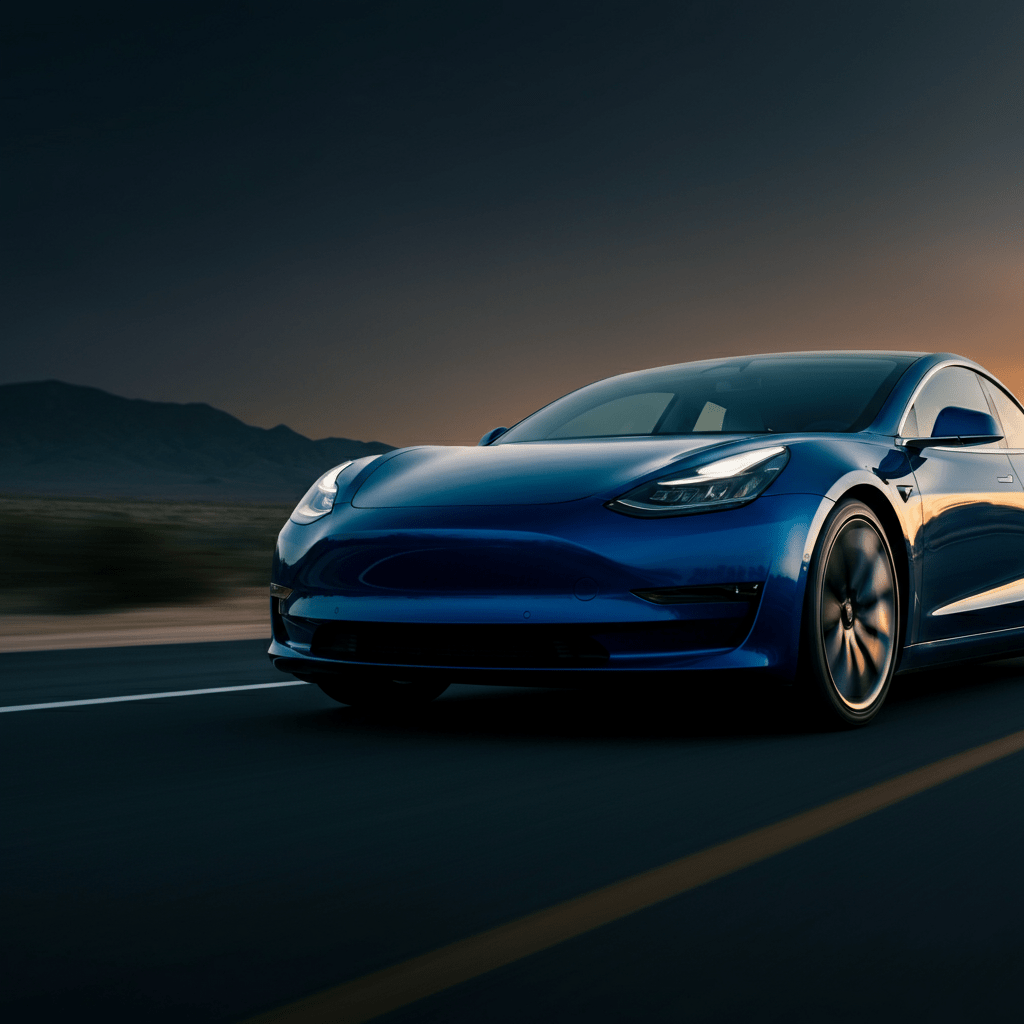


Tesla’s Full Self-Driving fleet has crossed the 10 billion mile mark. It’s an enormous number. It is also, by itself, almost meaningless.
The company trumpeted the milestone as evidence of its data-driven approach to cracking the autonomy problem. CEO Elon Musk has long argued that sheer volume of real-world driving data is the secret weapon, the moat no competitor can cross. “The more miles we drive, the smarter our cars become,” Musk has said.
Ten billion miles is a staggering accumulation of left turns, lane changes, highway merges, and near-misses. But the uncomfortable truth Tesla doesn’t advertise is that FSD remains, by the Society of Automotive Engineers’ own classification, a Level 2 system. Partial automation.
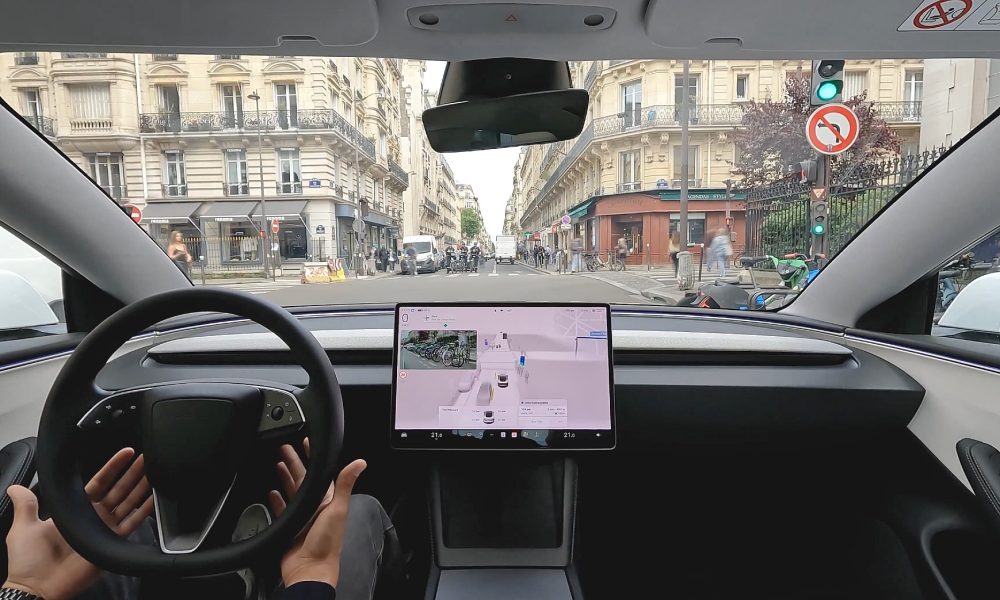
The driver’s hands might be off the wheel, but their legal and practical responsibility never leaves the cabin. That gap between the marketing language and the engineering reality has dogged Tesla for years. Full Self-Driving is a brand name, not a technical description.
Level 5 autonomy, the kind where you could nap in the back seat while the car navigates a construction zone in a rainstorm, remains aspirational for every company in the space. Tesla included.
Industry analysts are split on whether the mileage figure matters at all. The argument for it is intuitive: more data means more edge cases captured, more scenarios for neural networks to chew on. Every snowstorm in Michigan and every jaywalker in Manhattan feeds the algorithm.
The argument against is more subtle but more important. Autonomous driving isn’t a brute-force problem solvable by throwing petabytes of data at it. Decision-making under uncertainty, handling genuinely novel situations, predicting the irrational behavior of human drivers — these challenges require architectural breakthroughs in the software itself, not just more training miles.
A billion more miles of highway cruising teaches the system very little about the one deer that bolts across a two-lane road at dusk.
Waymo, which operates fully driverless robotaxis in multiple U.S. cities, has logged a fraction of Tesla’s total miles but operates without a safety driver in the seat. That contrast is instructive. Waymo’s approach — geofenced, heavily mapped, LiDAR-equipped — is narrower in scope but deeper in execution.
Tesla’s approach is broader in ambition but still requires a human babysitter. The company has promised software updates in the coming months aimed at pushing FSD closer to genuine unsupervised capability. Tesla has been making similar promises since 2016, when Musk declared that all vehicles rolling off the production line had the hardware necessary for full autonomy.
Nearly a decade later, the hardware has been revised multiple times and the software still isn’t there.
None of this means Tesla’s approach is doomed. The vision-based, fleet-learning model could ultimately prove superior to the geofenced robotaxi paradigm. But ten billion miles is not proof of that thesis.
It’s proof that a lot of Tesla owners have been running beta software on public roads for a very long time.
Miles are an input, not an output. The output that matters is a car that can drive itself without qualification, without a human safety net, without the legal fine print that currently accompanies every FSD activation. Tesla hasn’t delivered that yet.
No one has, at scale. The real milestone won’t be measured in miles. It will be measured in the moment Tesla can drop the asterisk.
Share this Story