
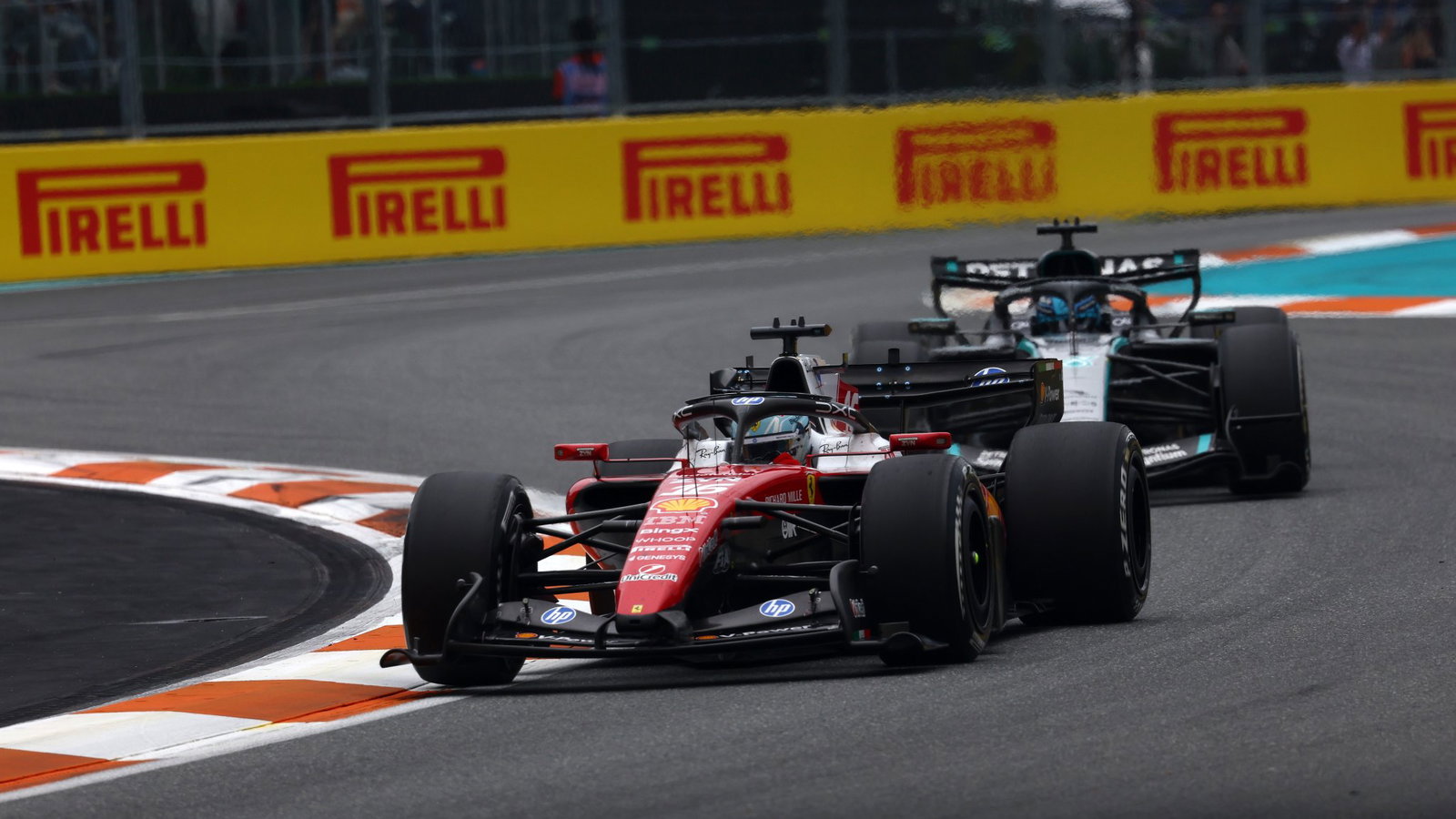


Charles Leclerc led the Miami Grand Prix for six laps. He finished eighth.
The gap between those two facts tells you everything about Ferrari’s Sunday at the Miami International Autodrome. What started as a genuine shot at the team’s first win since Carlos Sainz took Mexico in 2024 disintegrated into a catalogue of misfortune, mistakes, and a post-race penalty that salted every wound.
Leclerc had jumped from third on the grid past Max Verstappen and Kimi Antonelli to seize the lead, and for a brief window, everything clicked. Clean air, strong pace, energy management on point. Then the safety car came out and compressed the field, and the race became a different animal entirely.
“The first phase, we are in clean air and with the good pace,” Ferrari team principal Fred Vasseur said. “Then, when we had the safety car, it told everybody to come back, and it was much more difficult.”
A botched undercut, a slow pit stop, debris, and a wall hit followed in depressing sequence. But the real damage came on the penultimate lap, when Leclerc spun battling Oscar Piastri for third and tagged the barrier. He somehow kept going, but the car was wounded — he said it wouldn’t turn right properly — and he carved through chicanes on the final lap just to reach the checkered flag.
He crossed the line sixth. The stewards weren’t done with him.
Called to the hearing room for three separate potential offences — driving an unsafe car, repeated track-limit violations, and contact with George Russell at the final hairpin — Leclerc left with a drive-through penalty converted into 20 seconds added to his race time. The Russell incident was dismissed. The unsafe-car charge was dropped for lack of evidence. But the corner-cutting stuck.
The stewards’ reasoning was blunt. Leclerc’s explanation that suspension damage forced him off the racing line didn’t qualify as a “justifiable reason.” Cutting corners, regardless of why, gave him a lasting advantage. F1 even posted a compilation on X showing every instance he left the track on that final lap. It wasn’t subtle.
“Very disappointed with myself,” Leclerc said before the penalty landed, thinking he’d salvaged sixth. “The last-lap mistake is obviously all on me. Mistakes happen, but in the last lap of the race like that, it’s frustrating and not the level where I should be at.”
He didn’t know the day was about to get worse.
The 20-second penalty dropped him behind teammate Lewis Hamilton and Alpine’s Franco Colapinto, who inherited a career-best seventh. Verstappen also caught a five-second penalty for crossing the white line at the pit exit but stayed fifth, comfortably clear of the reshuffled pack behind him.
Leclerc still sits third in the championship, behind the Mercedes drivers, but the cushion over Lando Norris — who won the sprint race Saturday and finished second on Sunday — has thinned noticeably. Ferrari came to Miami needing a result. They left needing answers.
The stewards’ logic raises a question that will linger: if your car is damaged and you can’t make the corners, what exactly are you supposed to do? Pull over and retire? Give back positions you didn’t intentionally gain? The rulebook says cutting track is cutting track. Leclerc’s frustration is understandable, but the penalty was always coming once that video compilation started circulating.
Montreal is next. Ferrari needs the reset, and Leclerc needs a clean weekend more than he has all season. Six laps of leading in Miami will feel like a cruel tease if the pattern of late-race collapses continues.




Share this Story