
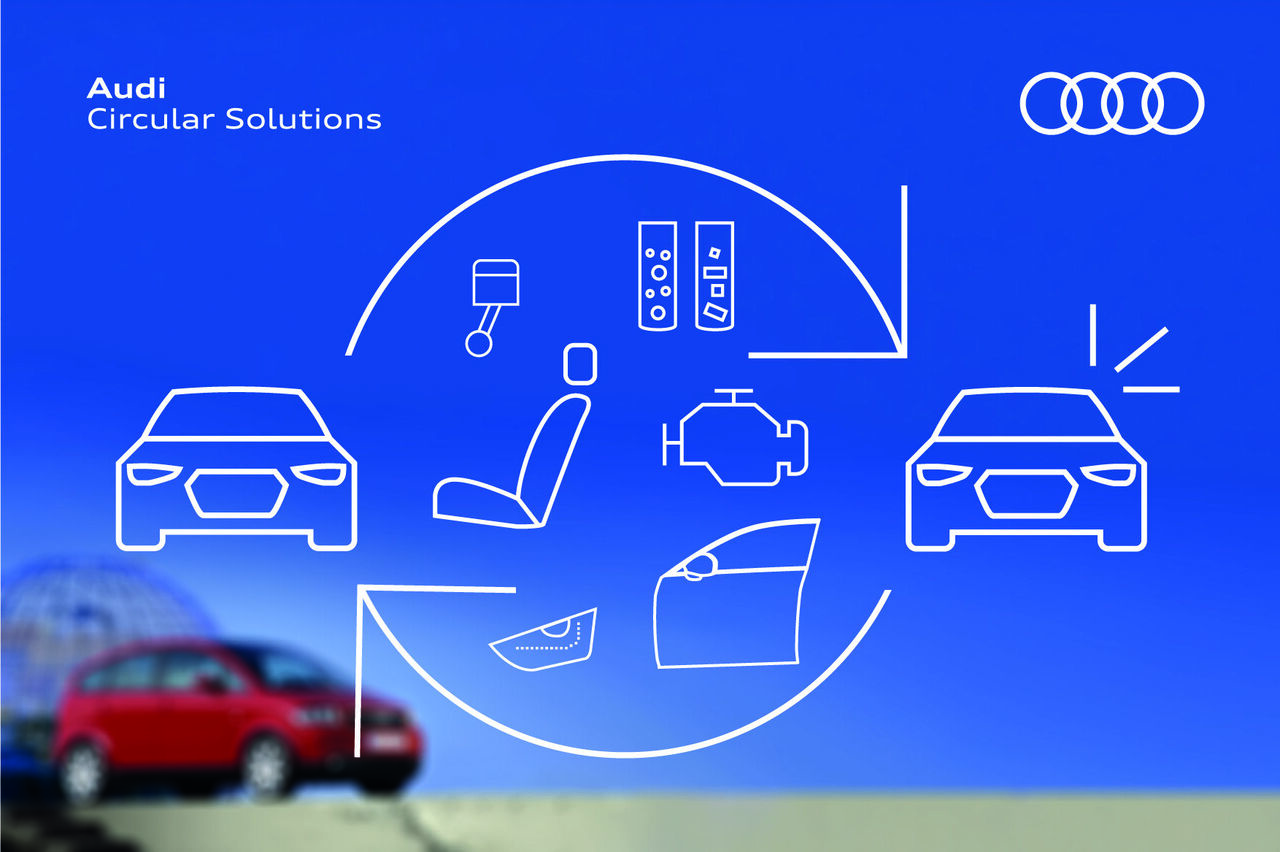


Audi is getting into the scrapyard business.
On November 13, AUDI AG announced Audi Circular Solutions GmbH, a wholly owned subsidiary that will buy used cars, take them apart, sell the parts and feed recovered materials back into its own supply chain. Operations start in early 2027.
The first cars on the dismantling bench won’t come from customers. They’ll come from Audi’s own internal department fleet. Purchased cars come later.
That order of operations shows how carefully Ingolstadt is stepping onto ground long worked by independent breakers, salvage yards and parts recyclers across Europe.
Step one is a central sales channel for used genuine Audi parts. Step two adds buying and dismantling vehicles. Alongside both runs a push to secure secondary raw materials, with recycled plastics named as a priority.
Audi frames this as sustainability, but its own language tells you more. The goal, it says, is to “prepare early for regulatory requirements” and “reduce dependence on raw material markets.”
Put simply, this is a carmaker hedging against two things it can’t control: regulators and commodity prices.
The business case is out in the open too. Managing director Michael Gick talks about building “a scalable, profitable business model.” Co-director Philipp Eder says the team spent recent months turning years of Audi initiatives into “a viable business model.”
Profit is the word that keeps coming up. Not offsets. Not pilot programs.
There is an obvious tension here. Every used genuine part Audi sells is, in theory, a new genuine part it doesn’t. The bet is that keeping the value of a recovered component in-house beats handing it to someone else.
Target customers include existing and new private and business buyers in Germany and other European markets. Audi says outright that it wants to reach “new customer groups.”
Then comes the detail that widens the scope. In a later phase, the subsidiary will add used parts from other brands.
That turns Audi Circular Solutions from an aftercare sideline for its own badge into a general parts operation competing in the open market.
Audi won’t be turning the wrenches itself. The model relies on a network of specialized local partners across Europe, with the subsidiary managing dismantlers rather than doing the work. Gick calls it a collaboration model that “lets us move quickly.”
The groundwork sits inside the Volkswagen Group’s circular economy strategy, “REDUCE & GROW.” The Group already pools its dismantling know-how at an industrial line in Zwickau. Audi’s MaterialLoop program has tested how recovered materials can go back into series production.
None of this is new as an experiment. Audi has spent years running pilots with suppliers, research institutions and recycling companies.
What is new is the legal entity, the sales channel and the expectation that it pays.
Plenty remains unsaid. Audi hasn’t named its partners or said which markets beyond Germany come first. It also hasn’t said how parts will be priced or how many vehicles it expects to process.
Customers and business partners, the company says, will be told separately about the launch and sales channels.
Early 2027 isn’t far off. The recyclers who have long sold Audi parts are about to find the carmaker standing at the same counter.


Share this Story