
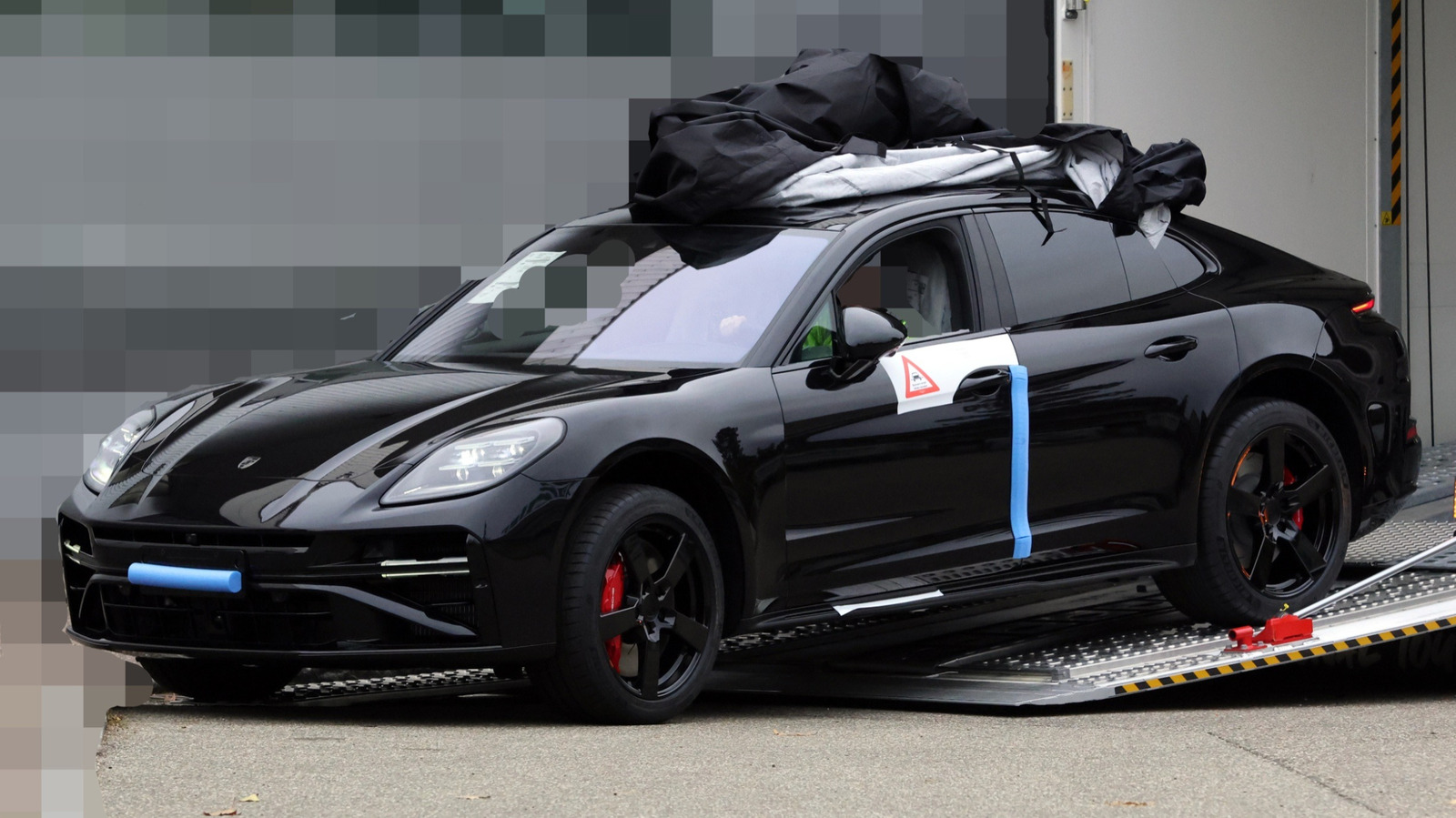


Porsche sold just 9,308 Panameras in the first six months of 2026, a 38 percent drop. The car meant to stop the bleeding was just caught at the Nürburgring. It looks almost exactly like the one already sitting unsold on dealer lots.
Two prototypes, one gasoline and one hybrid, were photographed testing with zero camouflage. No swirl wrap, no fake panels, no cladding. When Porsche stops hiding a car, a debut usually isn’t far off, and this one points to the 2028 model year.
The trouble is that there isn’t much to hide.
The Panamera was heavily overhauled for 2024. Barely two years later it is back on the operating table, and the surgery so far looks cosmetic. The headlights and daytime running lights carry over unchanged, and the bumper shape shifts only slightly.
The clearest front-end difference between these lower trims and the GTS spied last month is a single intake element. On the base car it runs as a horizontal bar, while the GTS gets a fatter vertical piece. You need to zoom in to see it.
The rear offers a little more to talk about. The GTS gets an aggressive bumper with a large vent on each side. The hybrid, identifiable by the charging flap on its left fender, wears a narrower, cleaner treatment.
Both prototypes run four round tailpipes. On the cheaper car, that likely means an optional sports exhaust, since the base Panamera normally makes do with two.
Down low, the hybrid’s lower bumper is mostly smooth, while the GTS makes a halfhearted attempt at something resembling a diffuser. Both look sportier than the current car. Neither looks like it will generate meaningful downforce.
The full-width LED taillight strip stays. Engineers have taped over the illuminated “PORSCHE” lettering that arrived with the 2024 update. That is about as much drama as this tail end offers.
Porsche has always defended this approach. The 911’s profile has barely moved in 63 years, and buyers have rewarded that patience for decades. Slow evolution is the brand’s design religion.
But the 911 is a sports car with a cult behind it. The Panamera is a big luxury sedan in a segment that doesn’t hand out loyalty on heritage alone.
Under the skin, early signs suggest little shake-up either. The entry-level car uses a 3.0-liter turbocharged V6 rated at 348 hp. The 4 E-Hybrid also runs a 3.0-liter turbo V6, making 463 hp, and the 4S E-Hybrid climbs to 536 hp.
Nothing in these photos suggests that lineup is about to change radically.
The Panamera exists as the combustion and hybrid counterpart to the electric Taycan, a hedge for buyers not ready to plug in full time. That role once looked like a safe bet. A 38 percent collapse in half a year says the hedge isn’t paying off on its own.
The Panamera didn’t crash in isolation. Porsche’s overall sales have tanked recently, and its four-door has been one of the heavier weights dragging the numbers down.
So Porsche’s answer, at least the part visible from the side of a German racetrack, is a reshaped intake bar, a revised rear bumper, and some tape over a lit-up badge.
The full reveal will show whether there is more under the sheetmetal. The sales charts will decide if it was enough.
Share this Story