
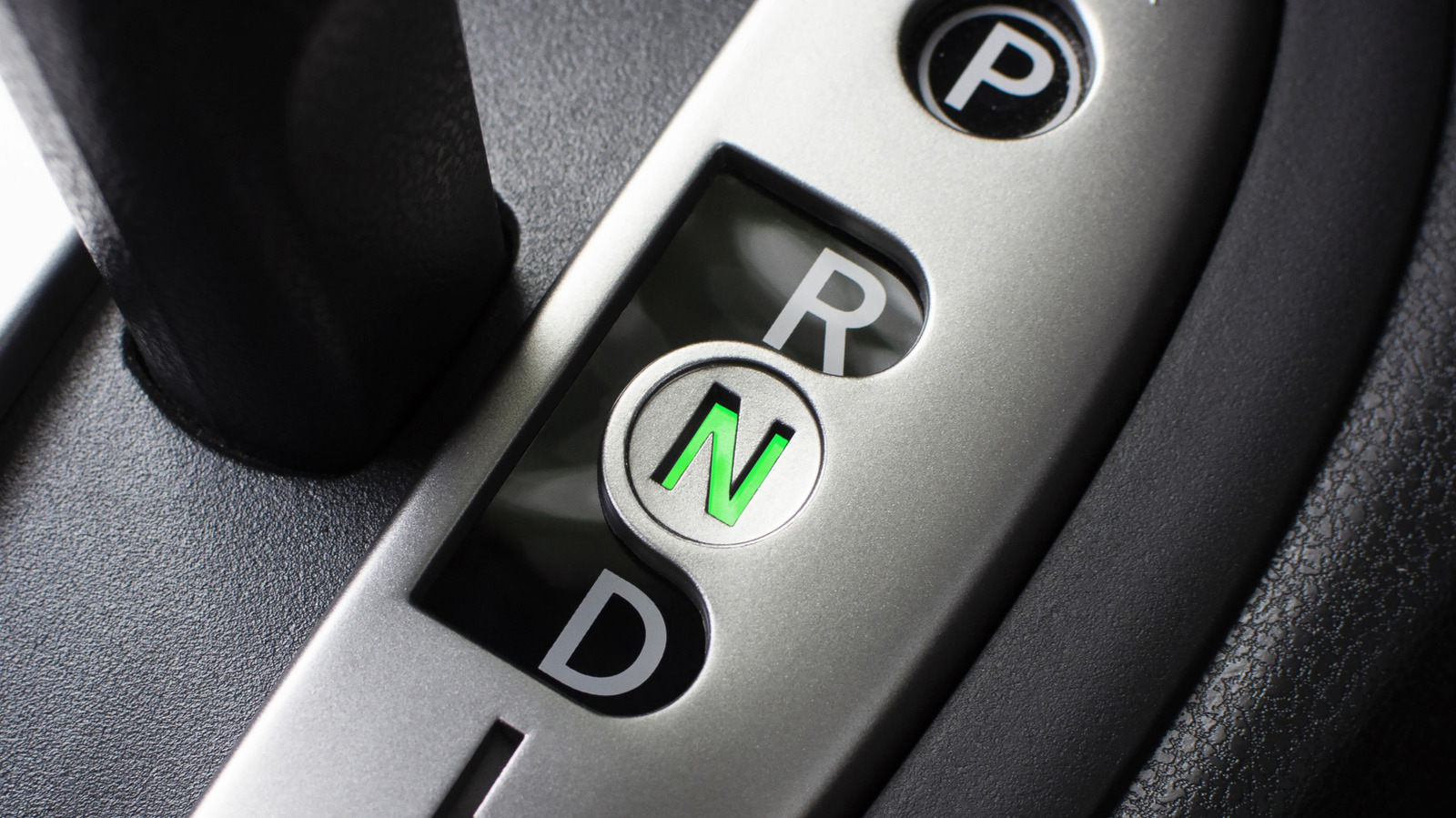


More than 70 years after the clutch pedal started vanishing from American cars, the letter N still sits on nearly every automatic shifter. Most drivers pass through it twice a day and never stop there.
That’s by design. Engineers say neutral has a short list of legitimate jobs, and a longer list of habits drivers should drop.
The automatic sold itself on simplicity. No clutch to balance, no guessing which gear suits the next corner. Drop it in drive and go.
Under that simplicity sit very different machines. A conventional automatic uses planetary gearsets and a torque converter, a fluid coupling that multiplies engine torque on its way to the wheels.
A dual-clutch box behaves more like a manual, with two electronically controlled clutches splitting odd and even gears. A CVT runs a belt between two cone-shaped pulleys for a near-infinite spread of ratios, and Carscoops’ Chris Chilton argues it isn’t as bad as its reputation.
None of them will stall in normal driving when the powertrain is healthy. Shift any of them to neutral, though, and you get the same result as in a manual car. Engine torque is fully cut from the driven wheels.
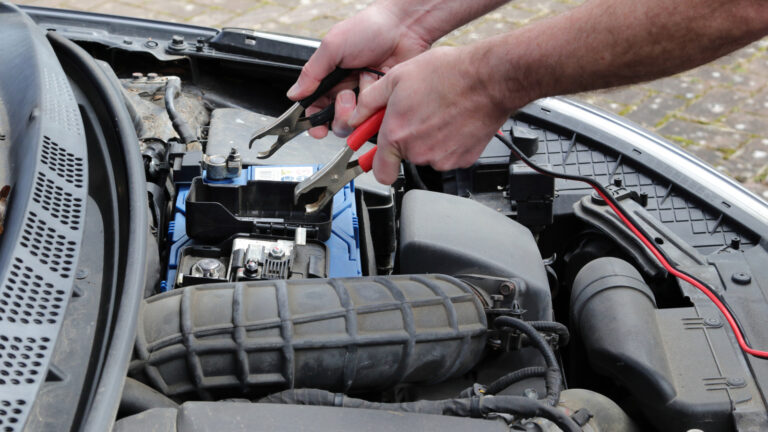
That separation earns its keep in a handful of moments. A car that won’t start can be pushed around a workshop. A car stuck in a ditch can be pulled free.
There’s a catch with towing. A traditional automatic depends on circulating fluid to protect its internals, and with the engine off, the transmission pump is off too.
Drag one too far with the drive wheels on the ground and you’re buying wear. Check the owner’s manual before any flat tow, because the distance and speed limits can be surprisingly strict.
The most dramatic case is also the rarest. If a throttle jams wide open, slotting N stops the brakes from fighting an engine determined to reach the horizon.
Killing the ignition might seem like the obvious move. It can also take the brake booster and power steering with it. That leaves you wrestling a heavier car with less help stopping or steering it.
Then come the myths. Some drivers shift to neutral at red lights, convinced they’re saving fuel. Engineers say the savings are close to nothing, and the extra shuffling between drive and neutral adds wear the transmission didn’t need.
Coasting downhill in neutral gets the same verdict. You save a trickle of gas and give up control of the car, including the engine braking that keeps your brakes from overheating on long descents.
Parking is the other trap. Leaving the car in neutral and trusting the parking brake alone skips a layer of protection you should always use.
Park engages a pawl that locks the transmission’s output shaft. Paired with the parking brake, it’s a second barrier against a rollaway.
So the position that confuses so many drivers turns out to be a tool kept for breakdowns, recoveries and the rare throttle that refuses to let go. Everything else belongs to drive, reverse and park.
For most owners, N will remain a letter they glide past on the way from drive to reverse and back. The few who need it will need it badly, and quickly.
Share this Story