
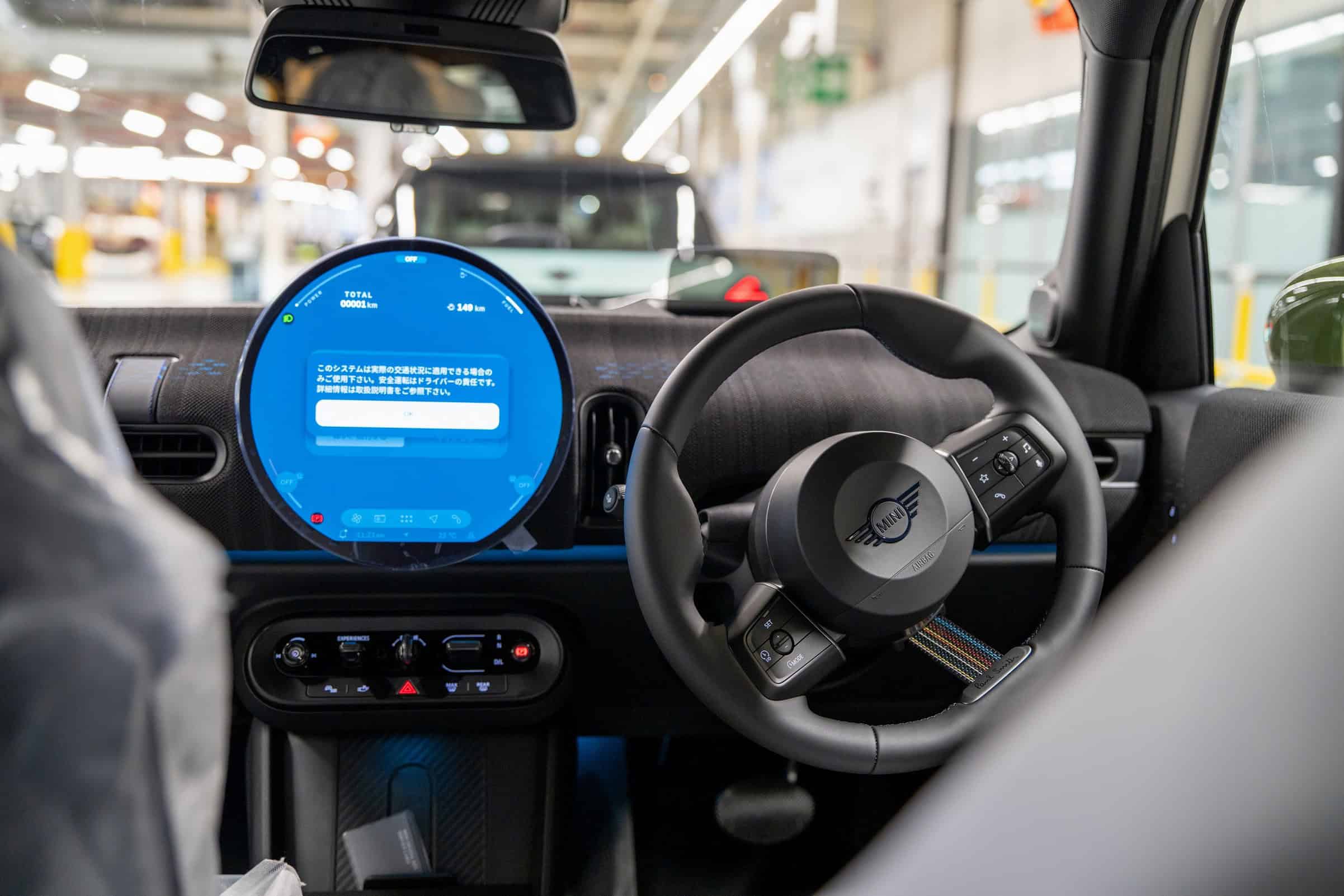


Four BMW plants are now moving cars around without anyone touching a steering wheel, and the automaker just crossed the one million mark for autonomous vehicle movements inside its production facilities. The number sounds like marketing polish until you look at the pace: 3,500 driverless movements per day, spread across Dingolfing, Leipzig, Regensburg, and the recently added MINI Plant Oxford in the UK.
This is not the autonomous driving story the industry has been promising consumers for a decade. There are no robotaxis here, no Level 4 highway systems, no regulatory battles. BMW’s Automated Driving In-Plant technology, or AFW, operates entirely within factory walls, and the approach is fundamentally different from anything aimed at public roads.
The trick is that the cars themselves carry none of the autonomous hardware. BMW has wired its factories with LiDAR sensors and cloud-based motion-planning software that monitors the environment and commands vehicles through designated zones. The car is the puppet. The factory is the brain.
By embedding the intelligence in the infrastructure rather than in each vehicle, BMW sidesteps the cost and complexity of outfitting every car rolling off the line with its own sensor suite just to drive it across a parking lot. The system works regardless of model or powertrain. A 3 Series with a combustion engine gets the same treatment as an electric MINI.
At Oxford, more than 53,000 autonomous movements were completed in the past year alone. The system there is now tied directly into factory control systems for the first time, positioning vehicles precisely next to lifting equipment for specific production tasks. That level of integration goes well beyond shuttling a car from Point A to Point B.
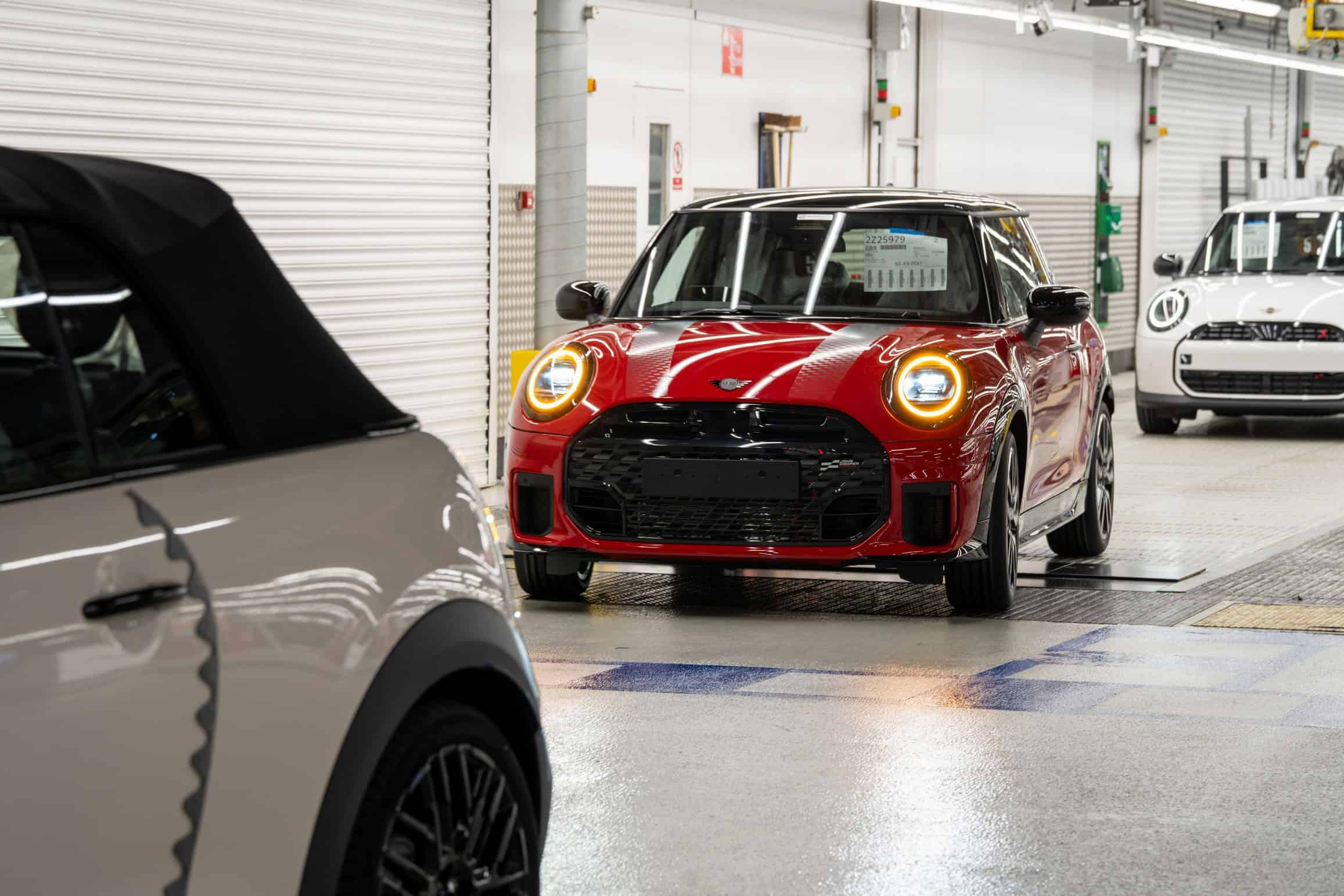
Dingolfing, where BMW builds the new G50 3 Series, now hosts what BMW calls Europe’s largest LiDAR infrastructure. The plant has served as the testing ground since 2022, when the system debuted alongside production of the 7 Series G70. Four years later, it has graduated from pilot project to standard operating procedure.
Next up is Spartanburg, South Carolina, where BMW plans to bring AFW online in 2027. That facility, one of the largest BMW plants in the world by volume, would become the first outside Europe to adopt the technology.
BMW developed the system with Embotech, a Swiss tech company that came through BMW Startup Garage. BMW i Ventures took a financial stake in Embotech in December 2024, a signal that this is not a casual supplier relationship.
The real story here is efficiency, not spectacle. Every car that moves itself through a factory is one fewer car that needs a human driver to reposition it. Multiply that by thousands of movements per day across multiple plants and the labor and logistics savings start compounding fast.
It is also a quiet proof of concept for infrastructure-based autonomous driving, an approach that has gotten far less attention than the vehicle-mounted sensor stacks favored by Waymo, Cruise, and Tesla. BMW’s version works precisely because the environment is controlled. Fixed routes, known obstacles, predictable conditions. The factory is the one place where autonomy’s hardest problems, unpredictable humans and chaotic traffic, can actually be managed.
Spartanburg’s 2027 launch will test whether the system scales cleanly to a plant with different layouts, different production volumes, and an ocean between it and the engineering teams that built it. A million movements is a milestone. Whether it becomes a template depends on what happens next in South Carolina.

Share this Story