
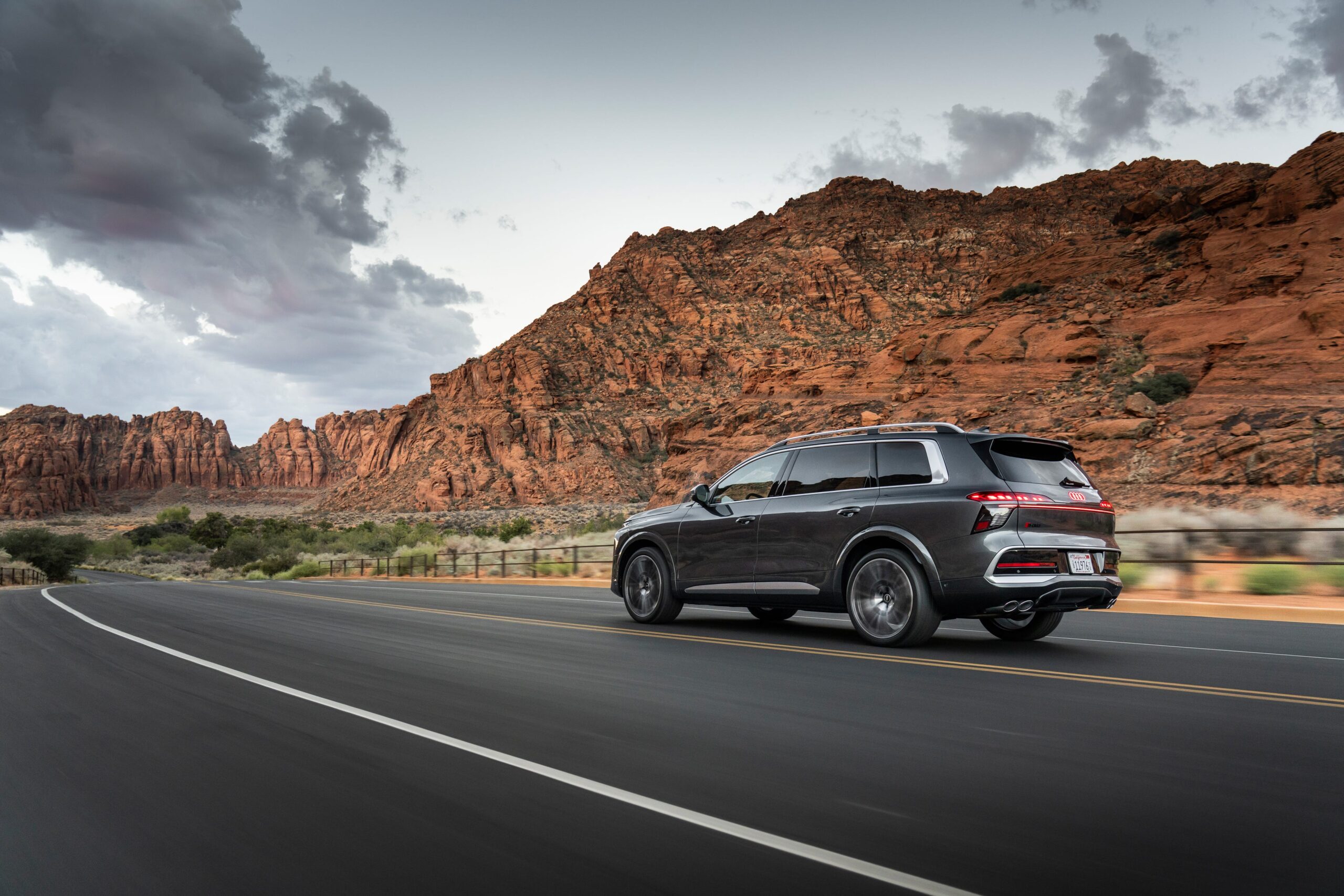


Audi has been circling this segment for years, watching Mercedes-Benz and BMW rake in full-size SUV profits while it sat on the sideline with the Q7. That waiting game is over. The 2027 Q9 and its hotter SQ9 sibling are Audi’s first real play in the large luxury SUV space, and at $89,095 and $119,395 respectively, Ingolstadt is not here to undercut anyone.
The numbers tell you how serious this is. A 123.5-inch wheelbase stretches longer than a Cadillac Escalade’s by 2.6 inches. Overall length of nearly 209 inches eclipses both the BMW X7 and Mercedes GLS.
Audi expects 65 percent of Q9 production to land in North America, making this vehicle less a global product and more a love letter to American appetites for size.
Under the hood, neither engine disappoints on paper. The Q9 gets a twin-turbo 2.9-liter V-6 producing 429 horsepower, good for a claimed 4.9-second sprint to 60 mph. The SQ9 packs a twin-turbo 4.0-liter V-8 with 591 horses and a factory estimate of 3.8 seconds flat.
Both mate to an eight-speed automatic. Both share their powertrains with the redesigned 2027 Q7 and SQ7.
Driven on the roads around Saint George, Utah, the Q9 proved smooth and quiet, with a ride quality that flatters the vehicle’s considerable mass. The SQ9, predictably, felt hungrier. Mat the throttle and it responds with genuine urgency, the kind of shove that justifies its $30,000 premium.
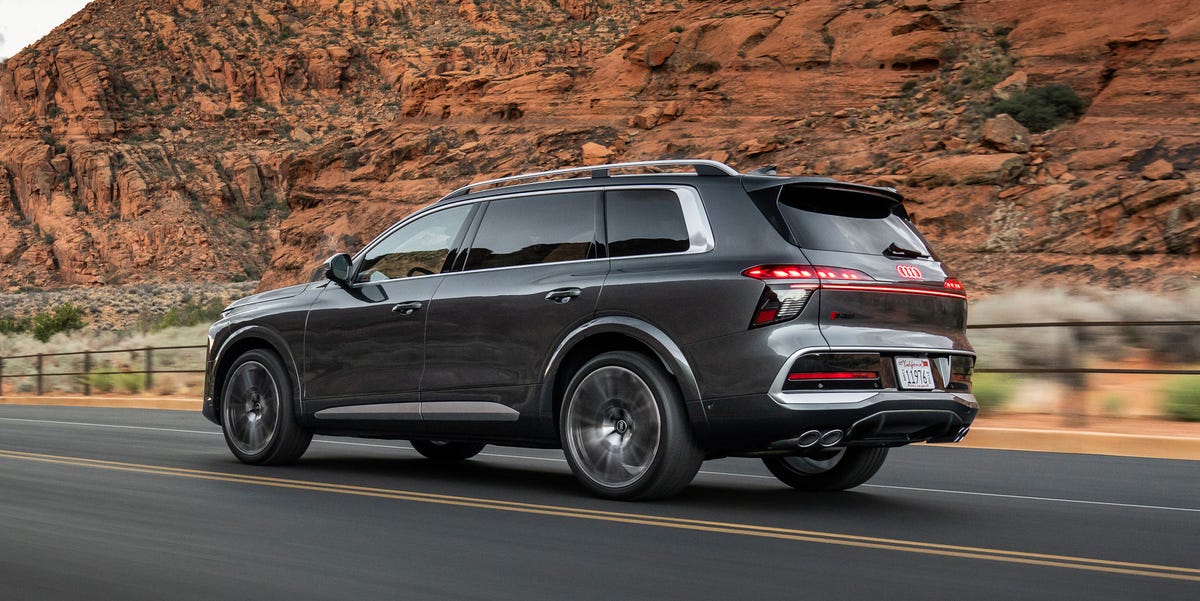
The SQ9’s real trick lives underneath. While the standard Q9 uses Audi’s familiar Quattro system with an updated locking center diff, the SQ9 debuts a new electronically controlled locking rear differential and all-wheel-drive clutch borrowed philosophically from Porsche and Lamborghini. It allows rear-biased torque distribution, staggered tire fitment, and more rotation on corner exits.
Rear-wheel steering, standard on the SQ9 and optional on the Q9, turns the rear wheels up to five degrees. On a vehicle this large, it transforms parking lots from nightmares into non-events.
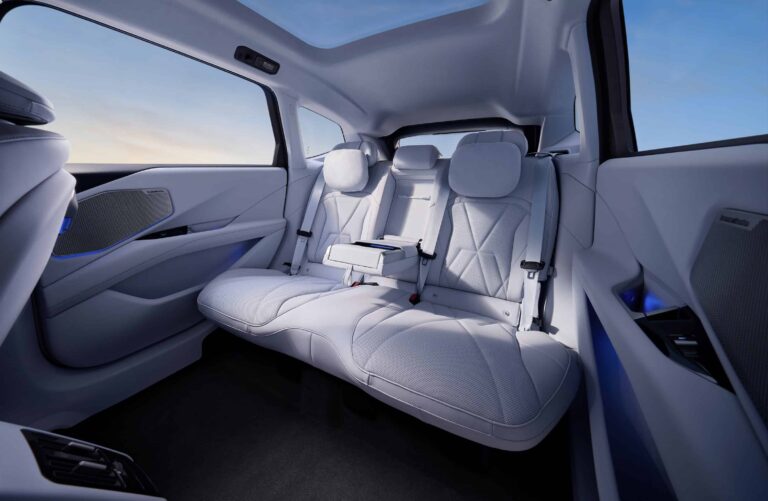
Inside, second-row captain’s chairs are a $450 option on a $90K truck, and almost everyone will tick that box. The seats are comfortable, spacious, and come with removable inner armrests for easier third-row access. That third row, though, is a different story.
Audi boasts more headroom than the GLS or X7, but the seat cushions are flat and legroom evaporates the moment second-row passengers push their powered chairs rearward. Kids will tolerate it. Adults will resent it.
Up front, comfort is genuine. A three-hour drive in the Q9 left me fresh, and the SQ9’s more bolstered seats managed to be sporty without sacrificing long-haul livability. The steering felt precise but deliberately light, a choice Audi engineers say is intentional to mask the vehicle’s heft.
The result is competent but somewhat numb.
Audi’s adaptive Digital Matrix LED headlights debut on the Q9, finally legal in the U.S. after years of regulatory delay. Tested at night in Utah’s Snow Canyon State Park, the system carved precise shadows around oncoming vehicles’ windshields while maintaining full illumination everywhere else. The tech works as promised and feels like a genuine leap in headlight capability.
The hands-free driving system, classified Level 2+, was less convincing. Operating up to 85 mph with automatic lane changes, it performed adequately on Interstate 15 but switched off randomly in well-marked, clear-traffic conditions. GM’s Super Cruise remains the benchmark, and Audi is not there yet.
Fuel economy estimates hover around 15 to 18 mpg combined for the pair. Curb weight lands between 5350 and 5600 pounds. The optional towing package supports up to 7700 pounds and pushes the price well past six figures.
Whether any of this is enough to peel buyers away from the GLS, X7, or the American body-on-frame crowd remains the open question. Audi built a polished, powerful first effort. The segment it is entering does not reward latecomers easily.

Share this Story