
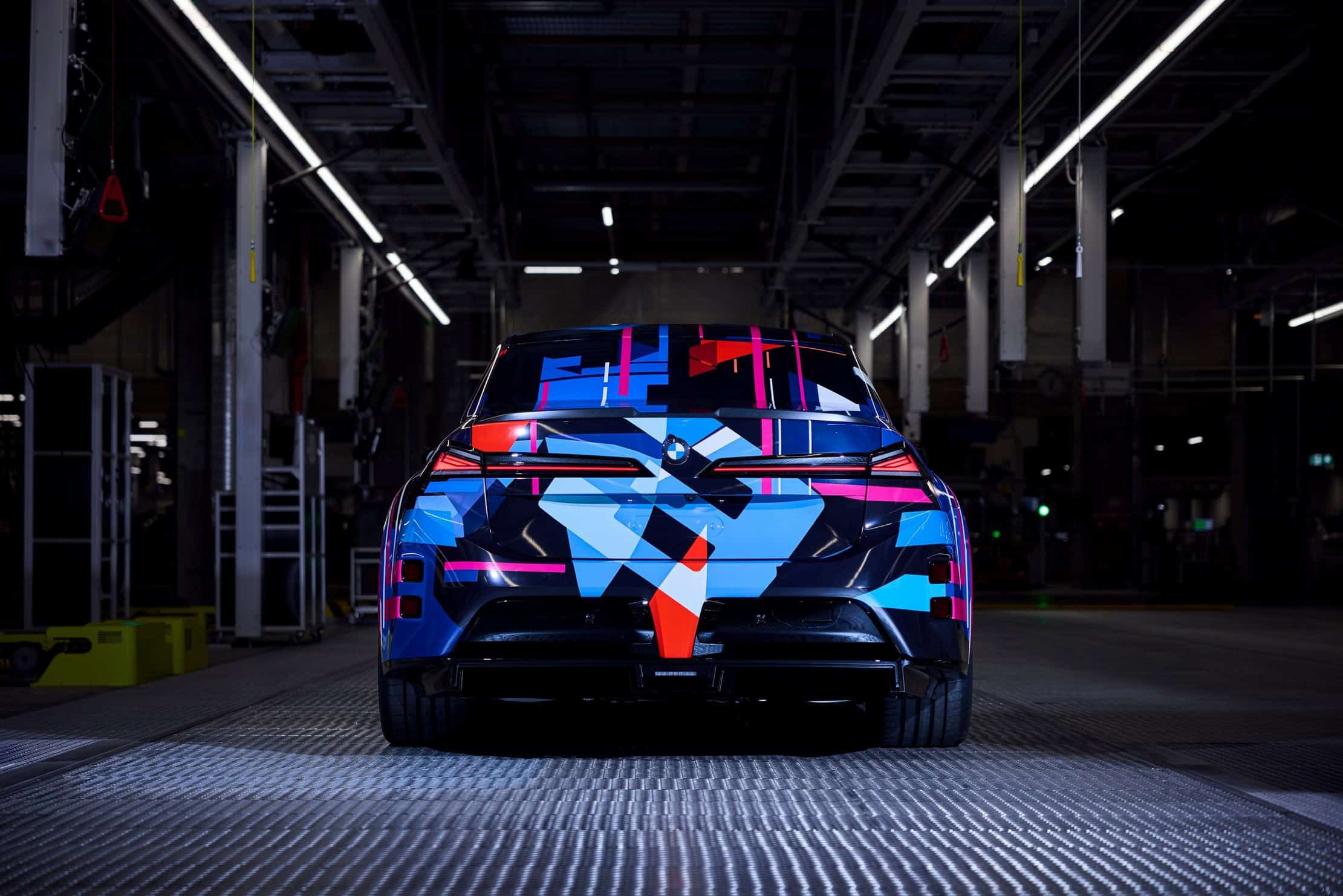


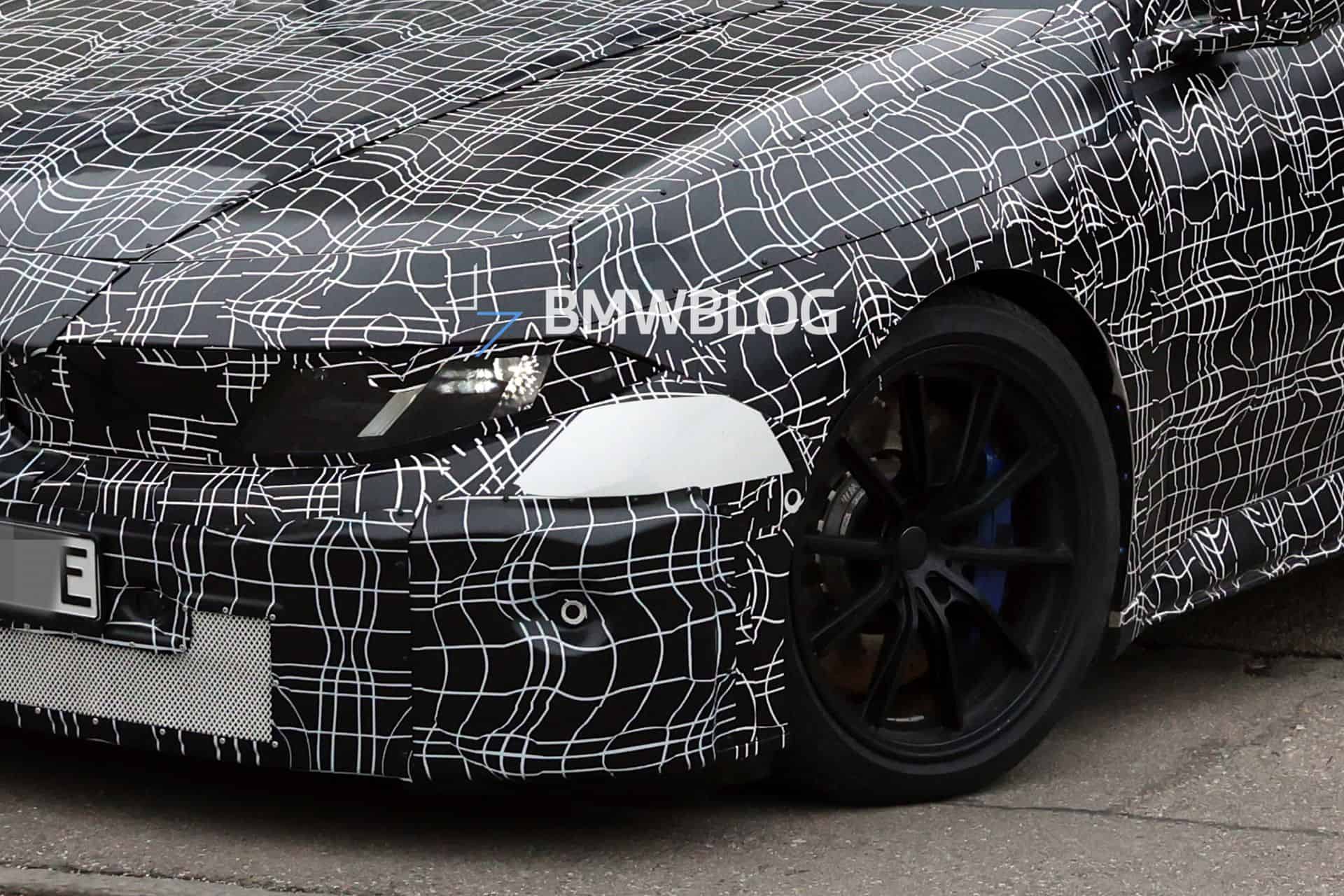
A prototype of the electric BMW M3, internally coded ZA0, has been photographed testing in California wearing camouflage over white paint and a functional hood vent lifted directly from the M Concept Neue Klasse. BMW plans to unveil the car in early 2027, with production at Plant Munich slated to begin that same year.
Most ZA0 spy shots until now have come from the Nürburgring, where prototypes have been grinding out laps for over a year. This one showed up on American pavement roughly two months after BMW brought the M Concept Neue Klasse to Monterey Car Week for its North American debut. The timing suggests U.S.-specific calibration work is already underway.
The hood is the detail worth studying. It carries the V-shaped cooling vent from the concept car, an outlet designed to dump heat from the electric drive hardware below. That vent occupies the space the standard i3 sedan uses for a front trunk, which means the M3 will almost certainly sacrifice frunk storage for thermal management.
BMW’s own October teaser already hinted the vent would survive to production. This California car confirms it on a running prototype.
The ZA0 packs four electric motors, one at each wheel, grouped into two drive units with dedicated gearboxes. BMW calls them the most powerful drive units M has ever produced. Sources familiar with the program peg output between 800 and 900 horsepower, which would leapfrog the 738-hp XM Label Red as the strongest production M car in history.
BMW M CEO Frank Van Meel has tamped down speculation about four-digit figures, saying in July that generating 1,000 hp is trivial but sustaining it is not. He doesn’t want an M3 that “cooks itself after half a lap.”
The battery is M-specific, with more than 100 kWh of usable capacity built from a performance variant of BMW’s Gen6 cylindrical cells. It runs on 800-volt architecture and is said to charge faster than the standard Gen6 pack, which already peaks at 400 kW in the iX3. The pack’s housing is structural, integrated into the chassis rather than bolted underneath as an afterthought.
No conventional differentials exist in the drivetrain. Torque vectoring is handled entirely in software through an M-tuned version of BMW’s Heart of Joy dynamics computer. The front axle can decouple completely, enabling a dedicated rear-wheel-drive mode. A Nürburgring spy video from last month appeared to show a prototype using exactly that setup, tail swinging wide on corner exits.
Weight remains the elephant in the room. The standard i3 50 xDrive already tips the scales at 2,205 kg, or 4,861 pounds. The M3, with its larger battery, beefier motors, and wider body, will land above that.
BMW is using natural-fiber components for the roof panel and mirror caps to trim mass where it can, but nobody should expect a lightweight sports sedan here.
The car will not offer a manual transmission. Instead, it gets simulated gearshifts in certain drive modes paired with a proprietary M soundscape. Early development work involved recording the S85 V10, S65 V8, and S55 inline-six in an anechoic chamber, though more recent reporting suggests BMW has moved away from layering pre-recorded engine sounds.
A combustion-powered M3 has not been abandoned. A six-cylinder G84 variant with a mild-hybrid S58 making roughly 525 hp is expected in 2028, one year after the electric version hits the road.
BMW has not disclosed U.S. pricing or a delivery timeline. Those details, along with the final horsepower number, are expected at the early 2027 reveal. Development is essentially finished.
Chief Development Officer Joachim Post was filmed driving the ZA0 at the Miramas proving ground in France this month, after a final tuning session at the Sachsenring. Prototypes have logged about 8,000 km on the Nordschleife alone, run in Arctic conditions, and been pushed to 300 km/h in BMW’s wind tunnel.
The M3 badge will stay. No iM3 branding. Van Meel made that clear, and the prototype’s roof graphic spells it out in plain letters.


Share this Story