
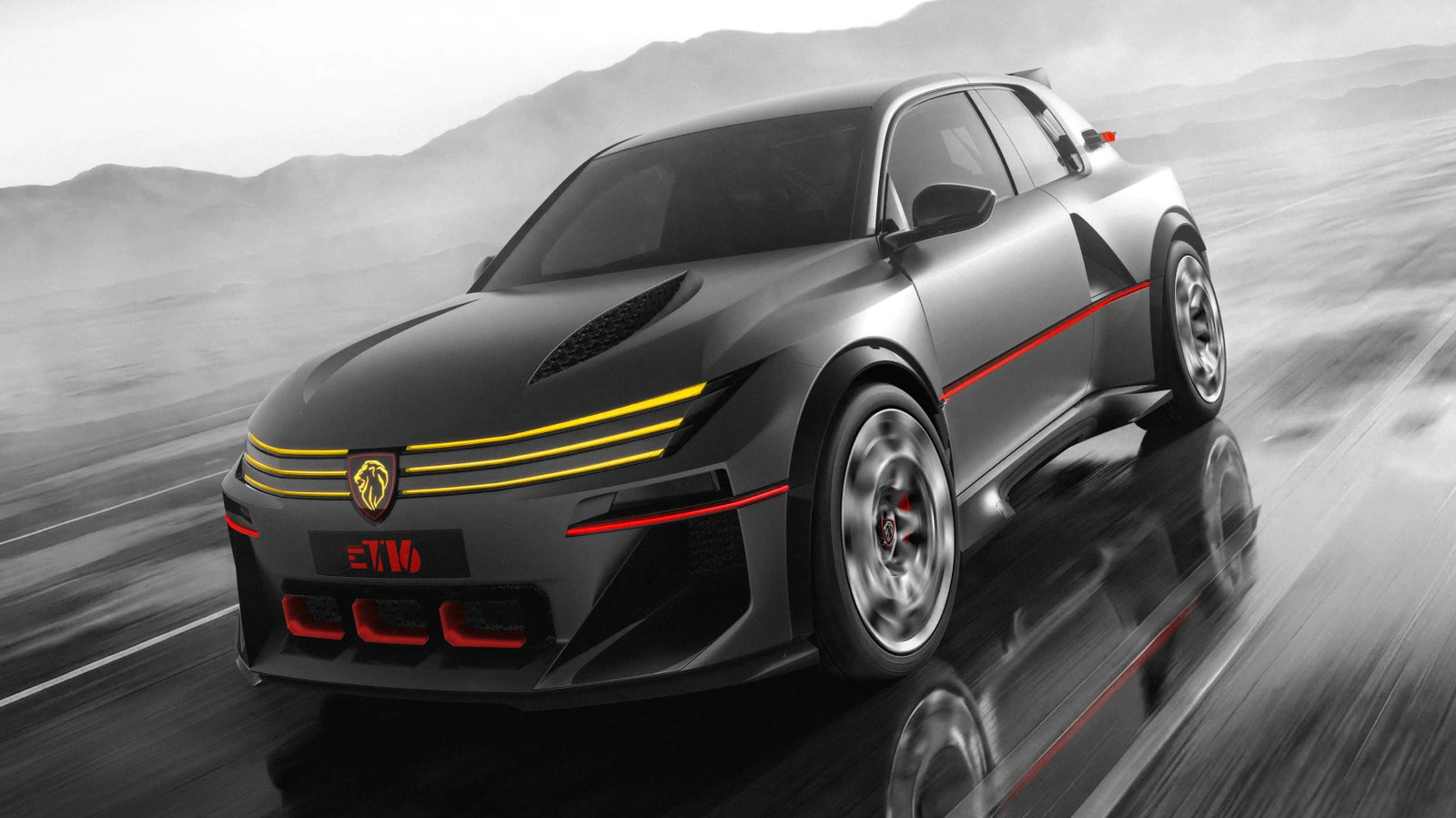


Peugeot CEO Alain Favey stood in front of the E-T16 Concept in Paris last week and said something automaker executives almost never say about wild show cars: “We can make this car next year.”
That sentence alone separates the E-T16 from the usual concept car theater. Three electric motors, 805 horsepower, 0-62 mph in 2.5 seconds, and a body that looks like someone let the rally department loose on a 208 hatchback. It was built to celebrate 40 years since Peugeot’s back-to-back WRC titles in 1985 and 1986, but Favey insists it is more than a birthday cake.
The key enabler is the STLA One platform, the new modular architecture Stellantis rolled out earlier this year. It will underpin more than 30 models across powertrains, and Peugeot gets first dibs. Because the E-T16 already sits on that architecture and borrows heavily from the upcoming e-208, the engineering lift to reach production is surprisingly short.
“It’s at least a car we can make. It’s technically feasible,” Favey told Autocar. He went further, confirming that the 805-horsepower output from its two rear motors and one front motor reflects real capability, not concept car fantasy math.
Two rear motors and one up front delivering that kind of power in a hatchback body would place the E-T16 in territory currently occupied by nobody. Renault’s 5 Turbo 3E concept plays in a similar sandbox of retro-futurist hot hatch fantasy, but it hasn’t materialized either. The difference is that Favey is putting a timeline on it and anchoring the car to production hardware.
The rally-bred proportions are unmistakable. Massively flared fenders, aggressive aero, and a stance that owes everything to the Group B 205 T16 that terrorized stages across Europe four decades ago. Wrapping that kind of visual drama around genuine supercar acceleration times creates the halo car Peugeot has lacked for years.
Production would almost certainly be tiny and the price stratospheric. Peugeot has not quoted a number, but an 805-horsepower tri-motor EV built in limited volume is not going to undercut a Tesla Model S Plaid. This would be a statement piece, a reason to walk into a Peugeot showroom and take the brand seriously in the performance conversation again.
The more tantalizing possibility sits downstream. If Peugeot can package three motors and 805 horses on STLA One, a detuned version with perhaps 400 horsepower and the same aggressive bodywork starts to look plausible. That car would land squarely against the Audi RS3 and Mercedes-AMG A 45 S, two machines that have owned the hyper-hatch segment with essentially no French competition.
Favey chose his words carefully. He said “let’s see,” which is not the same as “we’re doing it.” But he also didn’t hedge the engineering. He confirmed the platform, the powertrain, and the performance figures as real.
The only remaining question is whether Stellantis, a company currently navigating cost pressures across every brand in its sprawling portfolio, will write the check. Peugeot has not announced a production decision or a target date beyond Favey’s “next year” comment. The gap between a CEO’s enthusiasm at a show car reveal and a board-approved business case can be vast, but the fact that the car already sits on series production architecture makes this a shorter leap than most concept-to-reality stories.
Share this Story