
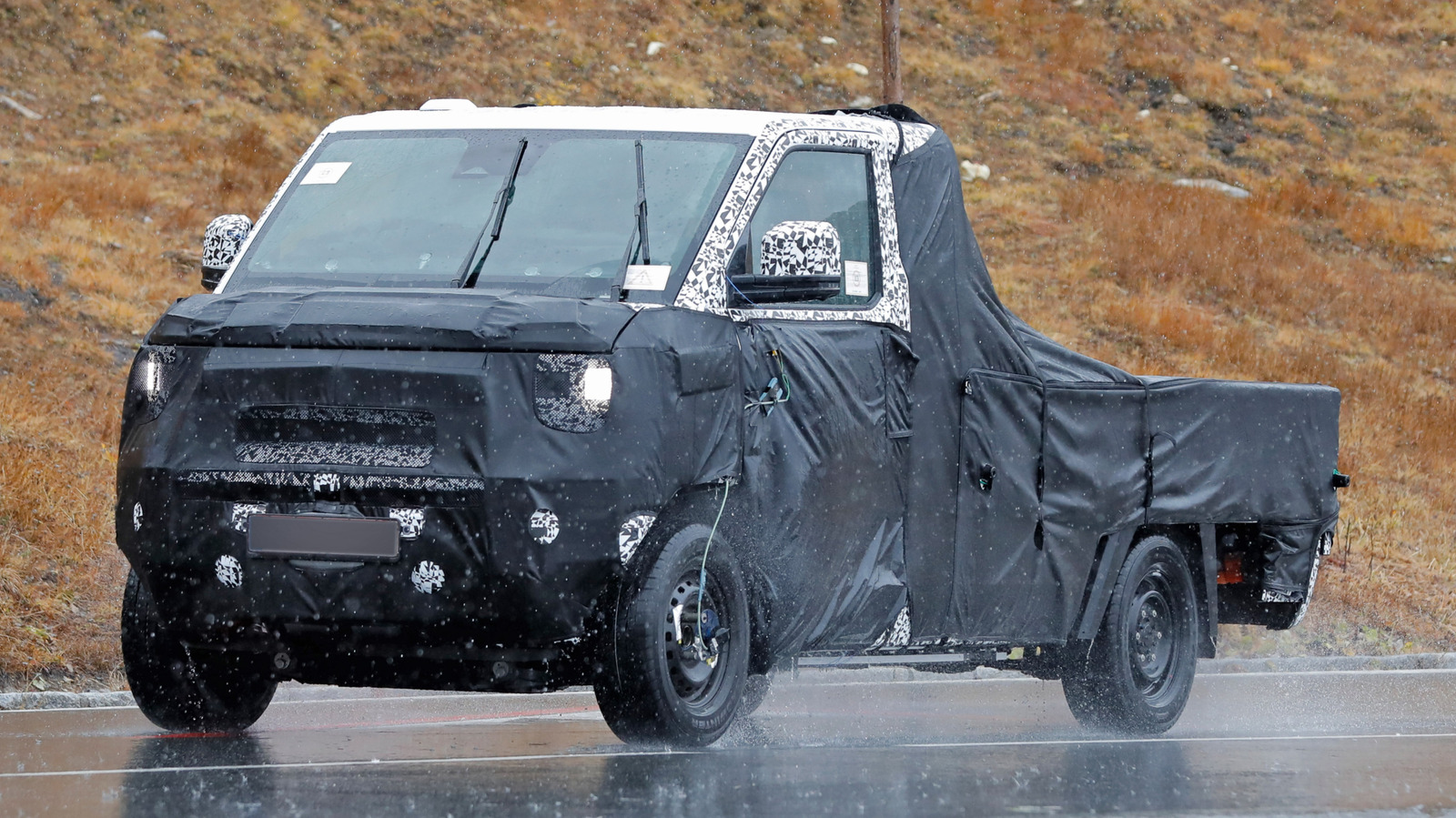


The Hyundai Porter has been on sale since 1977. Its current generation dates back to 2004, making it a genuine automotive fossil. Now spy photographers have caught a heavily disguised prototype of its replacement testing in Europe, plugged into a charger, confirming what the industry has long expected: the Porter is finally going electric.
That a small commercial truck sold primarily in South Korea, South America, and parts of Africa and Asia would show up testing on European roads tells you everything about Hyundai’s ambitions for this fifth-generation model. The automaker is believed to be engineering the new Porter to meet European crash-test and emissions standards. That’s a first for a nameplate that has spent decades quietly working markets where regulatory bars sit much lower.
Technical specifics remain scarce. But clues point to shared DNA with Kia’s PV5 commercial vehicle, which rides on a modified version of Hyundai Group’s E-GMP platform running a 400-volt electrical architecture. Spy photographers couldn’t grab a shot of the charger screen, so charging speeds remain unknown. Scribbled notes on a chassis rail suggest this prototype packs four-wheel drive.
An EV version won’t be the only Porter on offer. A gasoline model is expected too, aimed at cost-conscious buyers in markets where charging infrastructure doesn’t yet justify a full electric commitment. That dual-powertrain strategy mirrors what Hyundai has done across much of its passenger car lineup, hedging bets rather than going all-in on batteries.
The design departure is dramatic. The outgoing Porter looks like a product of a different century because it is. This new one wears a boxy, upright shape with a flat windshield, square headlights, and small air intakes partially visible beneath the camouflage wrap.
The nose stretches slightly longer than before, an accommodation for modern crash structures that the current model simply doesn’t have. The prototype caught by photographers appears to be an extended-cab configuration with a proportionally long bed.
Hyundai clearly sees opportunity in the light commercial space. The Kia PV5, which shares corporate parentage and potentially platform bones with this new Porter, has already been positioned as a workhorse for European fleets. Adding the Porter to that equation could give Hyundai Group a two-brand assault on the small-truck segment at a time when urban delivery demand keeps climbing and cities keep tightening emissions zones.
Whether the Porter actually launches in Europe is still unconfirmed. Testing there could simply reflect the need for roads and conditions that stress-test the vehicle differently than Korean circuits do. But developing a truck to meet European crash and emissions regulations without selling it there would be an expensive exercise in overengineering.
For a vehicle that has spent two decades without a proper generational update, the leap to electric power and potentially European distribution represents a radical change in direction. Hyundai has treated the Porter as a dependable earner in developing markets for years, content to let it age gracefully while pouring R&D money into splashier products like the Ioniq lineup.
The prototype is still wearing heavy camouflage, and no timeline for production or launch has been announced. But four-wheel drive, a 400-volt platform, and European road testing suggest Hyundai isn’t building another quiet regional workhorse. It’s building something with much broader aspirations.

Share this Story