
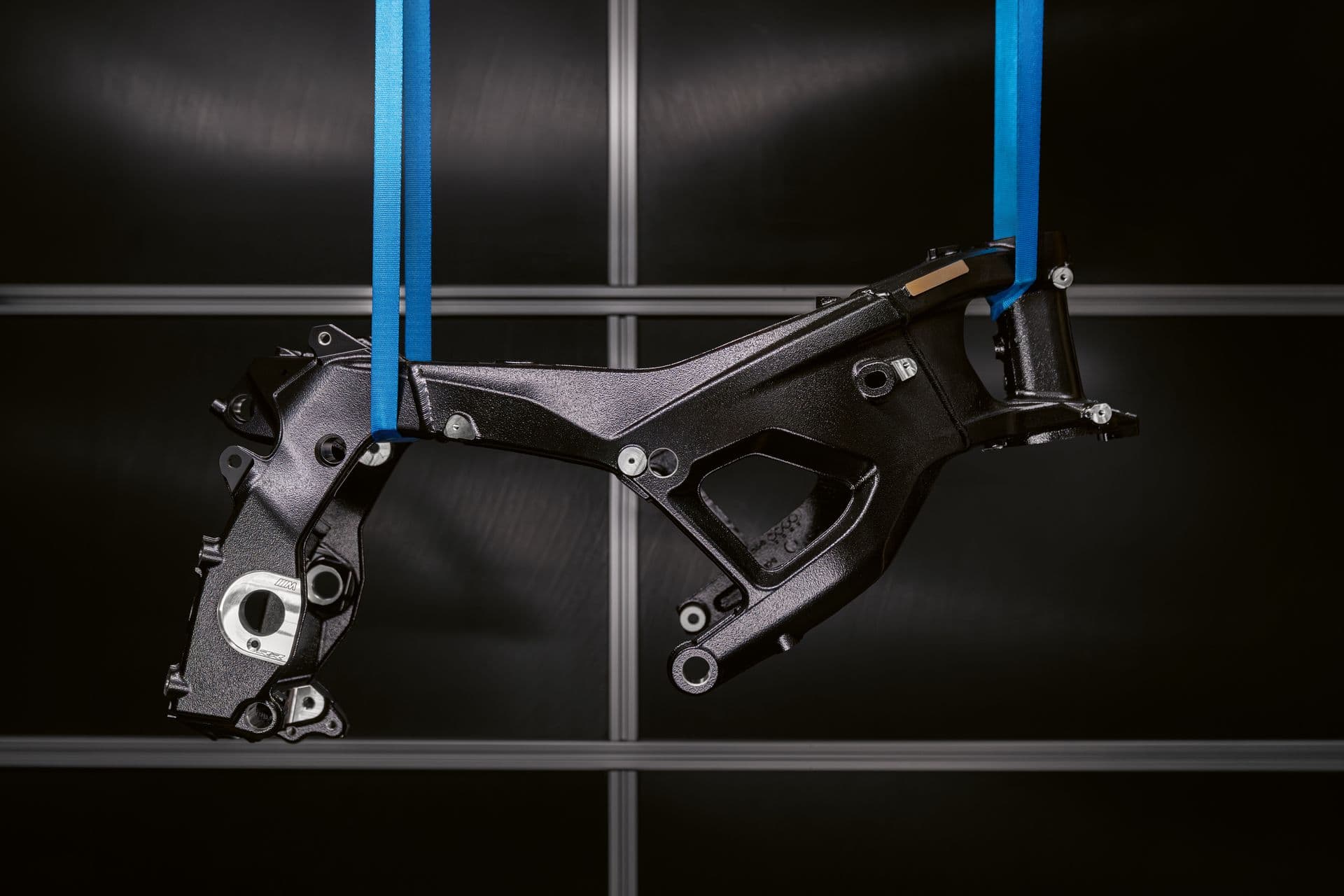


Two years ago, BMW raced a flexible chassis in World Superbike that helped Toprak Razgatlioglu claim the manufacturer’s first title in the series. In January 2025, Dorna and the FIM stripped that frame from competition after rival teams argued it didn’t match any production motorcycle BMW actually sold. Now BMW has solved that problem the old-fashioned way: it put the frame on the showroom bike.
The 2027 BMW M 1000 RR will carry a third-generation M Motorsport aluminum frame as standard equipment. BMW says the new unit is 1.3 kg lighter than what it replaces, with wall thicknesses cut by up to 30 percent. Those thinner walls aren’t just about shedding grams — they’re engineered to let the frame flex laterally at lean angles while staying rigid lengthwise under braking and acceleration.
That distinction matters on a motorcycle. When a superbike is tipped into a corner, the suspension compresses at an angle to whatever bumps the tires encounter. A frame that gives slightly in the lateral plane shares the load with the fork and shock, keeping the contact patch more consistent. BMW claims riders get clearer feedback and more even tire wear as a result.
The political backstory is what makes this update worth tracking. WorldSBK’s superconcession rules in 2024 gave BMW, as a struggling manufacturer at the time, extra latitude to modify chassis components beyond what the production bike used. Razgatlioglu exploited that advantage ruthlessly, winning the championship.
Competing factories cried foul. The governing bodies sided with them, and BMW was forced back to its standard production frame for 2025.
Razgatlioglu still defended his title on that less exotic chassis, then departed for MotoGP in 2026. But the message from the paddock was clear: BMW needed to homologate the flexible frame concept on a street-legal motorcycle if it wanted to race the design again.
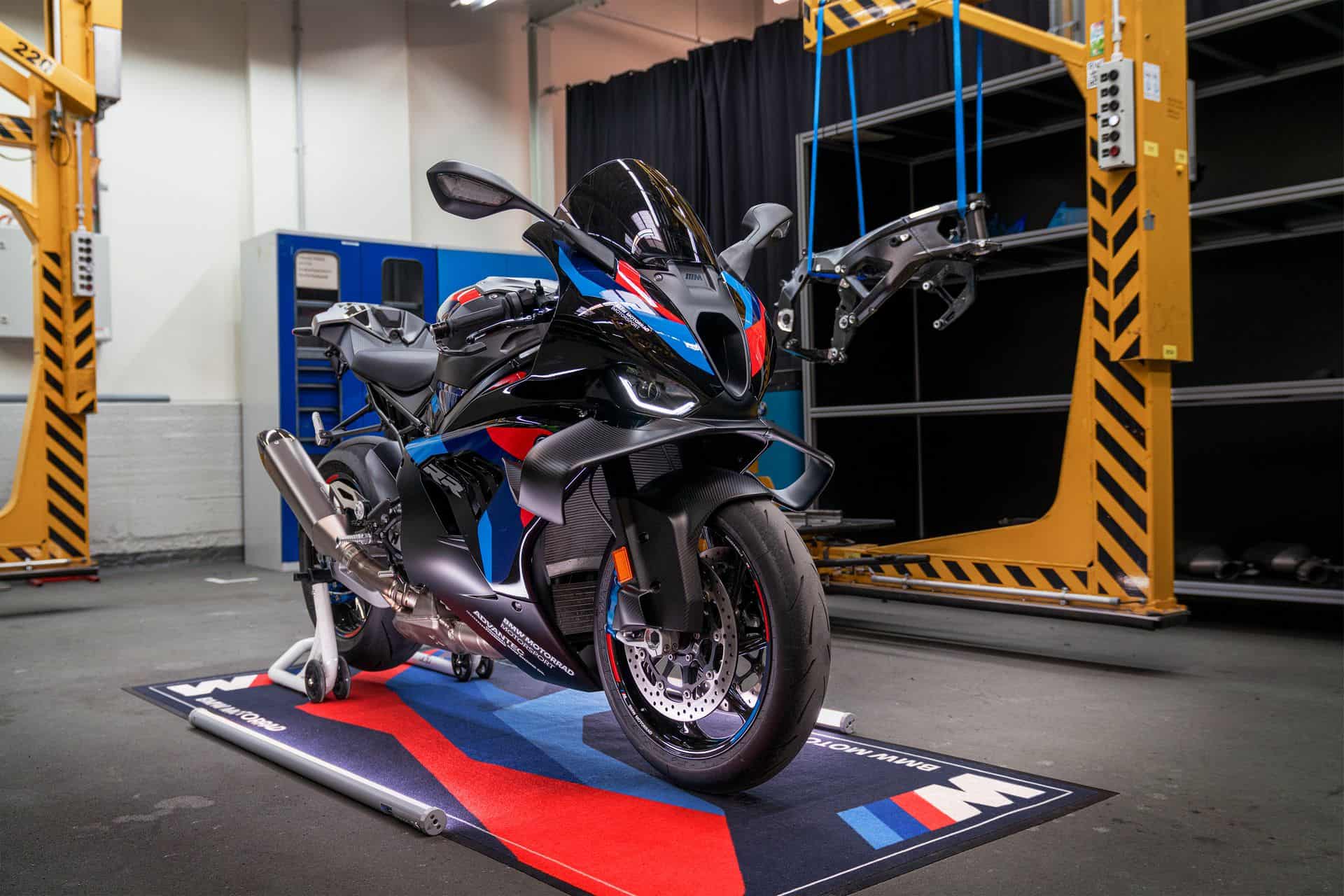
That is exactly what the 2027 M 1000 RR accomplishes. With the third-generation frame now a catalog item available to every customer, BMW’s factory WorldSBK team and its customer racing squads can legally campaign the chassis concept that rivals once had banned.
Three BMW facilities share production duties. Munich handles digital design, simulation, and ride validation. Plant Landshut in Bavaria casts the four main aluminum sections using low-pressure methods with quartz sand cores to form the hollow structures.
Every casting passes through X-ray inspection before shipping. Plant Berlin, BMW Motorrad’s lead production facility, TIG welds the pieces together, applies corrosion protection inside the closed cavities, and machines the final mounting surfaces to tolerance. A coordinate measurement check signs off each completed frame.
Beyond the chassis, the 2027 model year brings M Forged Wheels as standard fitment. The old M Competition Package is gone, replaced by two M Track packages differentiated by whether they include M Carbon Wheels. Orders opened in August 2025, though BMW has not disclosed pricing.
The whole episode reveals how deeply production-racing homologation rules shape the motorcycles civilians can buy. A frame designed to win a world championship, blocked from competition by politics, is now a street-legal part because BMW reverse-engineered the regulation problem. Whether the 2027 WorldSBK grid feels the effect depends on who BMW puts on the bike, with Razgatlioglu now chasing MotoGP glory and the factory team still searching for its next front-runner.
Share this Story