
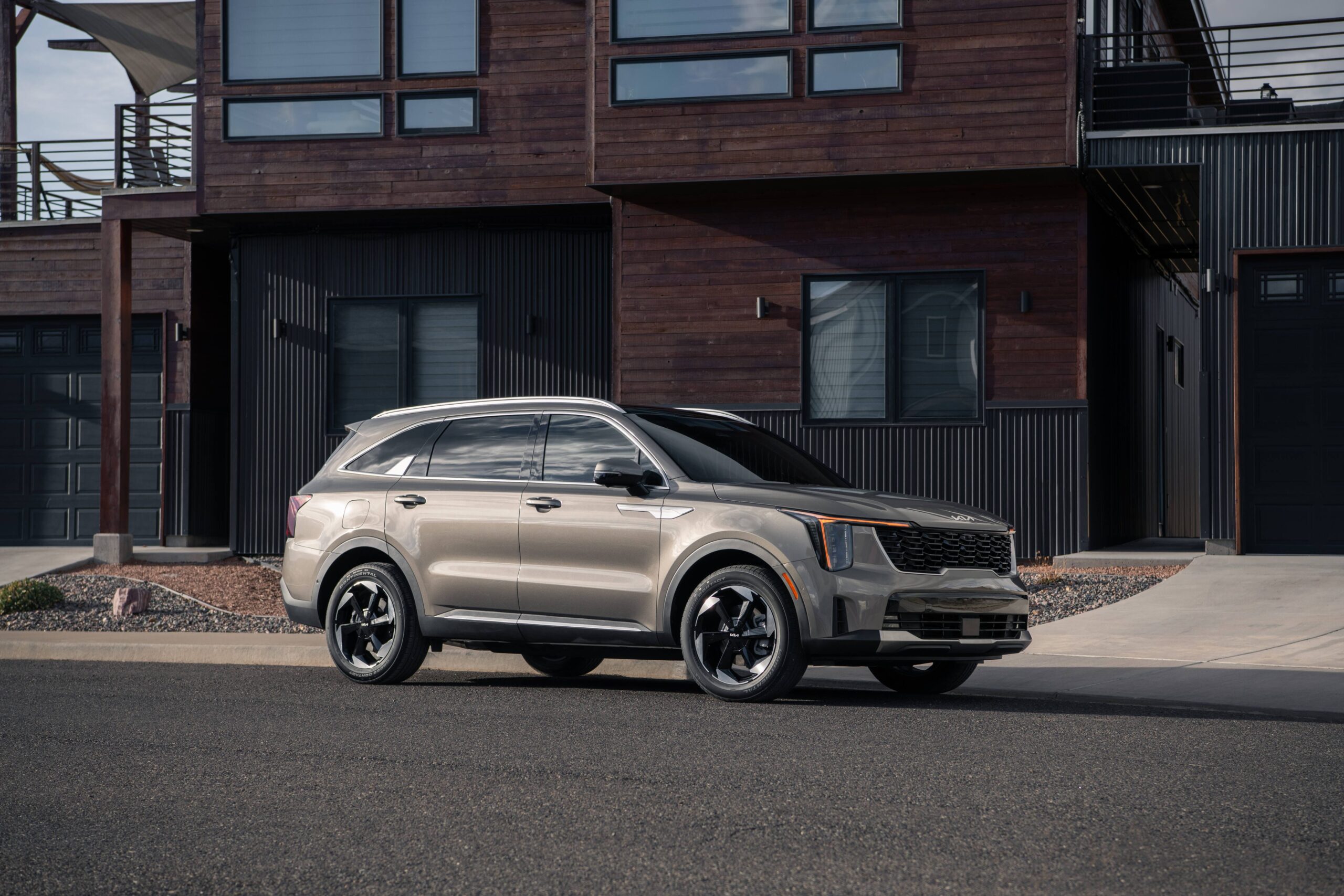


The 2027 Kia Sorento plug-in hybrid now starts at $55,385. That’s $5600 more than last year’s entry point, and the reason is simple: Kia killed the only affordable way in.
The EX trim, which opened the PHEV door at $49,785 for 2026, is gone. What remains is the X-Line SX Prestige, a fully loaded trim that was already near the top of the price sheet. Kia bumped it by just $400 over its 2026 equivalent and added a standard head-up display, but for buyers who wanted a plug-in Sorento without spending north of $55,000, the math no longer works.
This is a pattern across the industry. Automakers trim entry-level variants of electrified models, then point to the loaded survivor as proof their lineup is “simplified.” The consumer loses a choice, the average transaction price climbs, and everyone calls it streamlining.
The Sorento still offers three powertrains, a rarity in the mid-size SUV segment. Gas-only models start at $34,085, and the standard hybrid begins at $49,485. But the PHEV now sits nearly $6000 above the hybrid and more than $21,000 above the base gas model.
That’s a steep toll for 30 miles of electric range and a turbocharged 1.6-liter four-cylinder making 261 horsepower through a six-speed automatic to all four wheels.
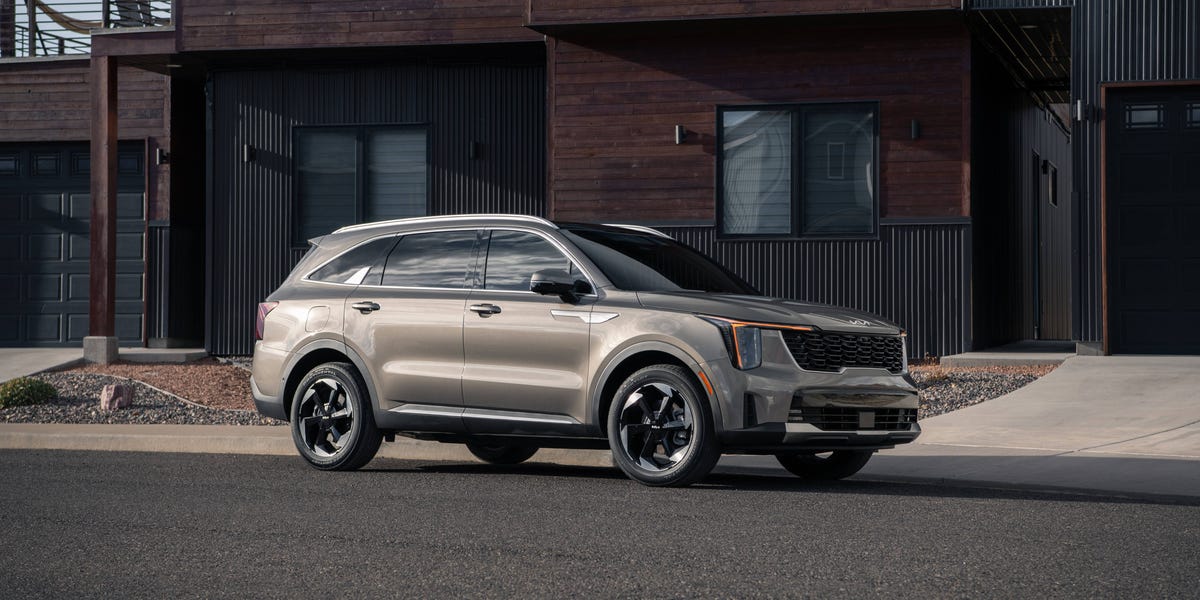
You do get equipment for the money. The X-Line SX Prestige wraps itself in 19-inch wheels, Gun Metal exterior trim, leather upholstery, a microsuede headliner, ventilated front seats, heated rear seats, a heated steering wheel, a panoramic sunroof, 360-degree camera, and Highway Driving Assist 2. The seatback embossing and machined wood trim round out the premium feel, and for 2027, a new Pale Gray paint replaces the outgoing Steel Gray.
Kia hasn’t released updated EPA numbers for the 2027 model, but expect the same 33 mpg combined rating and roughly 30 miles of all-electric driving. Those figures were never class-leading. The Toyota RAV4 Prime, though a size class smaller, delivers 42 miles of EV range.
The Sorento’s advantage has always been its three-row-capable footprint and competitive pricing, at least until now.
The federal EV tax credit could theoretically soften the blow, but eligibility depends on battery sourcing requirements that shift frequently. Buyers banking on a $7500 write-down to justify a $55,000 PHEV should check the fine print before signing anything.
What Kia has done here is turn the Sorento PHEV from a volume play into a premium product. The sub-$50,000 plug-in three-row SUV was a compelling proposition in a market where electrified family haulers rarely came cheap. That vehicle no longer exists in the Sorento lineup.
The question now is whether buyers who wanted a mid-price PHEV simply move to the Sorento hybrid, which starts $5900 lower, or leave the brand entirely. Hyundai’s Santa Fe PHEV and the Toyota Grand Highlander Hybrid are circling the same customers, and neither has abandoned its entry-level trims yet.
Kia’s bet is that the loaded SX Prestige carries enough equipment to justify its price tag on its own. For shoppers already cross-shopping in that range, it might. For the ones who stretched to reach $49,785, the Sorento PHEV just closed its door.


Share this Story