
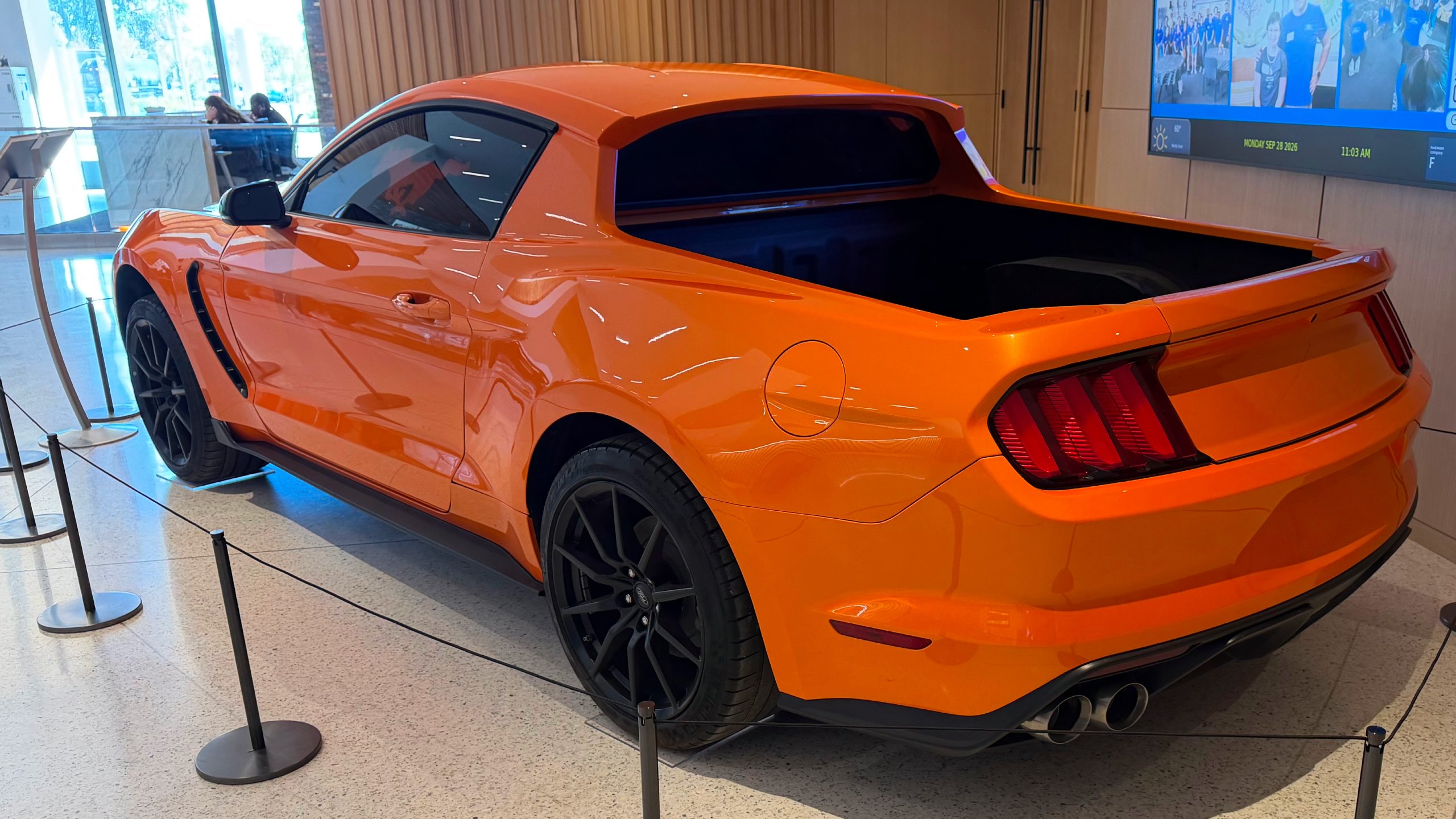


Ford took a perfectly good Mustang, possibly a GT350 R press car that was headed for the crusher, and let its metal shop apprentices hack the rear end into a pickup bed. The result is the kind of vehicle Ford should have been building for decades but refuses to sell.
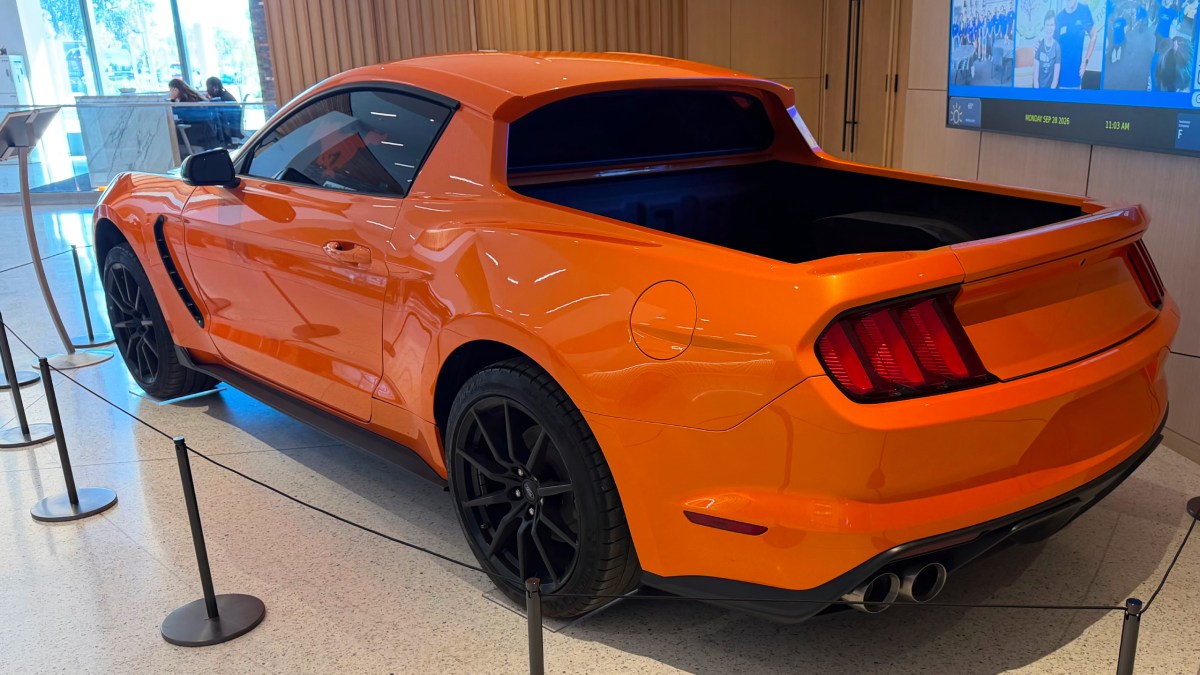
The one-off project replaced the Mustang’s rear seat and trunk with a surprisingly usable bed, borrowing parts directly from the production Ranger. The apprentices even converted the rear trunk panel into a functioning tailgate. It is a training exercise dressed up as the most interesting thing Ford has done with the Mustang platform in years.
The proportions land somewhere between a Hyundai Santa Cruz and a fever dream about the old Ranchero. From most angles, the short bed works better than it has any right to. The front three-quarter view skews a little Baja-truck with the added ground clearance, but drop it back down on shorter springs and you have something that looks like it belongs in a showroom, not just a training facility.
Ford killed the Ranchero in 1979. Chevrolet buried the El Camino in 1987. The American ute has been dead for nearly four decades, even as Australia kept building them until Holden finally collapsed.
Every few years someone floats the idea of reviving the format, and every few years Detroit shrugs it off as a niche nobody would pay for. Then Hyundai dropped the Santa Cruz and moved enough units to keep it in the lineup. Ford launched the Maverick and couldn’t build them fast enough for two straight years.
Customers have been screaming for smaller, sportier utility vehicles, and the answer keeps landing somewhere between compact crossover and full-size truck. Nobody is willing to split the difference with a two-door muscle car that can haul a load of mulch.
This apprentice project proves the bones are already there. Ranger bed components bolt onto a Mustang platform with enough coherence that a group of trainees can pull it off. The engineering gap between shop exercise and production vehicle is vast, but the concept is sound enough that Ford’s own parts bin makes it possible.
Ford is reportedly exploring a sedan return. The company just poured resources into the seventh-generation Mustang. The Maverick prints money at the low end.
Somewhere in that triangle of decisions sits a vehicle that combines all three impulses, a fast, rear-drive machine with genuine cargo capability and the kind of personality that no crossover will ever replicate.
Instead, this Mustang ute will probably sit in a lobby somewhere, or roll out for auto show appearances, or end up in a storage facility alongside every other concept that made people reach for their wallets before being told no.
The apprentices did their job well. The question is whether anyone at Ford with a product-planning title is paying attention to what they built, or whether this is just another clever project that gets filed away while the company greenlights another tall, heavy, anonymous utility vehicle.
Ford has the platform. Ford has the bed components. Ford even has the customer base that would line up for this thing tomorrow morning. What Ford does not appear to have is the nerve.
Share this Story