
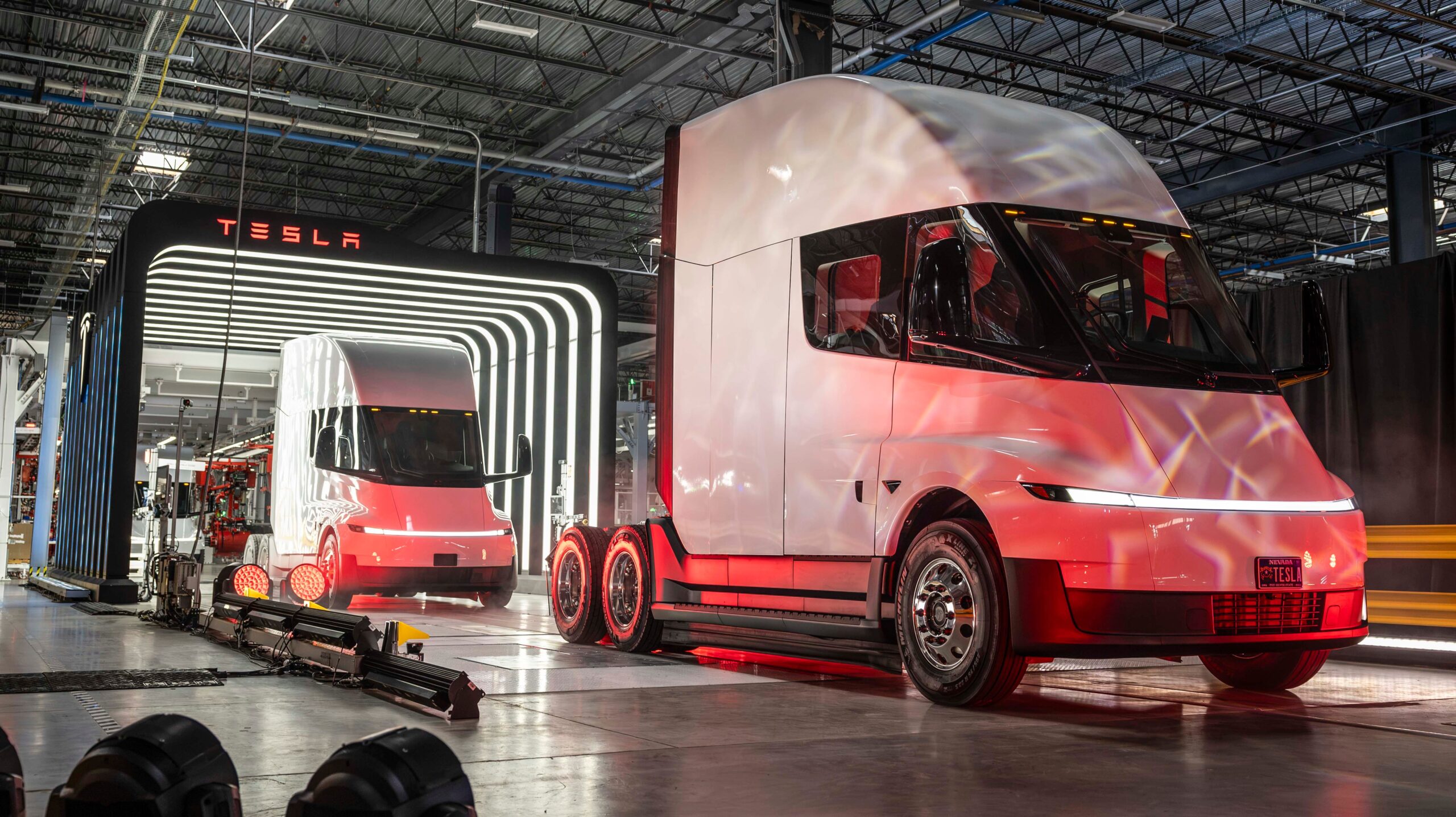


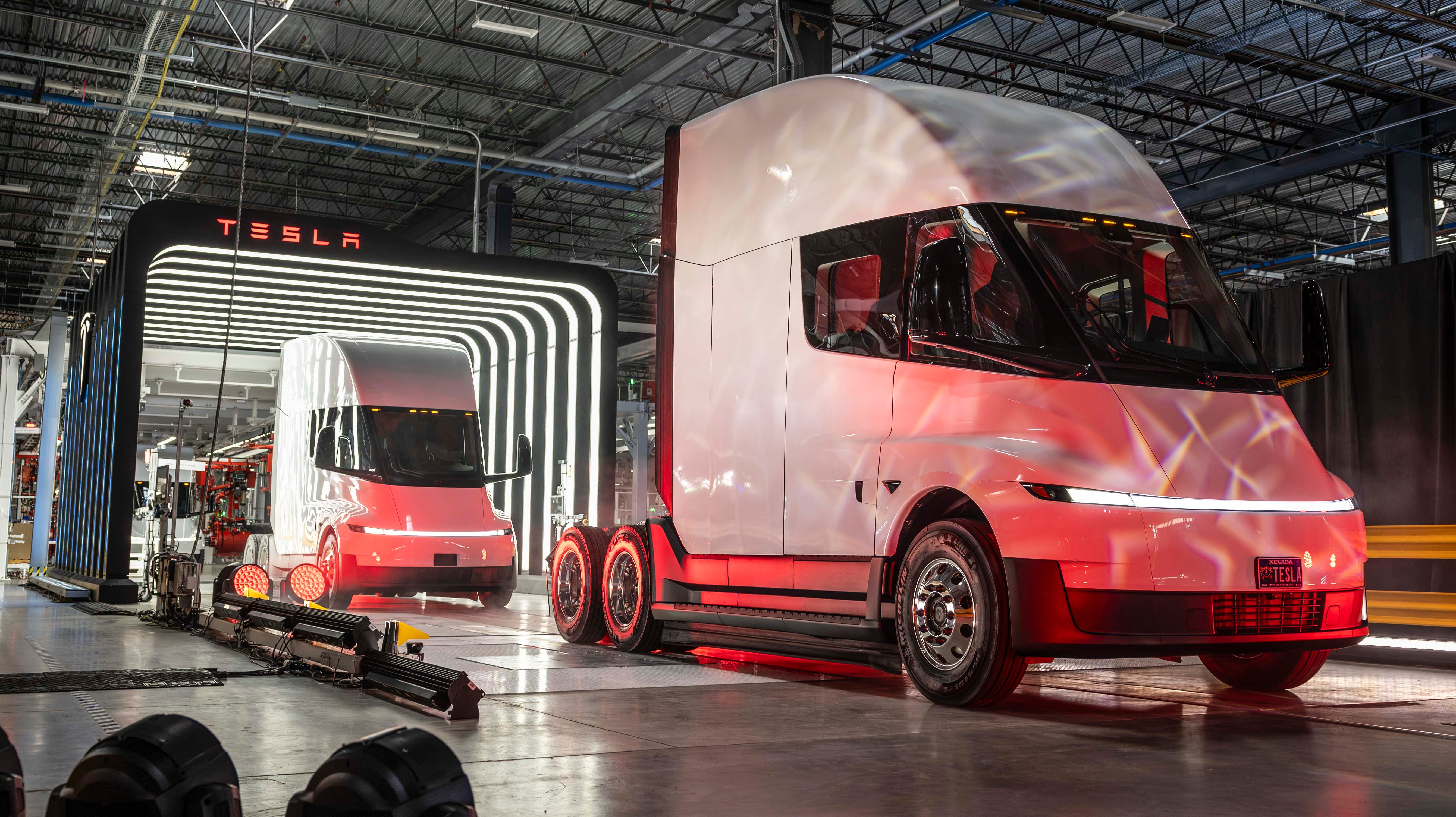
Tesla rolled its production Class 8 Semi out of a new factory in Sparks, Nevada, and immediately handed the keys to someone who had never driven a Tesla in his life. Adam Wingfield, editorial director at FreightWaves and a trucker with more than a million miles of Class 8 experience, climbed into the cab as both a skeptic and a professional. That combination is exactly what makes his early take worth tracking.
The Semi is not a passenger vehicle dressed up for freight duty. The tractor alone stretches over 20 feet, stands 13 feet tall, and carries a gross vehicle weight rating of 48,000 pounds. Hooked to a trailer, it maxes out at 82,000 pounds gross combined weight.
Tesla claims 500 miles of range while towing a full load. If that figure holds under real-world conditions, it would finally make an electric truck viable for a meaningful slice of the long-haul market.
Wingfield drove the Semi both unloaded and towing roughly 37,000 pounds. His resume includes stints as a hired driver and as an owner-operator running his own rig. By his own account, he walked in doubtful about nearly everything: the center-mounted driver’s seat, the touchscreen controls, the entire premise of replacing diesel with batteries on an 82,000-pound vehicle.
Tesla didn’t cherry-pick a friendly audience. FreightWaves is among the most respected outlets in trucking, freight, and supply chain coverage. Inviting Wingfield was a calculated bet that the truck could speak for itself, even to someone predisposed to find its flaws.
The production Semi packs 1,076 horsepower. Tesla has already lined up customers with what it describes as big plans for the truck, though the company hasn’t disclosed the full order book or delivery timeline in detail. The Sparks factory is purpose-built for this vehicle, and Tesla clearly intends to scale.
But scaling in Class 8 trucking is a different animal than flooding suburban driveways with Model Ys. Fleet buyers don’t care about zero-to-sixty times. They care about cost per mile, uptime, maintenance intervals, charging infrastructure along freight corridors, and whether a truck can survive 500,000 miles of hard use without becoming a money pit.
Diesel incumbents like Freightliner, Kenworth, and Peterbilt have decades of data proving their rigs can do exactly that.
MotorTrend, which attended the rollout and drove the Semi, openly acknowledged that a Class 8 truck maxes out its staff’s expertise. The outlet’s heaviest testing typically involves heavy-duty pickups towing around 30,000 pounds. The Semi operates in a weight class that demands entirely different knowledge, from air brake systems to federal bridge formulas to the economics of deadhead miles.
Wingfield’s full driving impressions, shared on MotorTrend’s InEVitable podcast, reportedly cover everything from ride quality under load to the ergonomics of that unconventional center seat. His verdict carries weight precisely because he has no stake in Tesla’s stock price or its mythology. He has spent years in diesel cabs, knows what works, and knows what breaks.
Whether the Semi can actually displace diesel or ends up a niche curiosity for short-haul routes and PR-friendly fleets remains an open question. The truck exists in production form now. The real test starts when fleets put it to work, day after day, in conditions Tesla doesn’t control.
Share this Story