
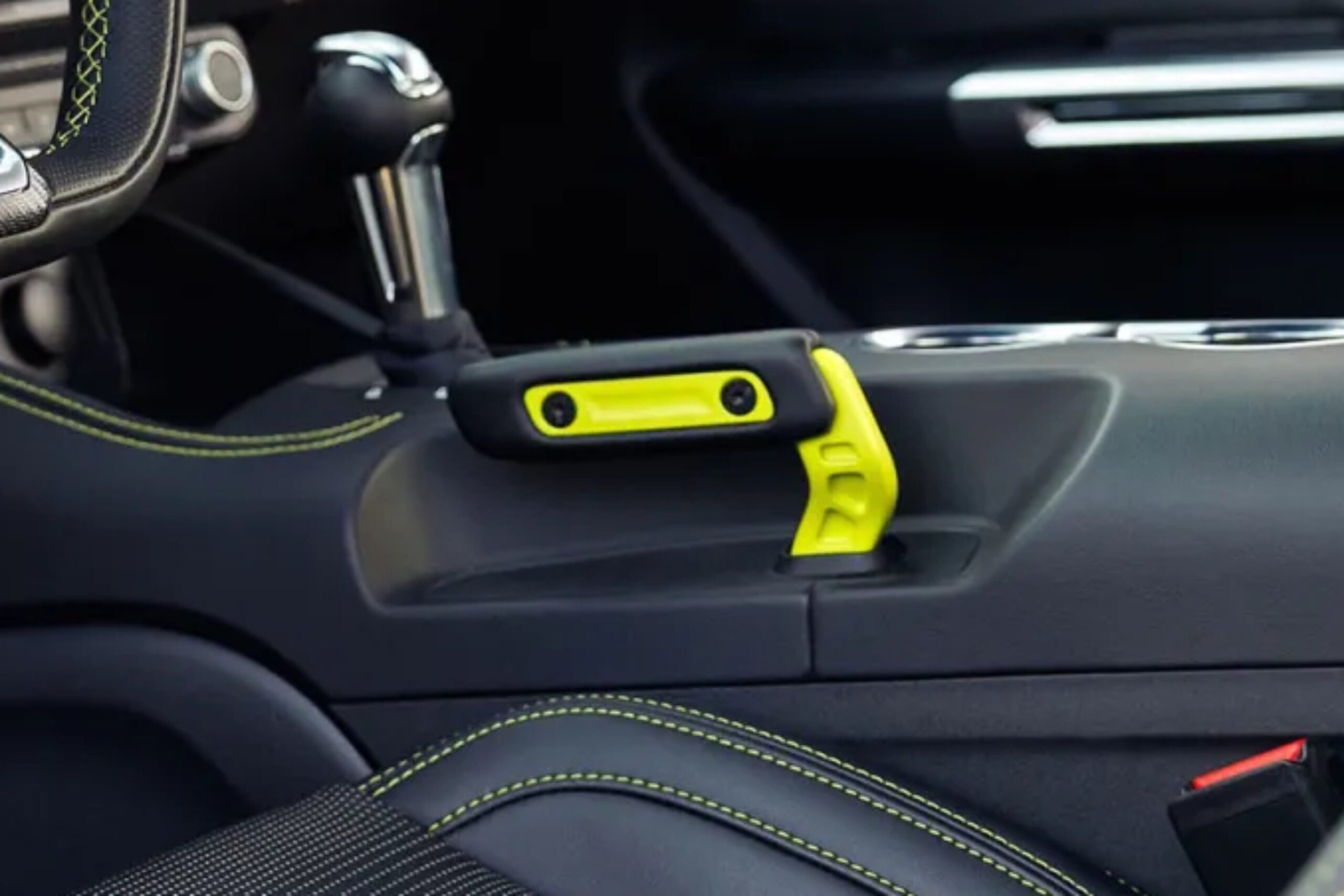


Ten years ago, Byron Hurd showed up to Ford’s ST Octane Academy in Utah expecting to dominate an autocross in a Fiesta ST. He finished third. The culprit wasn’t a lack of skill but a custom drift brake bolted where the standard hand brake should have been, forcing every driver to yank the rear end loose through a 180-degree hairpin.
The playing field got leveled by a lever. That story, told recently at The Drive, is really about something larger and more permanent. The hand brake, one of the most intuitive mechanical interfaces in any car, has been quietly erased from the modern cockpit.
Almost nobody in the industry seems to care. Even among the shrinking roster of cars still sold with a manual transmission, finding an actual pull-handle parking brake is nearly impossible. Electronic switches and buttons have replaced them across the board. They work fine for holding a car on an incline, and they are worthless for anything else.
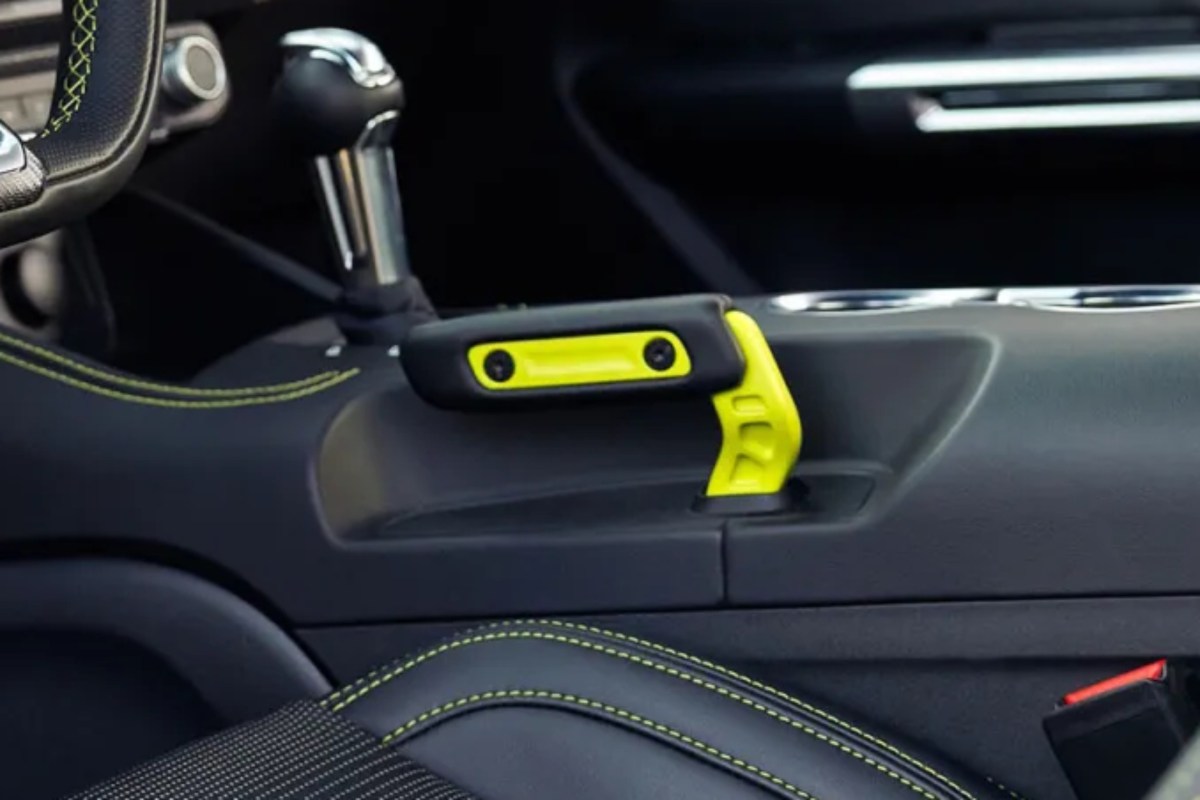
Ford and RTR had to engineer a hand brake back into the current Mustang for the drift-ready RTR variant, which is a strange sentence to write about a car that had one as recently as the previous generation. The S550 Mustang came with a traditional pull handle. The S650 deleted it.
The RTR puts it back, minus the ratcheting detent, so it functions purely as a drift brake rather than a parking brake. It is a bespoke solution to a problem the automaker created by removing a part that already existed.
The broader pattern here is familiar. Automakers strip out mechanical connections between driver and machine in the name of packaging efficiency and cost savings. Then a specialty builder or tuner charges a premium to reinstall something resembling what was lost.
Manual transmissions are going the same way. The EcoBoost Mustang dropped its stick shift with the S650 redesign. The six-speed is now reserved for the GT and its V8.
A button-activated parking brake does exactly one job. A hand brake did several. You could use it to hold the car, rotate the car, or modulate rear brake force independently of the pedal.
Rally drivers relied on it. Autocrossers used it. Regular people figured out it could save them on an icy hill. That versatility disappeared not because the technology failed but because the accountants found a switch that took up less console real estate.
Hurd admits he has softened on the drift brake concept. A decade of daily drivers without any hand brake at all will do that to a person. The RTR Mustang, he concedes, is genuinely fun. When the only alternative is a featureless button on the center console, even a spring-loaded drift lever starts to feel like a gift.
The hand brake was never glamorous. It was a cable connected to a lever connected to a pair of brake shoes or calipers. No electronics, no software, no calibration tables.
You pulled it, things happened. You let go, they stopped. The feedback was immediate and mechanical and honest, which is probably why it had to go.
Ford and RTR building one back in suggests at least a flicker of recognition that “it’s just fun” can still justify an engineering decision. Whether that flicker survives the next cost-reduction meeting is another question entirely.
Share this Story