
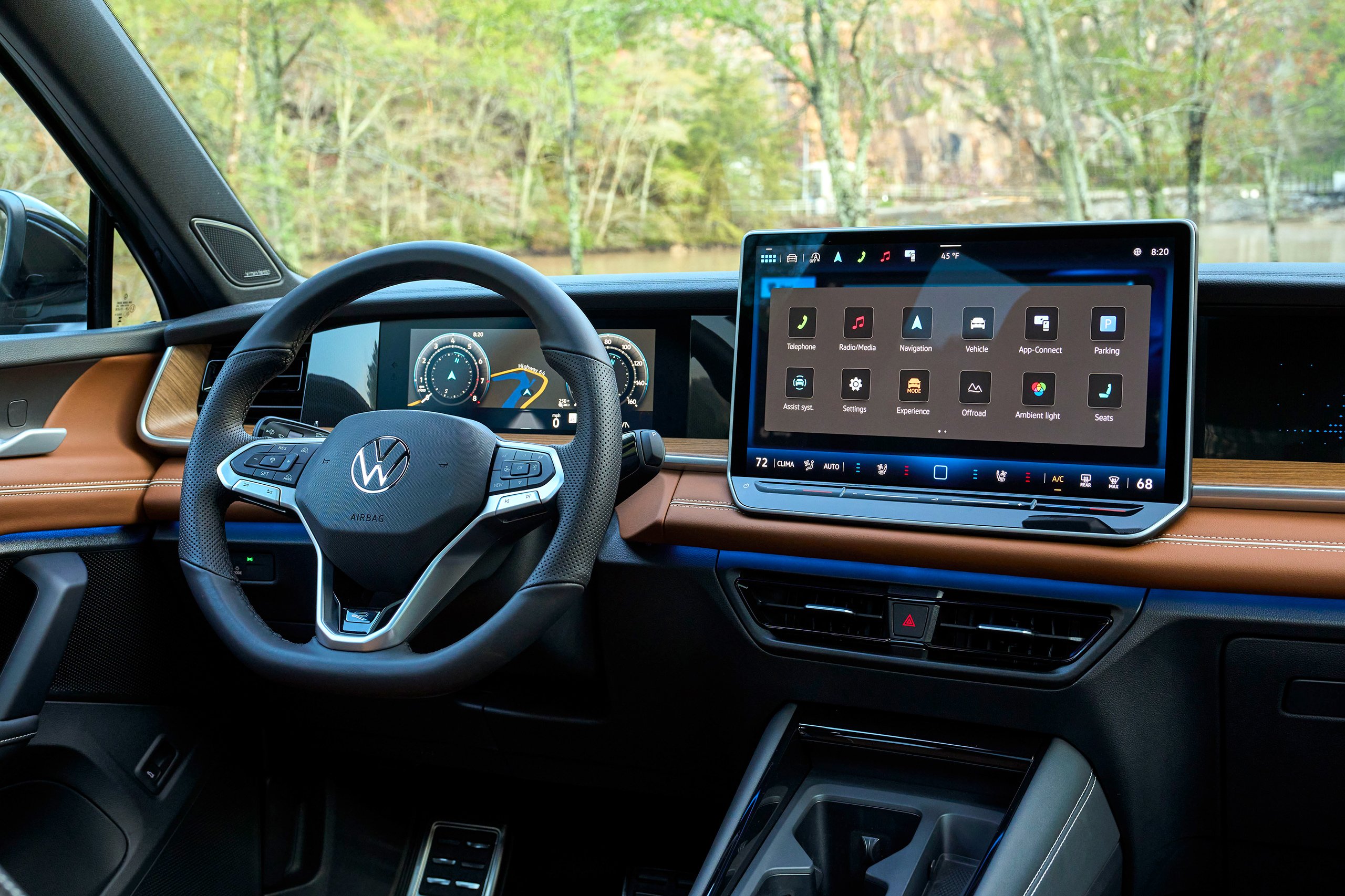


Nearly 50,000 Volkswagen Tiguans built between March and August of 2025 are heading back to dealers because their Body Control Module software can spontaneously reset, instantly killing the engine, the exterior lights, the rearview camera, and what VW describes as “certain controls.” The fix cannot be performed over the air. Owners have to bring the car in.
The Body Control Module is one of those systems that sounds like it handles window switches and dome lights. It does. But it also governs the ignition. When the BCM in a test vehicle reset without warning, VW lost everything, motive power included. The car simply stopped being a car.
VW discovered the fault internally and found “a small number” of resets in vehicles sold outside the United States. Volkswagen of America says it has no confirmed cases on U.S. soil but cannot rule them out either. That distinction, between “it hasn’t happened here” and “it can’t happen here,” is doing a lot of heavy lifting in this recall notice.
There is no diagnostic trouble code for this failure. When the BCM resets, it leaves no fingerprint. A dealer plugging in a scan tool after the fact would find nothing pointing to the root cause. That makes field diagnosis nearly impossible and raises an uncomfortable question about how many resets may have already occurred without being reported or traced.
The parallel to General Motors’ ignition switch debacle is hard to ignore. More than a decade ago, GM recalled over 800,000 vehicles because a physical switch could slip out of the “run” position with minimal force, cutting power to the engine and disabling airbags. That crisis killed people and led to a $900 million federal penalty.
The VW situation is mechanically different, a software fault rather than a defective part, but the end result is the same. The vehicle loses propulsion without warning while potentially in motion.
What makes this recall particularly telling is the vehicle involved. The Tiguan is not a bleeding-edge EV packed with experimental autonomous hardware. It is a conventional gas-powered compact SUV, the kind of car buyers choose specifically because they want something straightforward. Yet even here, the software stack has grown so dominant that a single module reset can render the entire vehicle inert.
Automakers have spent years pushing connectivity, centralized computing architectures, and over-the-air update capability as virtues. VW itself has invested billions in software development through its Cariad division, which has been plagued by delays and leadership turnover. The Tiguan recall is a reminder that consolidating vehicle functions into fewer, more powerful control units creates a single point of failure that didn’t exist when systems were siloed.
The recall covers Tiguans produced over a five-month window, a tight build range that suggests a specific software version is to blame. Dealers will flash updated code onto the BCM, and VW expects the fix to resolve the issue. But the underlying architecture, one where a body electronics module also holds the keys to propulsion, remains unchanged.
The 2025 Tiguan had been off to a strong start commercially. Whether this recall dents that momentum depends on how quickly VW moves and whether any real-world incidents surface before owners get their cars to the dealer.



Share this Story