
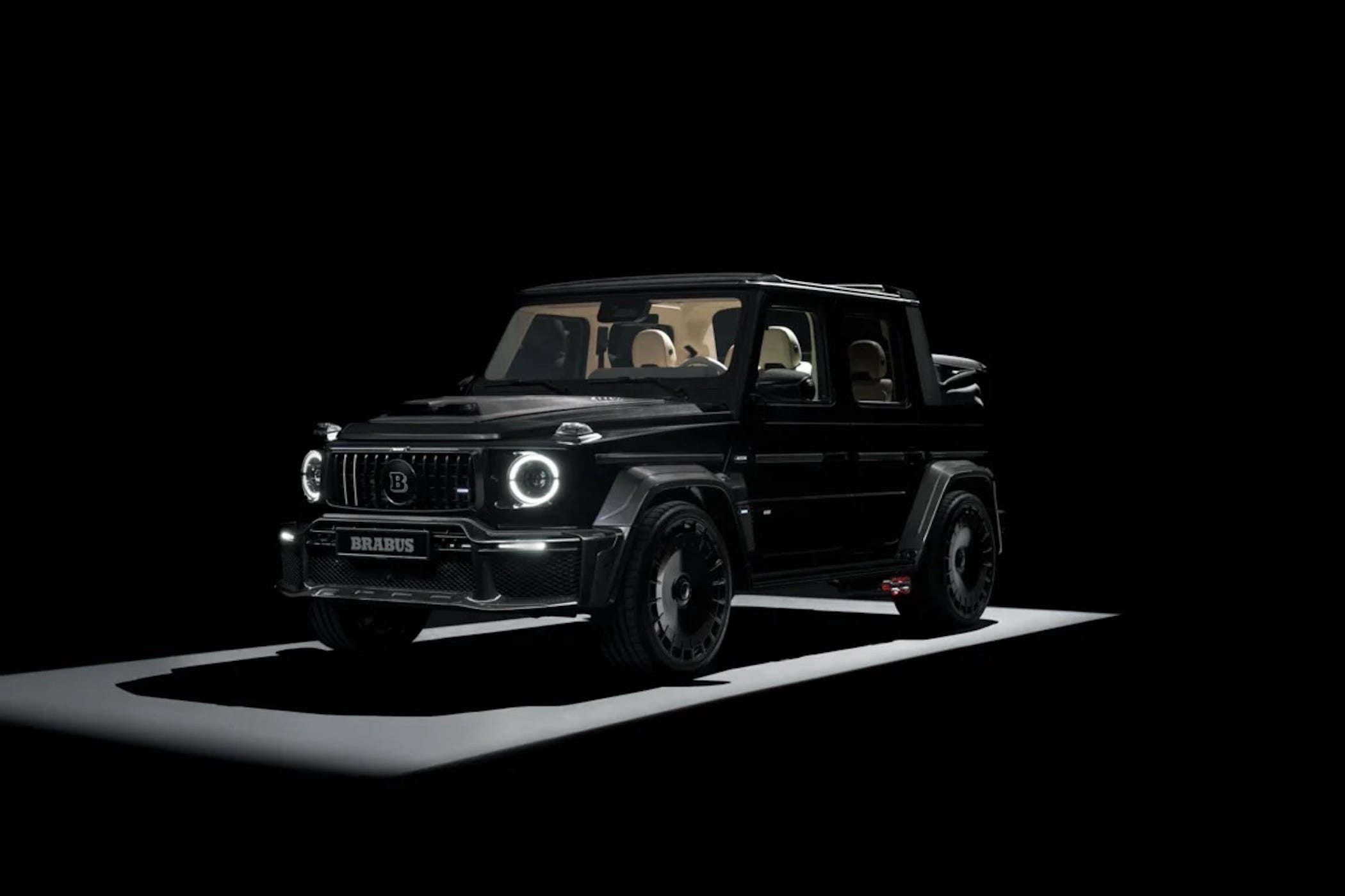


Brabus will build exactly 50 convertible Mercedes-AMG G-class SUVs, each packing 800 horsepower and a price tag north of one million dollars. The company calls it the 800 Cabrio, and it is the logical endpoint of a decades-long arms race to make the G-Wagen the most absurd status object on four wheels.
The recipe starts with AMG’s twin-turbocharged 4.0-liter V-8, massaged to produce 800 hp. A folding fabric roof retracts in 20 seconds. Carbon-fiber bodywork wraps the exterior, the interior is drowned in leather, and those 24-inch monoblock wheels are not optional.
Despite weighing roughly as much as a small apartment building, Brabus claims the 800 Cabrio can hit 60 mph in under four seconds. That figure puts it in the same sprint territory as sports cars costing a fraction of the price, though nobody buying this thing cares about lap times.
The details get stranger the deeper you look. The exhaust tips glow red. A blow-off valve system exists primarily to make noise, engineered not for function but for attention, which is the entire business model.
There are two versions. The standard 800 Cabrio sits on those massive wheels and is meant for boulevard duty. The XL variant gets portal axles that jack ground clearance up to 18.9 inches, theoretically making it trail-capable.
In practice, no one spending a million dollars on a roofless G-Wagen is taking it anywhere near a trail. The XL’s off-road hardware is costume jewelry, a visual signal that the owner could go off-road if they wanted to. They will not want to.
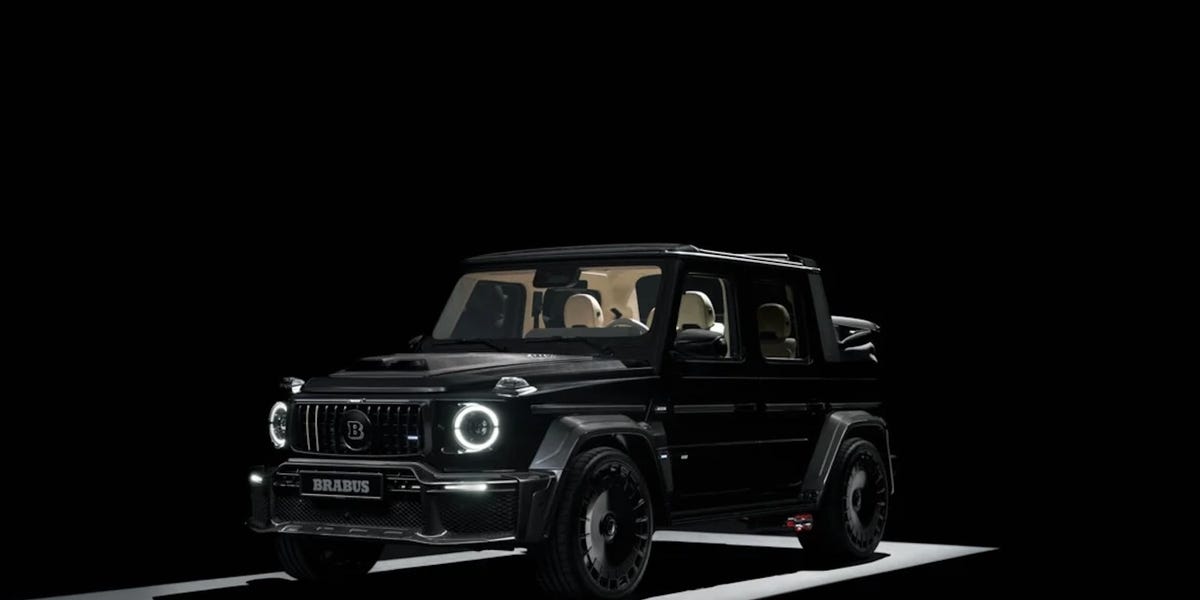
At more than four times the cost of a standard G63, the 800 Cabrio occupies a market segment that barely qualifies as automotive. It is closer to yacht money, watch money, the kind of spending that exists purely to broadcast wealth. Brabus has always understood this, because the company does not sell transportation. It sells spectacle.
The 800 Cabrio follows closely behind Brabus’s Bodo coupe concept, another radical G-class rethink that signals the tuner is pushing harder than ever into ultra-luxury territory. Where mainstream automakers chase electrification targets and regulatory compliance, Brabus is moving in the opposite direction, building louder, thirstier, more extravagant machines for a clientele that treats emissions regulations as someone else’s problem.
Fifty units is barely a production run. It is a capsule collection, the automotive equivalent of a limited-edition handbag. Scarcity drives desire, and desire drives pricing power.
Expect to spot them in Beverly Hills, Monaco, Dubai, the usual rotation of places where cars like this serve as moving furniture for the wealthy. The 800 Cabrio is not designed to be driven hard or pushed to its limits. It is designed to be seen.
Every engineering decision, from the glowing exhaust tips to the carbon bodywork to the retractable roof, serves that single purpose. Whether Brabus can sustain this kind of excess in a market increasingly shaped by electrification mandates remains an open question. For now, the company is betting that 50 buyers will happily pay a million dollars to drive around in what amounts to an open-air monument to conspicuous consumption, and based on Brabus’s track record, that is probably a safe bet.
Share this Story