
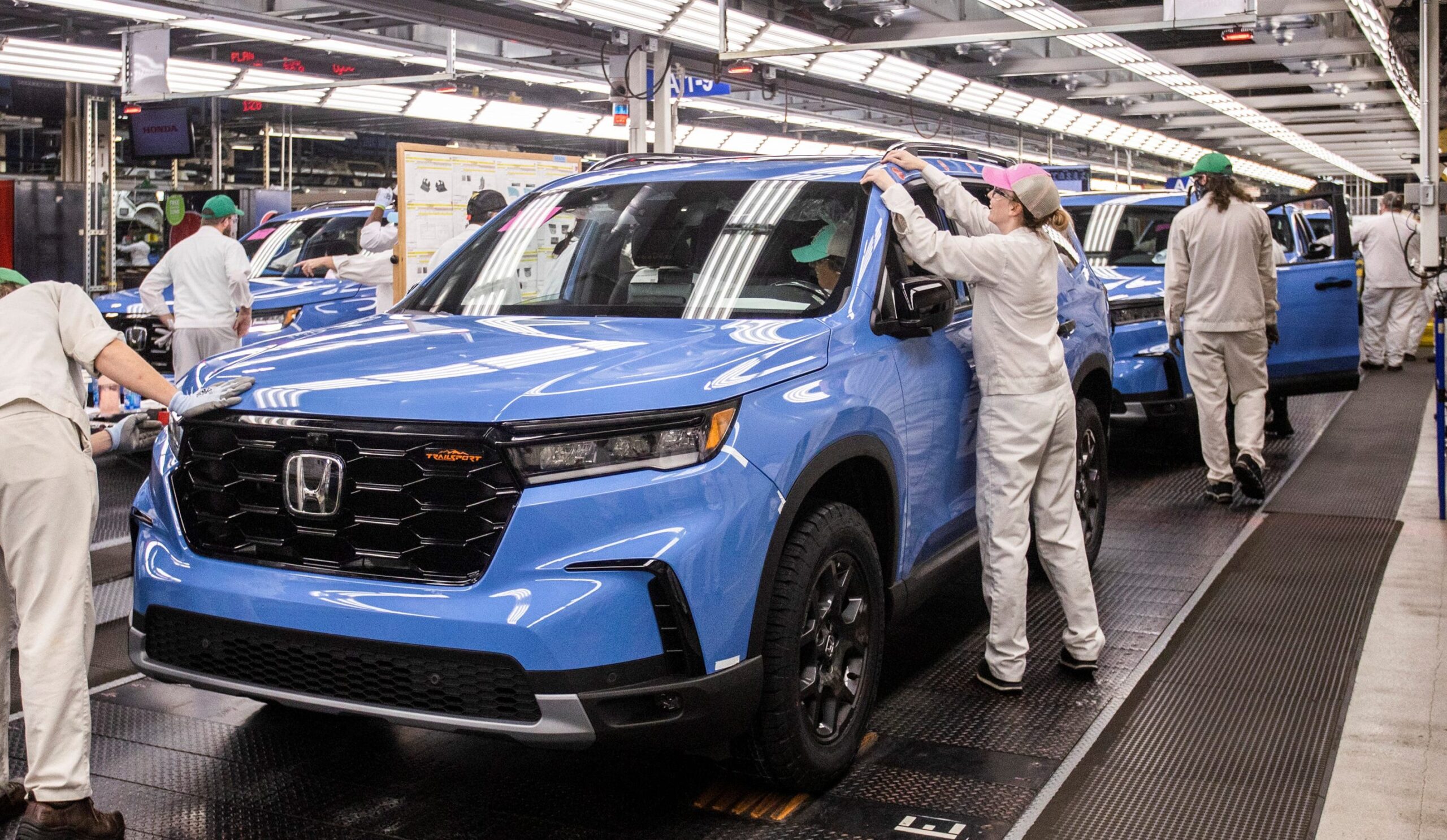


Three months ago, Honda killed three planned EVs for the U.S. market. Now it wants to spend $2.5 billion building a factory dedicated to hybrids. The whiplash is real, but so is the logic.
Honda is in the final stages of negotiations to build its eighth North American assembly plant in Ohio, according to Automotive News. The facility would focus on hybrid-vehicle production, could be operational by 2030, and might build two models that don’t yet exist: a three-row “Acura XL” SUV and a larger Honda “Pilot XXL.
Ohio already hosts two Honda plants. Adding a third would deepen the automaker’s roots in a state it has called home since 1982, when it became the first Japanese automaker to build cars in the U.S.
The timing tells the story. Honda projected a brutal financial hit for 2026 after scrapping those EV programs, blaming tariffs, a shaky Chinese market, and American buyers who still aren’t purchasing battery-electric vehicles in the volumes the industry once predicted. CEO Toshihiro Mibe first floated the idea of another plant in July. Barely two months later, Ohio emerged as the front-runner.
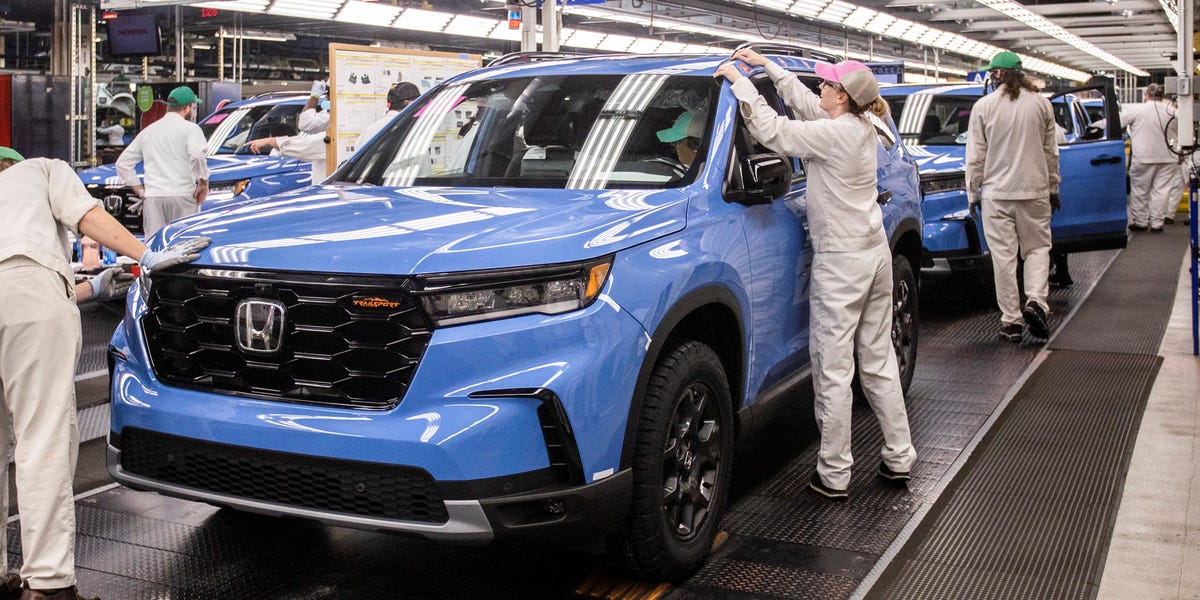
Honda’s existing seven North American plants are running at roughly 90 percent capacity, churning out its bread-and-butter profit machines: CR-V, Accord, Civic, Odyssey, Pilot. There is no room to squeeze in a new generation of hybrids without either displacing those models or building new walls. Honda chose new walls.
The automaker announced in May that it plans to introduce 15 new models globally by 2030, leaning hard on a next-generation hybrid powertrain it says will boost fuel efficiency by 10 percent and slash production costs by 30 percent. Most of those vehicles are aimed squarely at North America, which remains Honda’s most profitable region. Prototypes of a Honda hybrid sedan and an Acura hybrid SUV have already been shown.
Building those vehicles domestically also sidesteps import tariffs, a consideration that has only grown more urgent as trade policy shifts with every news cycle. A car assembled in Ohio is a car that doesn’t get taxed at the border.
Honda recently sat down with its suppliers and asked for price reductions totaling $9.4 billion by 2030. Spending $2.5 billion on a new factory while squeezing suppliers for nearly four times that amount is a calculated bet that volume and efficiency will carry the company through a turbulent stretch.
The pivot away from EVs and toward hybrids is not unique to Honda. Toyota has been playing this card for years. Ford pulled back on EV investment to fund hybrid development. The American market, for all its regulatory nudging toward electrification, keeps buying combustion-adjacent vehicles at a pace that pure battery cars cannot match.
Honda’s hybrid bet is less a vision statement than a survival calculation. The company needs new products to fill showrooms, new capacity to build them, and a powertrain strategy that matches what customers are actually willing to purchase. Ohio gives it the geography. Hybrids give it the product.
Whether the math works depends on a lot of things Honda cannot control, starting with what tariffs look like in 2030. No deal has been signed yet. Honda is still negotiating.
Share this Story